
Blowing Away Star Formation with Warm Molecular Gas
Astrobites reports on a study that uses JWST to investigate how warm, star-forming molecular gas is blown away by active galactic nuclei.

Astrobites reports on a study that uses JWST to investigate how warm, star-forming molecular gas is blown away by active galactic nuclei.

Astrobites reports on the use of Johannes Kepler’s pre-telescope sunspot drawings to re-examine irregular solar activity in the 17th century.

Astrobites reports on how the orbits of Jupiter-like exoplanets affect these planets’ ability to send ice into the inner regions of their home systems.

Astrobites reports on whether JWST is capable of achieving one of its main goals: finding the very first stars in the universe.

Astrobites reports on the climates of planets orbiting stars that are smaller, cooler, and more common than Sun-like stars.

Astrobites reports on a hunt for intermediate-mass black holes and what this search tells us about how black holes formed in the early universe.

Astrobites reports on the radio signals from stars being ripped apart by supermassive black holes.

Astrobites reports on research that brings together data from multiple wavelengths to make a detection of distant 21-cm radiation.
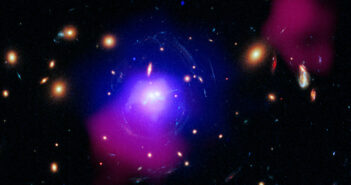
Astrobites reports on the aftermath of a massive active galactic nucleus outburst that left behind a string of star formation.
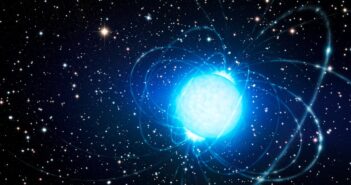
Astrobites reports on the fast blue optical transient AT2018cow, which has remained a mystery to astronomers since it was discovered.