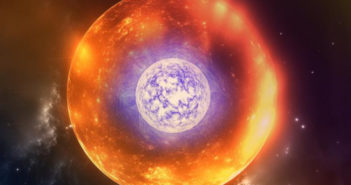
Red Giants and Neutron Stars and Gravitational Waves, Oh My!
Astrobites reports on unusual hybrid objects: red giants that hide neutron stars in their interiors.

Astrobites reports on unusual hybrid objects: red giants that hide neutron stars in their interiors.
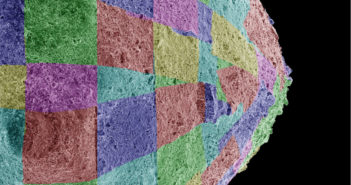
Shape models help us to interpret the stunning observations from a spacecraft’s recent visit to asteroid Bennu.
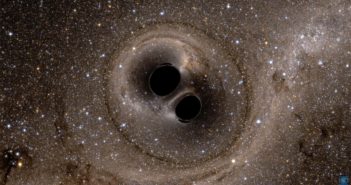
Models suggest that black holes of a certain mass can’t be produced by supernovae. Gravitational-wave signals from black hole mergers can allow us to test this prediction of “missing” black holes.
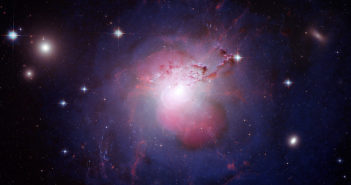
Scientists have explored how delicate filaments of cold gas form and survive within the hot, fast-moving surroundings of an active galaxy.
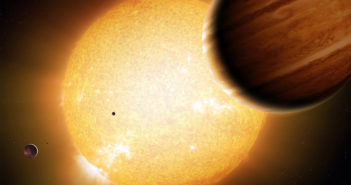
Astrobites reports on a newly “gotten” failed hot Jupiter that aids in our understanding of giant-planet migration.
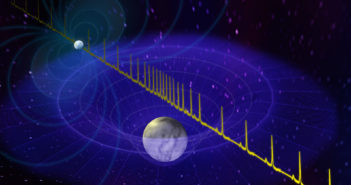
New observations of a massive neutron star provide clues about these extreme objects’ interiors.
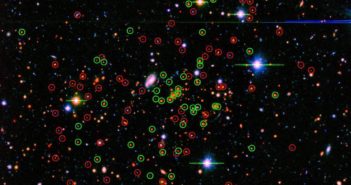
Most galaxies are either star-forming disks or red-and-dead spheroids — but Astrobites reports on new findings that complicate this simple divide.
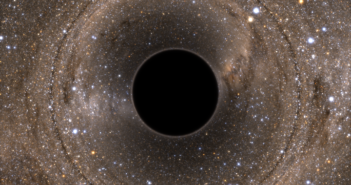
How can we spot supermassive black holes lurking outside of their galaxies’ centers? These wanderers may not remain lost!
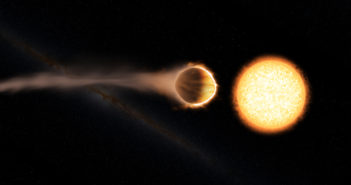
Astrobites reports on the recently discovered tail of exoplanet WASP-107b and the clues it provides about atmospheric escape.
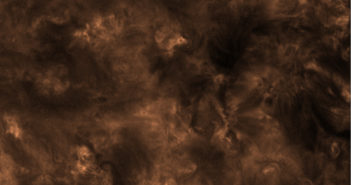
What heats the solar corona to enormous temperatures? The answer may lie hidden here in the quiet Sun.
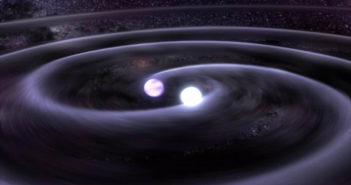
What does the afterglow of a binary neutron star merger look like? Simulations can give us a fairly good approximation.
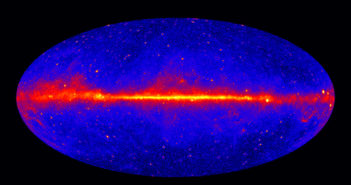
The disk of the Milky Way glows in high-energy gamma-ray photons — but where does this diffuse emission come from?