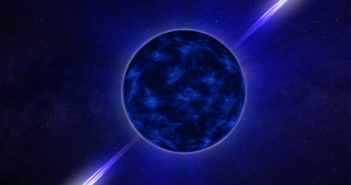
More Insight into Neutron Star Interiors
Recent X-ray observations of an enormous neutron star provide clues to its interior structure.

Recent X-ray observations of an enormous neutron star provide clues to its interior structure.
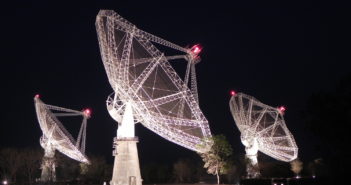
Frenzied star formation in our universe slowed 8–10 billion years ago. A recent study explores how much fuel these galaxies had available for making stars.
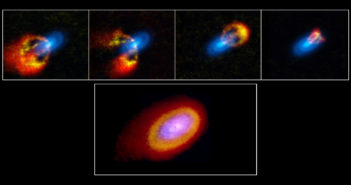
How much matter is available to form baby planets in disks around young stars? Scientists have demonstrated a new approach to weighing disks.
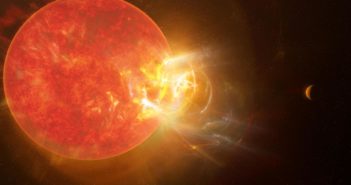
Scientists recently reported on the largest flare ever recorded from our nearest neighboring star, Proxima Centauri.
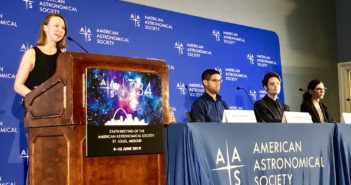
We’re excited to welcome planetary scientist Kerry Hensley to the staff as a member of our communications team and an editor of AAS Nova.
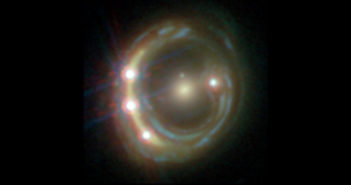
Astrobites reports on the most distant known quasar in the universe that’s lensed via a cosmic house of mirrors.
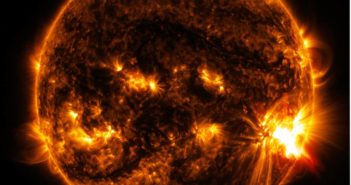
Solar activity sometimes stays trapped close to the Sun’s surface — but sometimes it breaks free in enormous eruptions. When should we expect the worst?

As of 1 January 2022, all AAS journals will officially be fully open access. What does that mean for you?
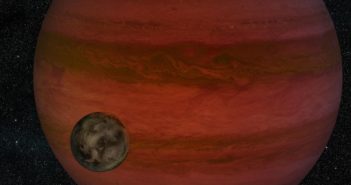
Astrobites reports on the search for exomoons orbiting rogue planets without host stars.
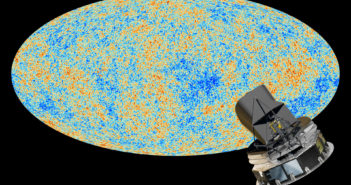
Certain features of the cosmic microwave background could help us measure how quickly the universe is expanding.
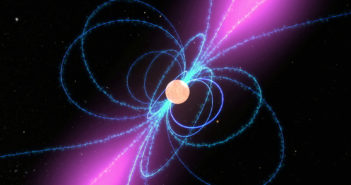
Astrobites reports on one pulsar that appears to lie unexpectedly far away from the galactic plane.
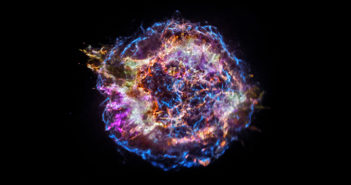
What are PeVatrons and how do we find them? Astrobites reports on results from an observatory that’s recently joined the hunt.