DPS 53: Days 1 and 2
This week we’re bringing you planetary science news from the 53rd AAS Division for Planetary Sciences meeting. Here are the highlights from Days 1 and 2!

This week we’re bringing you planetary science news from the 53rd AAS Division for Planetary Sciences meeting. Here are the highlights from Days 1 and 2!
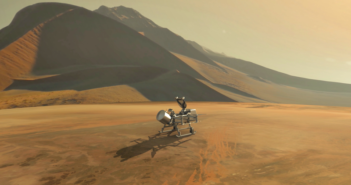
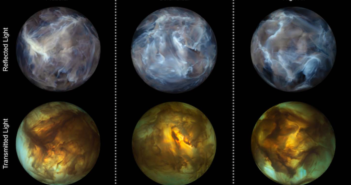
Astrobites reports on the selection of a landing site for NASA’s upcoming Dragonfly mission, which is slated to arrive at Saturn’s haze-shrouded moon, Titan, in 2034.
This week we’ll be bringing you updates from the 53rd DPS meeting, happening virtually anywhere, and other great planetary science content.
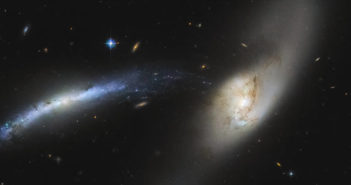
Carbon monoxide lends a helping hand in the search for star-forming gas beyond the Milky Way.
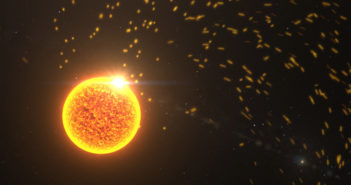
Space weather forecasting is challenging, but thousands of Earth-orbiting spacecraft could benefit from it. Is there a way to make our forecasts more accurate?
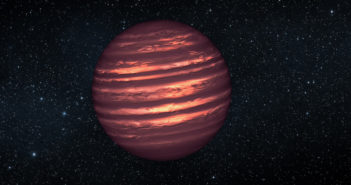
Astrobites reports on the discovery of a new — and especially chilly — brown dwarf by citizen scientists.
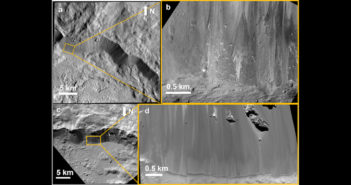
Avalanches of fine particles on dwarf planet Ceres may help this body to retain volatile material within its surface.
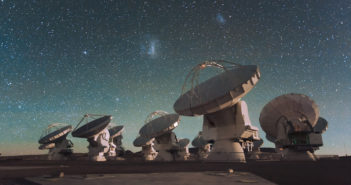
Infrared observations of a galaxy from the early universe hold insights on the evolution of galaxies and their central black holes.
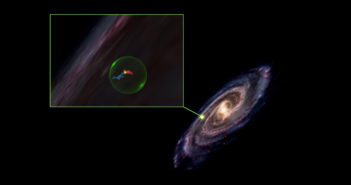
New studies of star forming clouds have expanded into the 3D universe — and now you can explore their results in 3D, too.
3D printing offers a new view of star-forming regions.
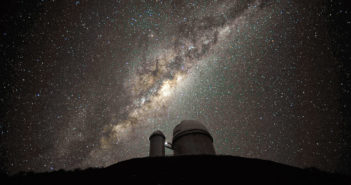
Gravitational microlensing allows astronomers to search for exoplanets throughout the Milky Way.
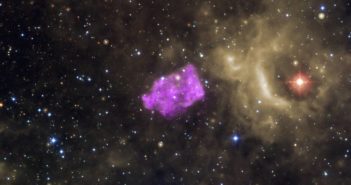
Titanium and chromium found in a supernova remnant suggest differences between exploding white dwarfs.