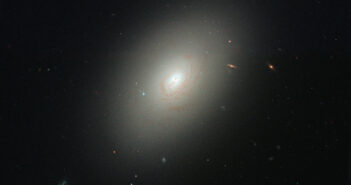
A New Class of Fast Transients Has Emerged in an Unlikely Place
Quiescent elliptical galaxies might harbor a new class of rare transients called luminous fast coolers, the physical origins of which remain unknown.

Quiescent elliptical galaxies might harbor a new class of rare transients called luminous fast coolers, the physical origins of which remain unknown.
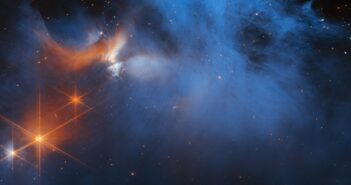
Researchers have detected glycolamide, a chemical cousin to the simplest amino acid necessary for life on Earth, in the interstellar medium for the first time.
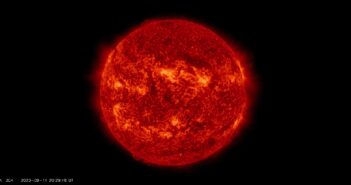
Astrobites reports on an interesting case of a solar radio burst occurring under unusual conditions.
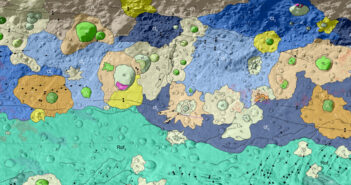
Researchers have mapped the surface of one of the largest objects in the asteroid belt, using a technique that marries different data types into one visualization.
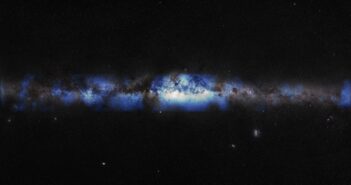
By the time you finish this sentence, trillions of neutrinos will have passed harmlessly through your body. But, where are all of them coming from? Astronomers still aren’t sure, but they’re starting to put limits on the answer.
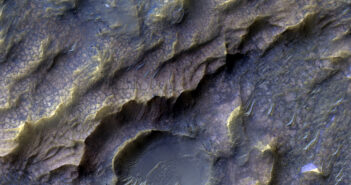
Lab experiments show that mixing Martian surface material into briny liquid helps water remain a liquid under colder, drier conditions.
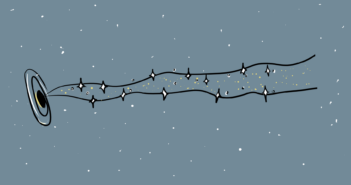
Astrobites reports on a mysterious stellar streak — could it be a wake left behind by a rogue black hole, or is it something else entirely?
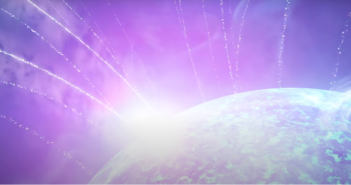
Fast radio bursts have puzzled astronomers for more than 15 years now, but they may be getting close to an explanation for these powerful flashes.
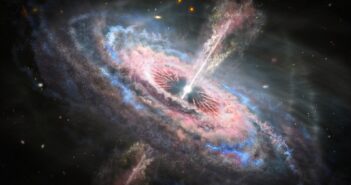
Comparing quasar observations made at key optical and infrared wavelengths shines a light on the best way to study quasar outflows with JWST.
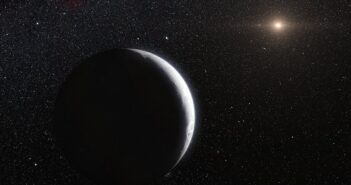
Astrobites reports on the possibility of finding Planet Nine (or Planet X) by searching for the subtle tugs that this planet would exert on spacecraft and asteroids in the solar system.
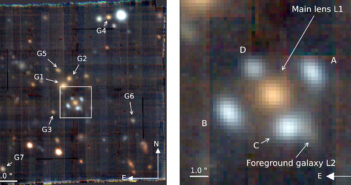
A rare kind of strongly lensed galaxy is now confirmed spectroscopically, adding to the short list of known Einstein Crosses.
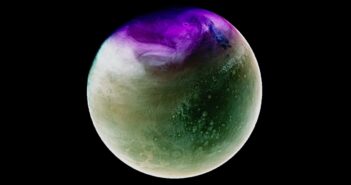
What happens to Mars when it’s struck by a coronal mass ejection? Two spacecraft on opposite sides of the planet gave us a unique perspective on the event.