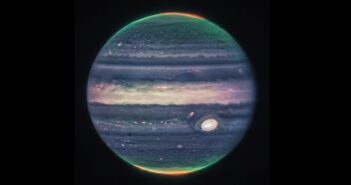
DPS–EPSC 2023: Day 3
On day 3, presenters tackled machine-learning challenges, icy planets and moons were scrutinized, and solar system images from JWST stole the show.

On day 3, presenters tackled machine-learning challenges, icy planets and moons were scrutinized, and solar system images from JWST stole the show.
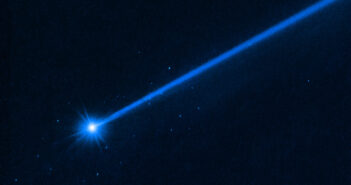
Plenary lectures on the second day of the joint AAS Division for Planetary Sciences and Europlanet Science Congress meeting brought insights into small solar system bodies, an asteroid redirection test, and the connection between comets and meteor showers.
We’re tuning in to this year’s joint meeting of the AAS Division for Planetary Sciences and the Europlanet Science Congress. Check out our summary of plenary sessions and press conferences on Day 1!
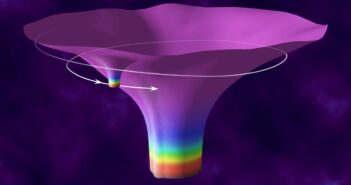
The gravitational waves emitted by stellar-mass black holes merging with one member of a supermassive black hole binary might be a prominent target for upcoming observatories like LISA.
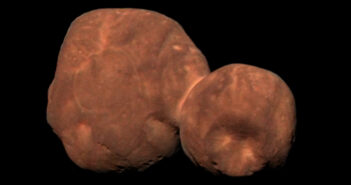
The New Horizons spacecraft flew by the Kuiper Belt object Arrokoth more than four years ago. Today, this fascinating, lumpy, bi-lobed object still holds plenty of mysteries.
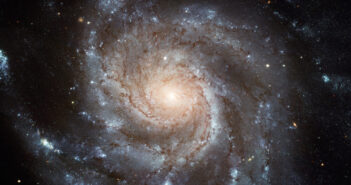
SN 2023ixf, which was discovered in May 2023 in the Pinwheel Galaxy, is the nearest extragalactic supernova observed in almost a decade. What did early data tell us about the event?
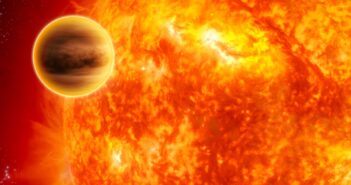
Astrobites reports on a way to find giant planets so close to their host stars that they’re usually obscured by the star’s glare.
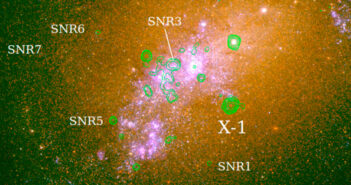
Researchers have identified the optical counterpart to an X-ray binary system, giving us clues about the nature of this extreme star system.
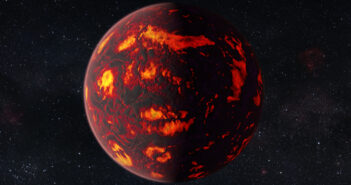
If you wanted to know what’s in the air of a lava planet, it wouldn’t be a good idea to go visit in person. Luckily, astronomers don’t have to.
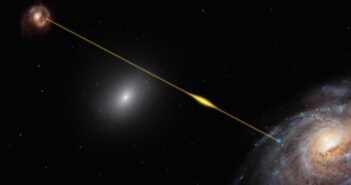
Researchers take a wide view of an unusual repeating fast radio burst to decode the burst’s dispersed signal.
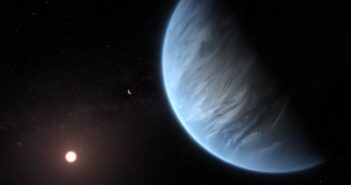
Astrobites reports on the prospect of using JWST to detect prebiosignatures: the molecules that indicate not life itself, but the possibility that life might someday form.
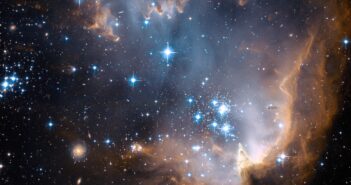
Why did a small galaxy stop forming stars less than 700 million years after the Big Bang? Cosmological simulations give some clues about why star formation stalled.