Features RSS

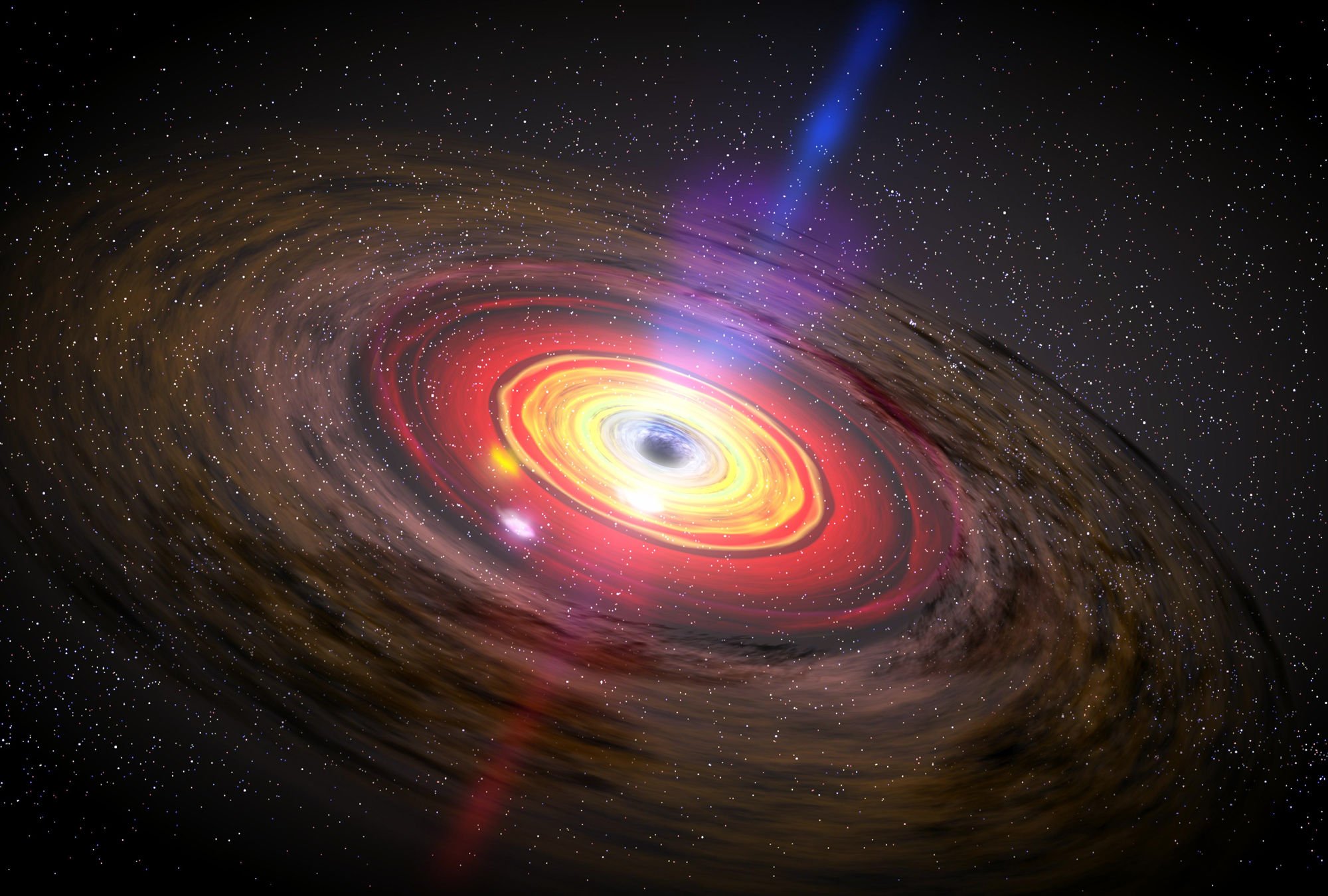
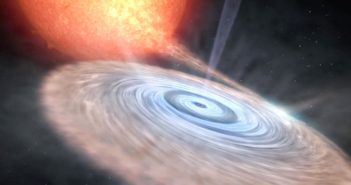
illustration of a bright accretion disk surrounding a black hole in the foreground, siphoning matter from a background, orange star.

Accreting, stellar-mass black holes are anything but predictable. A new study explores what’s happening as these feeding monsters erupt in violent outbursts and then settle down again.

Three panel illustration shows bright streams of gas appearing and then disappearing above a black hole and disk

This illustration shows some of the possible transient behavior of the gas flowing onto and away from a black hole in an X-ray binary. [NASA/JPL-Caltech]

An Unsteady Existence

Black hole X-ray binaries (BHXBs) consist of a stellar-mass black hole that siphons material from an ordinary companion star. As this material flows between the objects, it forms an accretion disk around the black hole. BHXBs shine in X-rays from the hot material of this disk, and from a mysterious corona — ultra-hot gas that exists in some unknown form above the disk.

BHXBs may accrete quietly and steadily much of the time, but on occasion, they undergo sudden outbursts, substantially brightening in X-rays. Unlike supermassive black holes, which evolve on extremely long timescales, stellar-mass black holes can change over just days or weeks — short enough for us to watch!

In a new study led by Jingyi Wang (MIT Kavli Institute), a team of scientists presents observations by NICER — an X-ray telescope installed on the International Space Station — of a BHXB throwing such a temper tantrum.

Reflections of a Transition

During an outburst, a BHXB undergoes state transitions, displaying changes in the X-ray luminosities and energies as either the corona or the disk takes over to dominate the emission. In addition to the X-ray changes, persistent radio emission from a slow and steady jet can be suddenly replaced by a short-lived radio flare that then subsides.

Despite many observations, we lack the details of what’s happening on small scales, close around the black hole. What form does the corona take? Does its size or extent change over time? What drives the state transitions? And how are the different components of this system — disk, corona, and jet — related, if at all?
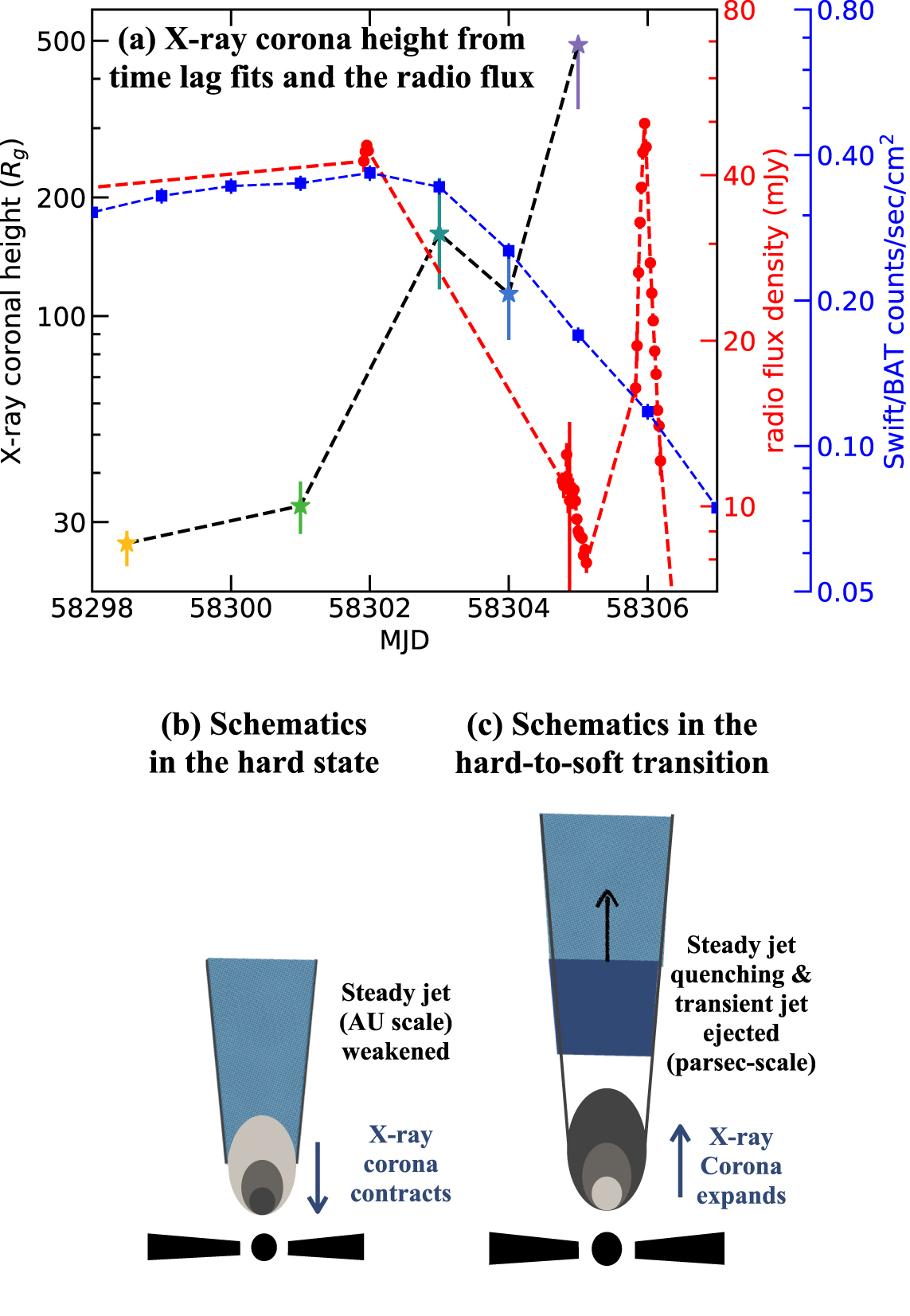
top plot shows height of corona over time. bottom two schematics show the relative locations and shapes of the corona, disk, and jet.

The top plot (a) shows the inferred corona height (black line) over the span of the outburst. The radio emission, including the flare, can be seen in red. The bottom two diagrams show the authors’ picture of the geometry of the black hole, disk, and corona at two points during the state changes: during the rise from quiescence (b), and at the end of the outburst when the jet base is ejected (c). Click to enlarge. [Adapted from Wang et al. 2021]

Wang and collaborators used NICER data of the BHXB system MAXI J1820+070 during a 2018 outburst to track the lag caused by light travel time between X-rays that arrived directly from the corona and light from the corona that was reflected by the disk before reaching us. By modeling the changes in this reverberation lag as the system underwent state transitions, the team could infer the geometry on the small scales we can’t observe, helping us to understand the tantrum.

A Connected Picture

Wang and collaborators show that the best explanation of NICER’s observations is that the height of the X-ray corona changes during the BHXB’s state transitions. They argue that the corona first contracts, and then rapidly expands during the outburst, preceding a radio flare by ~5 days.

Under the authors’ interpretation, these signs point to a neat picture of BHXB outbursts: a quietly accreting black hole has a disk and a steady jet, and the corona makes up the base of that jet. When the BHXB goes into outburst, it ejects that jet base as a bright knot in its final moments of outburst, before fading back to quiescence.

While this model isn’t yet definitive, this latest evidence points to a clear connection between the disk, jet, and corona of a BHXB. We’re sure to gain more insight ahead!

Citation

“Disk, Corona, Jet Connection in the Intermediate State of MAXI J1820+070 Revealed by NICER Spectral-timing Analysis,” Jingyi Wang et al 2021 ApJL 910 L3. doi:10.3847/2041-8213/abec79

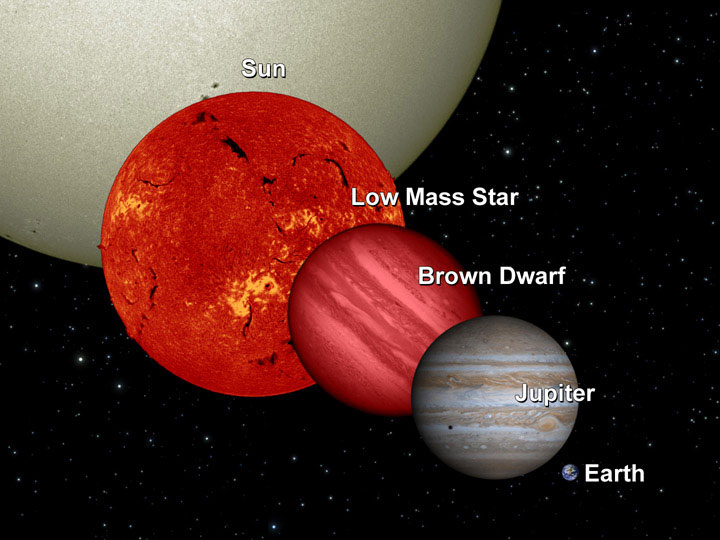
Illustration of a dark, purple, banded planet against the night sky.

It’s human nature to try to categorize the things we observe in the universe. But what happens when something doesn’t fit into the neat categories we’ve established? A new study explores one such object: an especially perplexing brown dwarf.

Illustration of five spheres of different sizes representing the relative sizes of the sun, a low-mass star, a brown dwarf, jupiter, and the earth.

Brown dwarfs are intermediate in size between the largest planets and the smallest stars. [NASA/JPL-Caltech/UCB]

A Hidden Population

Brown dwarfs — substellar objects that aren’t massive enough to fuse hydrogen in their cores — are an intriguing population. Not quite stars and not quite planets, these objects occupy an uneasy in-between space that’s worth studying further.

But the coldest brown dwarfs — which fall into spectral category Y and have effective temperatures below ~450 K — are a challenging population to study! These chilly objects don’t emit much light, and what little they do radiate is concentrated in the infrared near 5 µm. These objects are therefore difficult to observe from the ground, so we rely on space-based missions to discover the faint light from these objects.

An Accidental Find

Thus far, we’ve managed to detect around 50 of these cold Y dwarfs. To better categorize them, we plot them on color–color and color–magnitude plots to compare their brightnesses at different wavelengths. A recent discovery, however, isn’t behaving as expected.

WISE 1534–1043, nicknamed “The Accident” when it was found serendipitously in a field imaged by the Wide-field Infrared Survey Explorer, is a lone brown dwarf speeding across the sky. An article led by J. Davy Kirkpatrick (Caltech) now presents new, follow-up observations of this puzzling object collected with the Hubble Space Telescope and with the Keck Observatory in Hawaii.

Defying Categorization

Two plots showing comparison of two different colors and J-band magnitude vs color for known brown dwarfs.

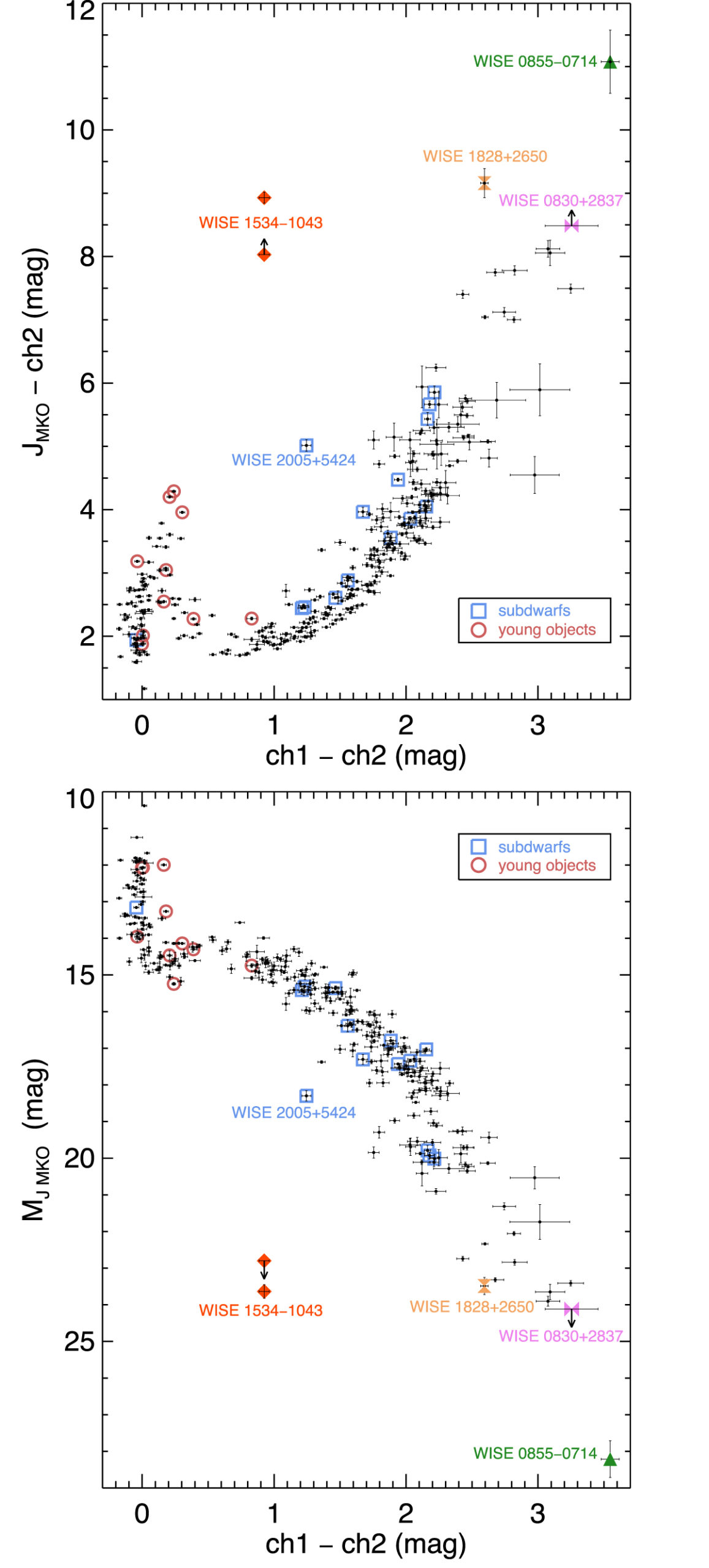
Color–color (top) and color–magnitude (bottom) plots exploring WISE 1534–1043’s  photometric properties (red data points, plotted using two different models) show that its behavior is unique among known, nearby, cold brown dwarfs. [Adapted from Kirkpatrick et al. 2021]

These new observations pinpoint WISE 1534–1043’s location — just ~50 light-years away — and confirm its bizarre observational properties. Looking at the color–color and color–magnitude plots to the right, it’s clear that WISE 1534–1043 lies in a quadrant entirely on its own.

Measurements of The Accident’s absolute brightness at different wavelengths are all in line with the coldest known Y dwarfs. But its relative colors (as shown by the W1 – W2, ch1 – ch2, and J – ch2 measurements in the plots) and magnitudes fall entirely outside of the range of known brown dwarfs.

Identity Options

What could be the explanation for these enigmatic properties? Kirkpatrick and collaborators use their observations to consider four possible identities for The Accident:

  1. An extremely low-metallicity, old, cold brown dwarf
  2. An extremely low-mass, low-gravity, young brown dwarf
  3. An ejected exoplanet
  4. An ultracold stellar remnant (like a white dwarf or an exotic ablated stellar core)

Of these options, the authors determine that the first is the most likely. If WISE 1534–1043 is old and remarkably low-metallicity, then the outer layers of its atmosphere would have decreased opacity, allowing us to see deeper into it and potentially explaining the unusual photometric properties. This could mean that The Accident represents the first known Y-type subdwarf — a brand new category of star.

“Verification, refutation, or further befuddlement” should be possible in the future with observations from the upcoming James Webb Space Telescope, suggest the authors. In the meantime, the refusal of objects like The Accident to fit neatly into boxes continues to keep us on our toes!

Citation

“The Enigmatic Brown Dwarf WISEA J153429.75-104303.3 (a.k.a. “The Accident”),” J. Davy Kirkpatrick et al 2021 ApJL 915 L6. doi:10.3847/2041-8213/ac0437

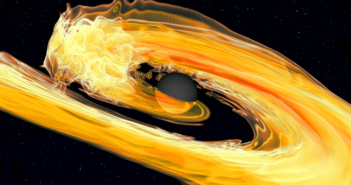
Still from a simulation showing a tidal stream of neutron-star matter accreting onto a black hole.

In the past six years, we’ve observed black holes merging with black holes and neutron stars colliding with neutron stars. Now, the universe is mixing things up: we’ve finally made the first definitive detection of a black hole merging with a neutron star.

What We’d Previously Seen

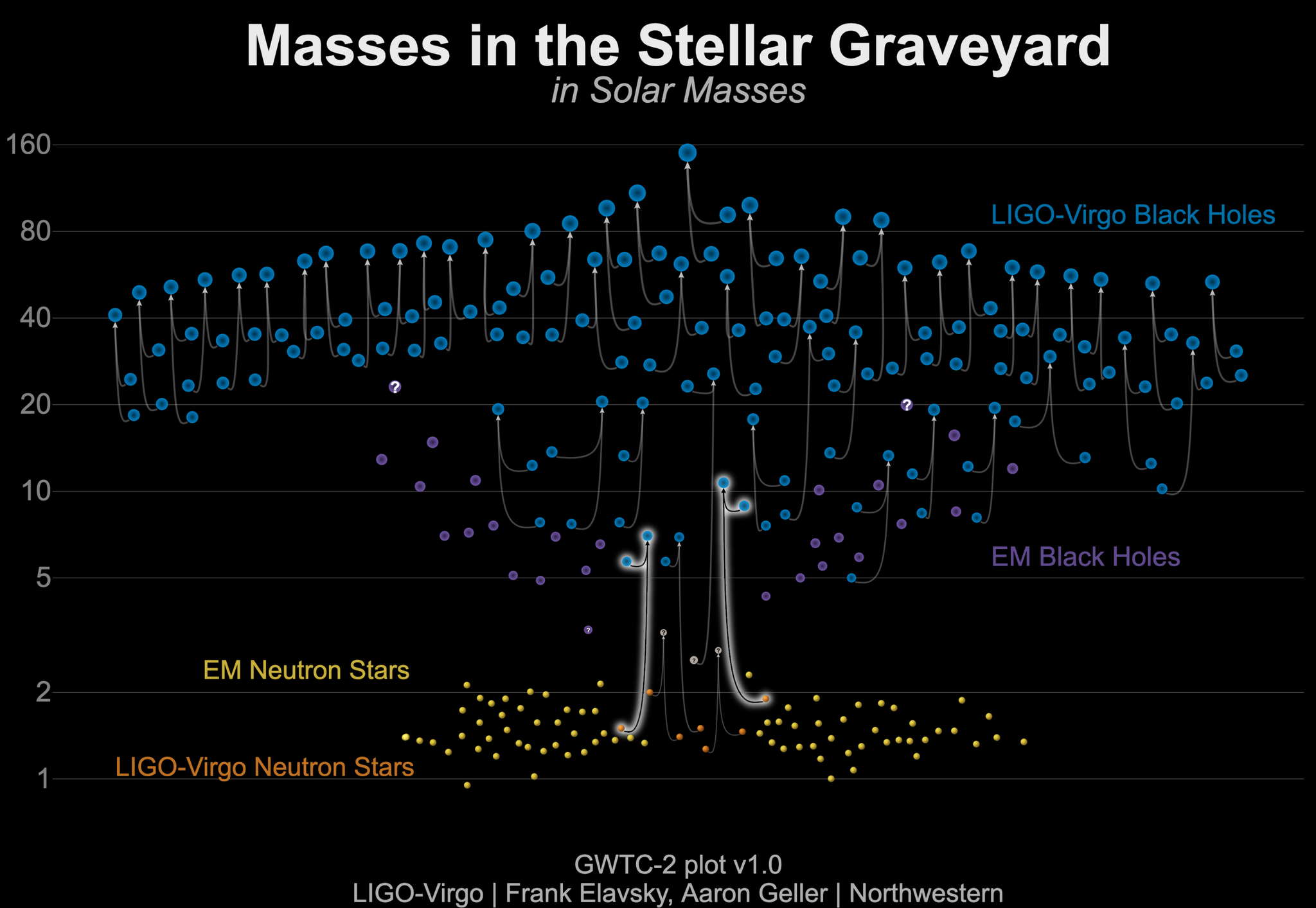
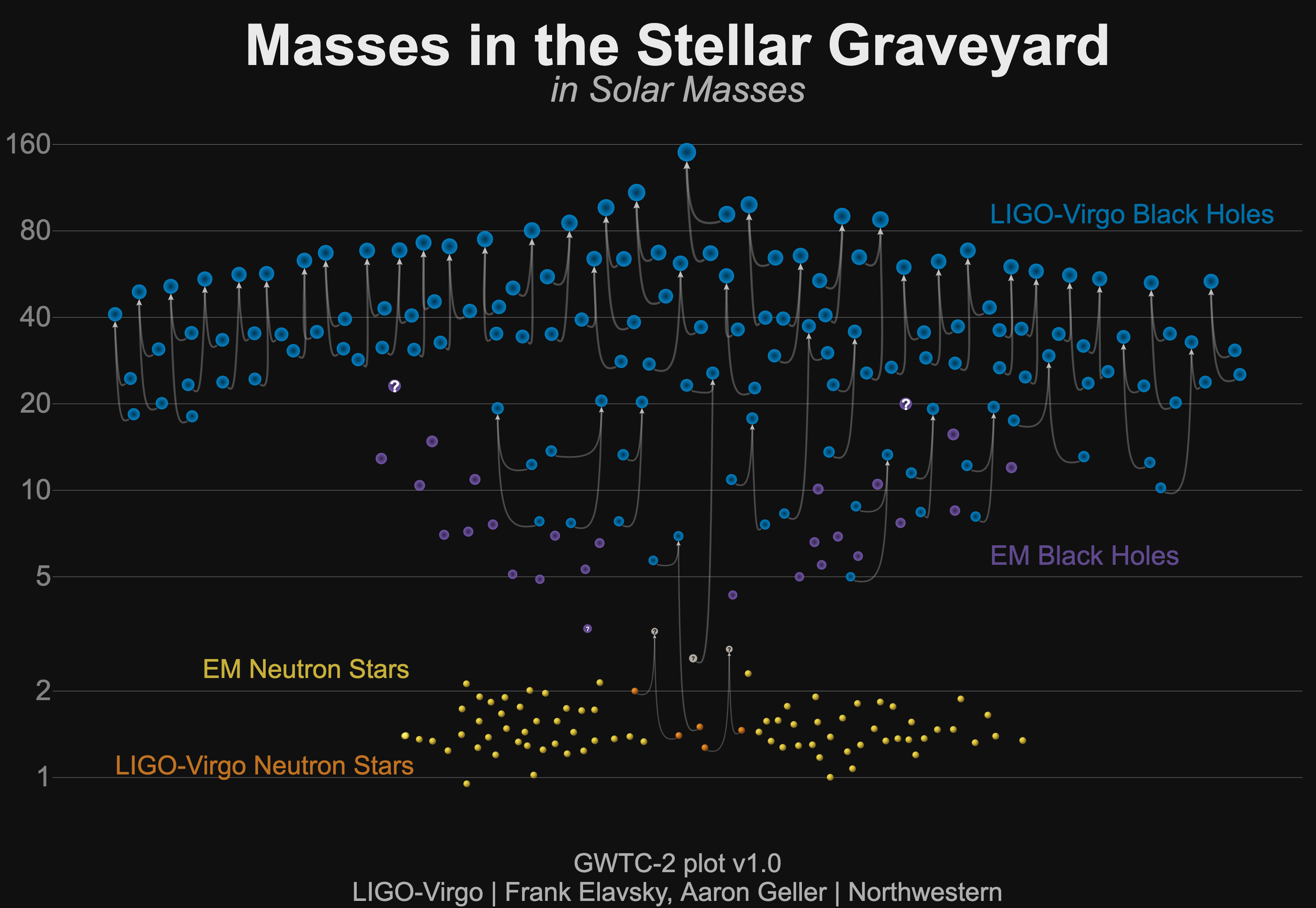
Plot showing masses of observed black hole and neutron star binary mergers. Plot includes black holes detected through electromagnetic observations (purple), black holes measured by gravitational-wave observations (blue), neutron stars measured with electromagnetic observations (yellow), and neutron stars detected through gravitational waves (orange).

The rapidly expanding “stellar graveyard”, a plot that shows the masses of compact objects observed via gravitational waves and other means. GW200105 and GW200115 are highlighted toward the center of the collection. Click to enlarge. [LIGO-Virgo/Frank Elavsky, Aaron Geller/Northwestern]

Gravitational-wave detectors like LIGO, Virgo, and KAGRA are designed to detect space-time ripples from compact objects in inspiraling binary pairs. In LIGO/Virgo’s first two and a half observing runs (O1, O2, and O3a), the detectors identified 48 instances of black hole–black hole mergers and 2 neutron star–neutron star mergers. But theory predicts that black hole–neutron star mergers should occur too!

Now, the LIGO/Virgo collaboration is releasing some of the first results from the second half of its third observing run (O3b) — and these results include two detections of a black-hole-mass object colliding with a neutron-star-mass object.

What Was Found

Using the LIGO detectors in Livingston and Hanford and the Virgo detector in Europe, the collaboration spotted two separate events spaced 10 days apart:

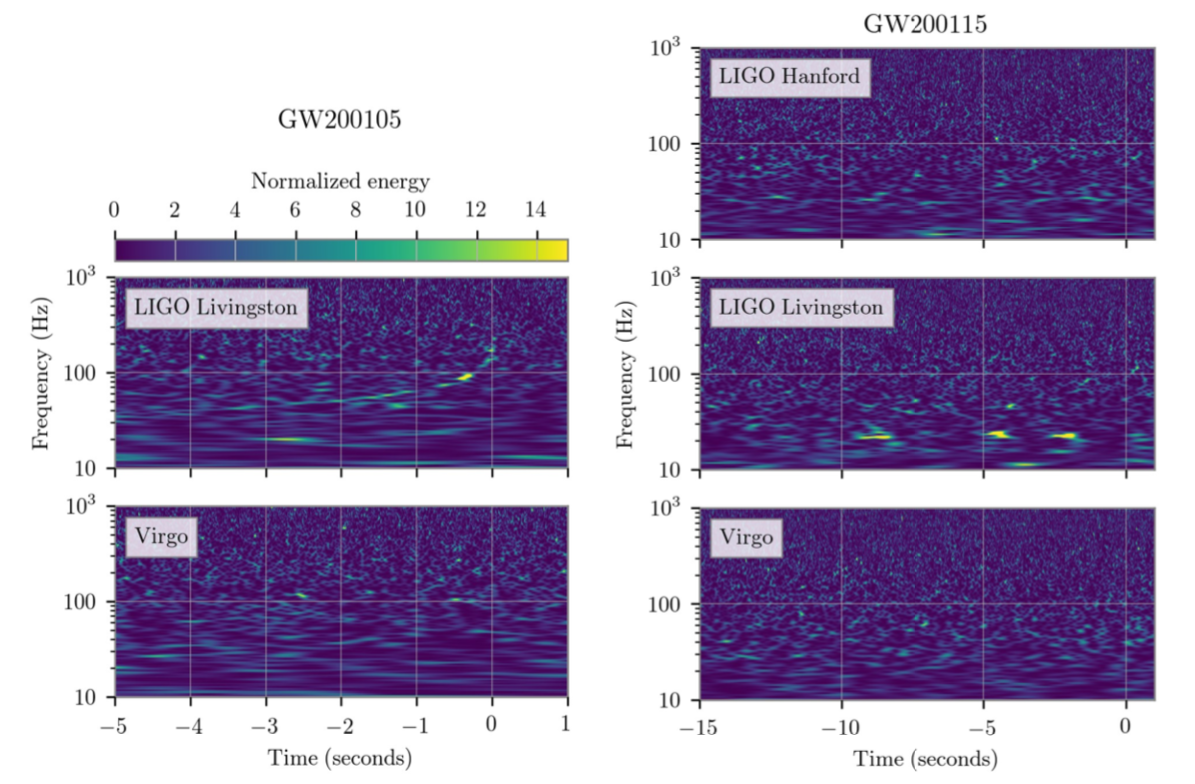
  • GW200105 was detected by LIGO Livingston and Virgo (LIGO Hanford was temporarily offline at the time), and the signal is consistent with a black hole of 9 solar masses colliding with a neutron star of 1.9 solar masses.
  • GW200115 was detected by all three LIGO/Virgo detectors, and the signal is consistent with a black hole of 6 solar masses colliding with a neutron star of 1.5 solar masses.
Five plots show the time–frequency data in the different detectors for the two merger signals.

The gravitational-wave signals in each detector for GW200105 and GW200115. Click to enlarge. [Abbott et al. 2021]

Thus far, no electromagnetic signatures have been detected in association with either event — but if the neutron stars were swallowed whole by the black holes instead of first being torn apart, no such signatures are expected.

Without electromagnetic evidence to prove that the secondaries of these two events were neutron stars, we instead rely on our measurements of the masses from the gravitational-wave signals. Comparing these measurements to the masses of known neutron stars in our galaxy, it’s clear that the secondaries both fall comfortably in the expected range of masses for neutron stars.

What We Can Learn from This

While scientists are excited to have finally completed “the family picture” of compact object mergers, GW200105 and GW200115 are more than a milestone — they also carry valuable information.

First, the combination of these two signals has allowed scientists to start estimating the rate of black hole–neutron star mergers. Assuming GW200105 and GW200115 are representative of the broader population, the authors infer that ~12–120 of these mergers occur per Gpc3 per year (that’s roughly one per month within a distance of a billion light-years).

black holes in a globular cluster

Still from a simulation showing how black holes might interact in the chaotic cores of globular clusters. Black holes are expected to dominate these dense cores, so black hole–neutron star collisions are rarer via this formation channel. [Carl Rodriguez/Northwestern Visualization]

In turn, this rate provides clues as to how these binary systems may have formed. Different formation channels predict different merger rates; right now, the estimated rate is most consistent with that predicted from binaries formed in isolation or in young star clusters. In contrast, dynamical formation of binaries in dense nuclear star clusters and globular clusters predicts a lower merger rate.

It’s too early to draw strong conclusions, however, and we’ll be able to better understand the relative contributions of these different channels as we make more detections of black hole–neutron star binaries in the future! With KAGRA recently online and LIGO/Virgo soon returning with additional upgrades, we can hope for many more such discoveries ahead as we continue to expand our view of the gravitational-wave universe.

Citation

“Observation of Gravitational Waves from Two Neutron Star–Black Hole Coalescences,” Abbott et al. 2021, ApJL, 915, L5. doi:10.3847/2041-8213/ac082e

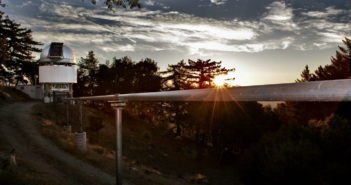
An open telescope dome is seen at the left of the image, with a pipe leaving it on the right. The pipe stretches across the entire image, moving into the foreground. The rising sun is roughly in the center of the image. The background is moderately populated with trees.

Starspots are regions on the surface of a star that are cooler than their surroundings. Temperature affects brightness, so starspots can significantly alter the overall appearance of a star even when individual starspots can’t be distinguished. But if we characterize starspots in detail, we should be able to account for their effects.

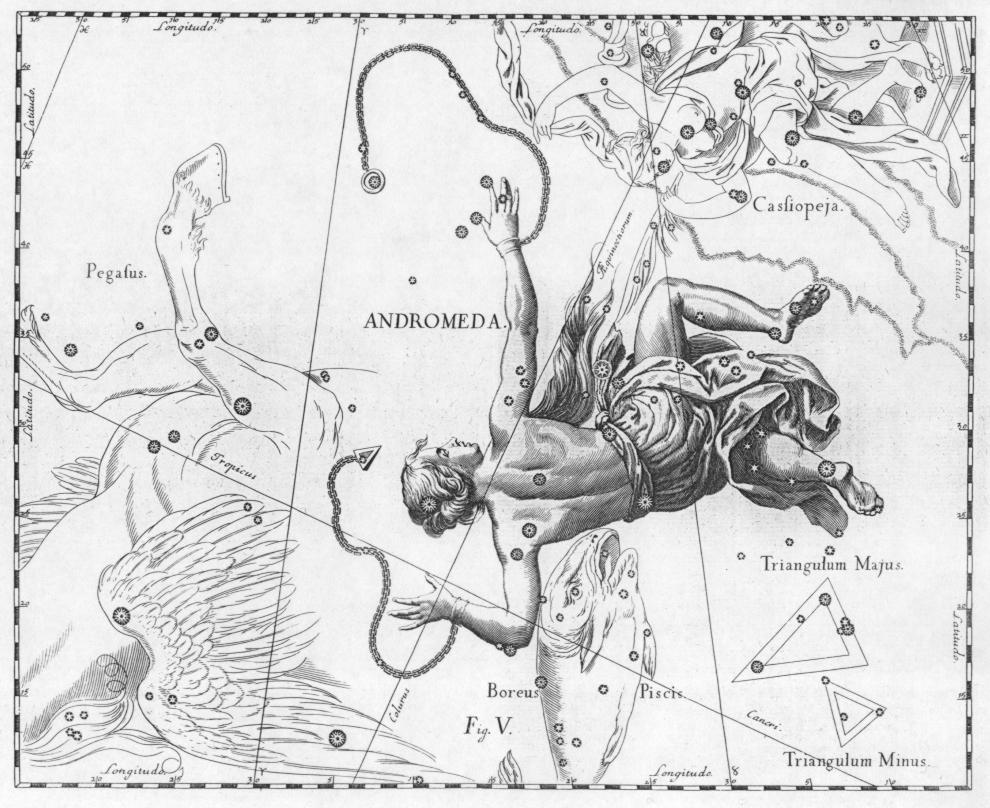
The constellation Andromeda from Uranographia by Johannes Hevelius. λ Andromedae is just to the left of Andromeda’s thumb on her outstretched arm. [Torsten Bronger]

Old and New Ways of Finding Starspots

Starspots are thought to be caused by stellar magnetic activity, so as much as they can obscure true stellar properties, they can also help us learn about the interiors of stars. We’ve also noticed that our Sun’s starspots behave very differently than starspots on other stars, adding another motivation to examine these phenomena on other stars.  

Until recently, starspots have been studied through indirect methods like light curve modeling and Doppler imaging, which measures changes in stellar spectra caused by magnetic fields. These techniques have broadened our understanding of starspots, but they are also hamstrung by requiring certain assumptions about the stars being observed.

Direct imaging of starspots has been made possible through a relatively new technique called long-baseline optical/near-infrared interferometry (LBI). A recent study led by James Parks (Georgia State University) uses this technique to observe starspots on λ Andromedae, a giant star in a binary with a less massive companion.

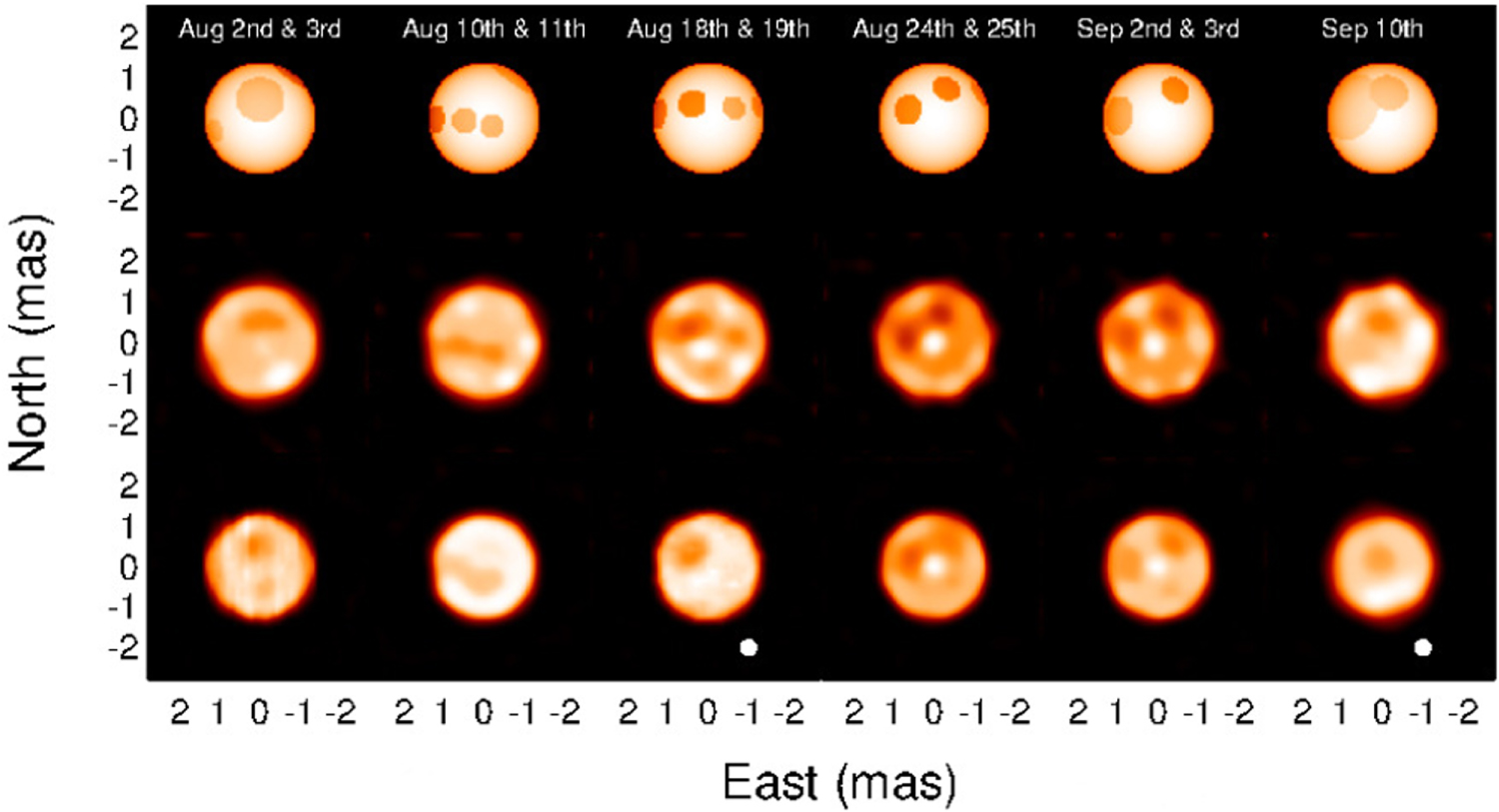
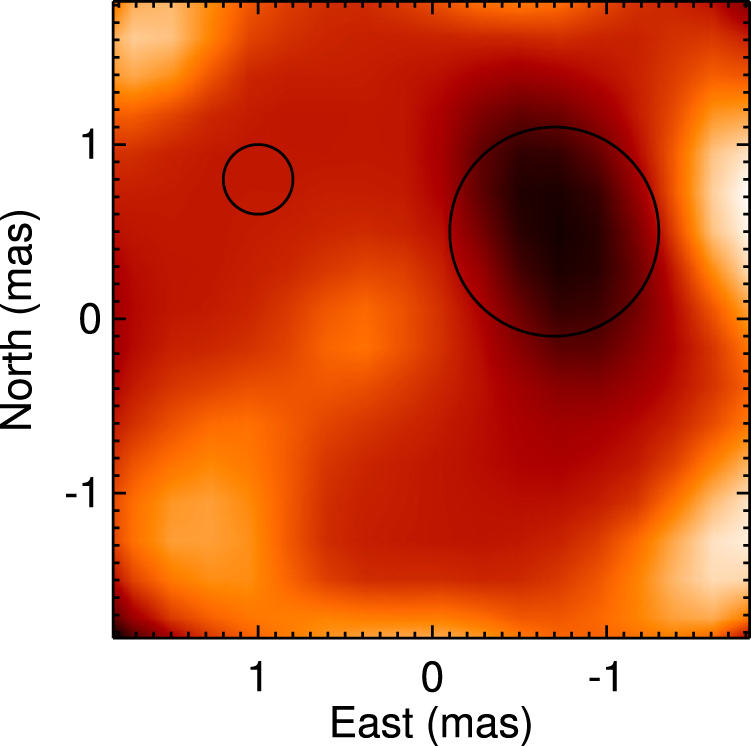
Stellar surface images based on observations taken in 2010. The top row is the starspot model images, the middle row is the observations, and the bottom row is the simulated images. The white dot is the resolution of the CHARA array, which was used to take the observations. The starspot models were constructed independently of the simulated images and vice-versa. [Parks et al. 2021]

Telescopes in Tandem

Interferometry is an imaging technique that combines the input of multiple telescopes as though they were a single, much larger telescope. LBI refers to interferometry conducted with telescopes that are spread out across a fairly large distance. For instance, the Event Horizon Telescope image of M87’s central black hole was taken by eight radio telescopes spread out across an entire hemisphere! 

To image the starspots on λ Andromedae, Parks and collaborators used observations taken by the Center for High Angular Resolution Astronomy (CHARA) array, which consists of six 1-meter optical telescopes arranged in a Y-shape. The highest resolution allowed by these observations was 0.4 milliarcseconds (for context, the Moon spans roughly 0.5 degrees, or nearly 2 million milliarcseconds). Data was also taken on the 0.4-meter telescope at Fairborn Observatory to obtain light curves of λ Andromedae that were roughly concurrent to the LBI observations. 

Close-up of a possible starspot in one of the image reconstructions. The larger circle indicates the region that was used to determine starspot properties, and the smaller circle indicates the region that was used to study the calmer surroundings of the spot. [Parks et al. 2021]

Two Different Ways to Model Starspots

Parks and collaborators used the CHARA observations to model λ Andromedae’s starspots in two different ways. The first method was to model the star’s surface while allowing for starspots, where the resulting models were informed by the CHARA observations. The second way was image reconstruction, which uses the observing conditions during which images were taken to determine the underlying astrophysical components. The advantage of using image reconstruction over surface modeling is that image reconstruction requires fewer assumptions about the object in question. However, false artifacts can be generated during the reconstruction process.

Both methods found between one and four starspots on λ Andromedae at any given time. The starspots also pointed to a rotation period that matched the period determined from the concurrent light curves. Overall, the study was a successful demonstration of using LBI to image starspots on λ Andromedae and, excitingly, more detailed studies are to follow!

Citation

“Interferometric Imaging of λ Andromedae: Evidence of Starspots and Rotation,” J. R. Parks et al 2021 ApJ 913 54. doi:10.3847/1538-4357/abb670

For decades, scientists have used networks of pulsars to search for a faint, background gravitational-wave signal that should pervade our universe. What have they found so far, and what can we expect in the future? A new publication details the possibilities.

Humming in the Background

Mrk 739

Mrk 739 is an example of a galaxy merger where the two nuclei at the center of the newly-formed galaxy are still in the process of merging. [SDSS]

In recent years, the LIGO and Virgo gravitational-wave detectors have clocked dozens of observations of stellar-mass black hole binary mergers. But what about larger black holes?

When galaxies collide, the supermassive black holes at their centers should also form binaries, inspiral, and merge. The combination of all inspiraling supermassive black hole binaries across the universe should produce a deep background hum of gravitational waves — a signal that we could detect, with the right tool. Enter: pulsar timing arrays (PTAs).

Cosmic Clocks

PTAs rely on the remarkably consistent timing of flashes of light from a network of spinning neutron stars — pulsars — to measure the stretching of the spacetime in which these pulsars are embedded.

pulsar timing array

An artist’s illustration showing how a network of pulsars could be used to search for the ripples in space-time. [David Champion/NASA/JPL]

As gravitational waves pass through spacetime, signals from the various pulsars in the network have to travel longer or shorter distances to reach us. PTAs measure those timing differences to search for a stochastic background gravitational-wave signal.

A Hint of a Signal

How are PTAs doing so far? The North American Nanohertz Observatory for Gravitational Waves (NANOGrav) has been searching for the gravitational-wave background for more than a decade — until now, without success. But the longer we observe the timings of a set of pulsars, the more subtle a signal we can detect. 

The 12.5-year dataset released this year offers a first glimpse of hope: this most sensitive dataset yet shows signs of a signal consistent with the predicted gravitational-wave background. Definitive evidence of the background will require longer observations with NANOGrav to beat down the noise and reveal an expected set of correlations between pairs of pulsars.

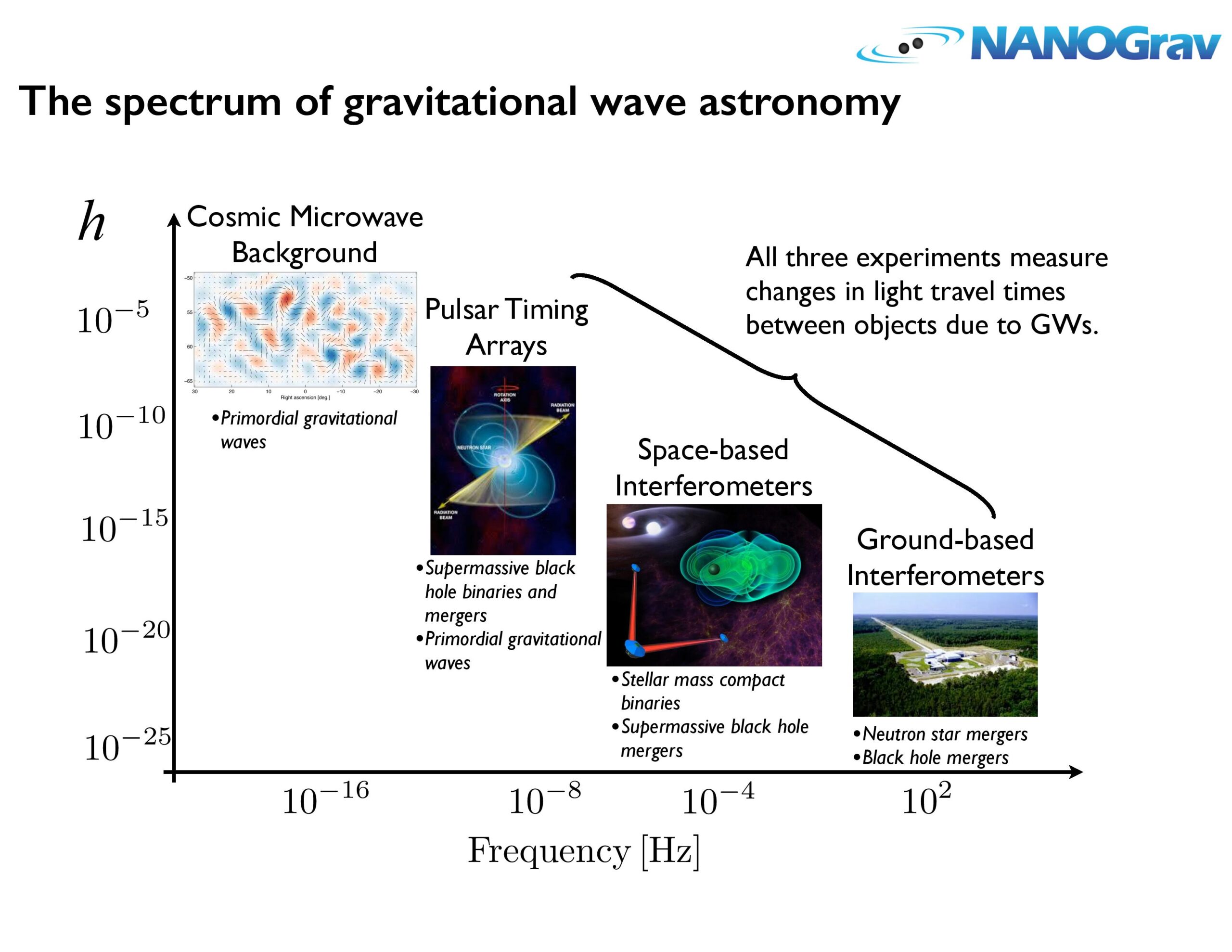
Plot of the spectrum for gravitational wave astronomy shows where nanograv fits in relative to LIGO and LISA.

The gravitational wave spectrum and detectors. Here, frequency of the gravitational waves is plotted against strain (the fractional change in the separation between objects caused by the passage of the gravitational wave). Click to enlarge. [NANOGrav]

So when can we hope to robustly detect this signal, and what will it tell us? In a new publication led by Nihan Pol (Vanderbilt University, West Virginia University), a team of scientists emulates and extends the NANOGrav dataset into the future and tries to recover injected gravitational-wave-background signals to learn what we can expect.

Milestones Ahead

Pol and collaborators identify three key milestones that we should soon achieve.

  1. Robust evidence of the gravitational-wave background should be possible with 15–17 years of data — only another 2–5 years beyond the 12.5-year dataset already published.
  2. The signal detected at this time will already contain enough information to identify whether the gravitational-wave background is caused by supermassive black hole binaries, as anticipated, or if it instead has more exotic origins, like primordial black holes or cosmic strings.
  3. If the signal is caused by supermassive black holes, the initial detection will also be sufficient to distinguish between different population models for supermassive black hole binaries.

This work illustrates that NANOGrav has the potential to provide us with a wealth of information in the next few years! What’s more, those results will come even faster with the addition of new pulsars to NANOGrav’s network, or the combination of data from multiple PTAs. Gravitational-wave astronomy is truly only just getting started!

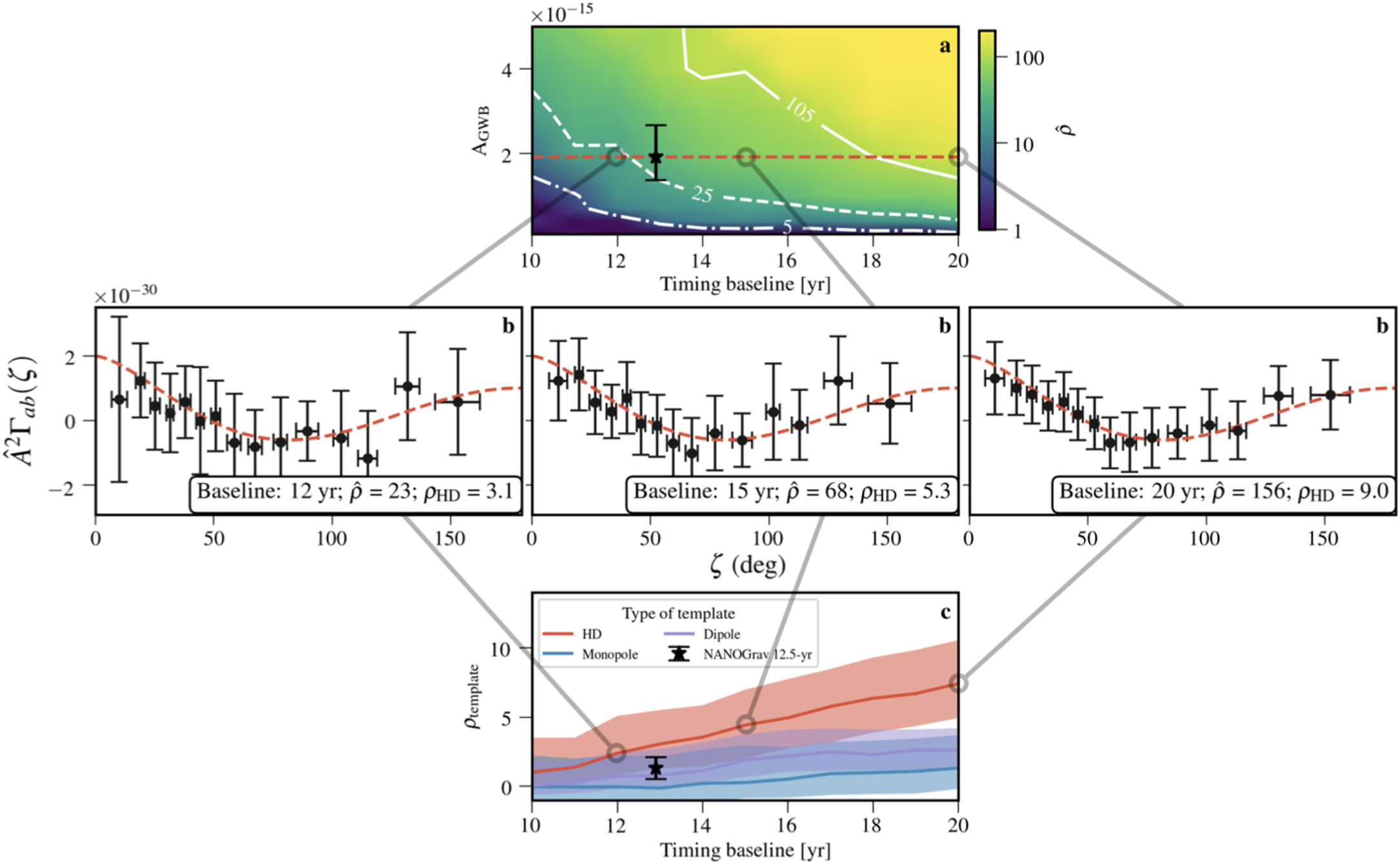
Five plots: a single one at the top, three in the middle, and one at the bottom. Description in the text.

Top: Evolution of the signal-to-noise ratio as a function of time observing the pulsars. Middle: The predicted correlation signal between pulsars after 12 years, 15 years, and 20 years, compared to the model (dashed red line) showing the presence of a gravitational-wave background. Bottom: The signal-to-noise ratio of the correlation signal as a function of observing time. [Pol et al. 2021]

Citation

“Astrophysics Milestones for Pulsar Timing Array Gravitational-wave Detection,” Nihan S. Pol et al 2021 ApJL 911 L34. doi:10.3847/2041-8213/abf2c9

illustration of an active galactic nucleus with dusty disk and polar winds.

What’s going on deep in the centers of active galaxies, close around the supermassive black holes feeding off of their surroundings? A new study uses infrared observations to explore this inner region in one active galaxy.

A Unified Picture?

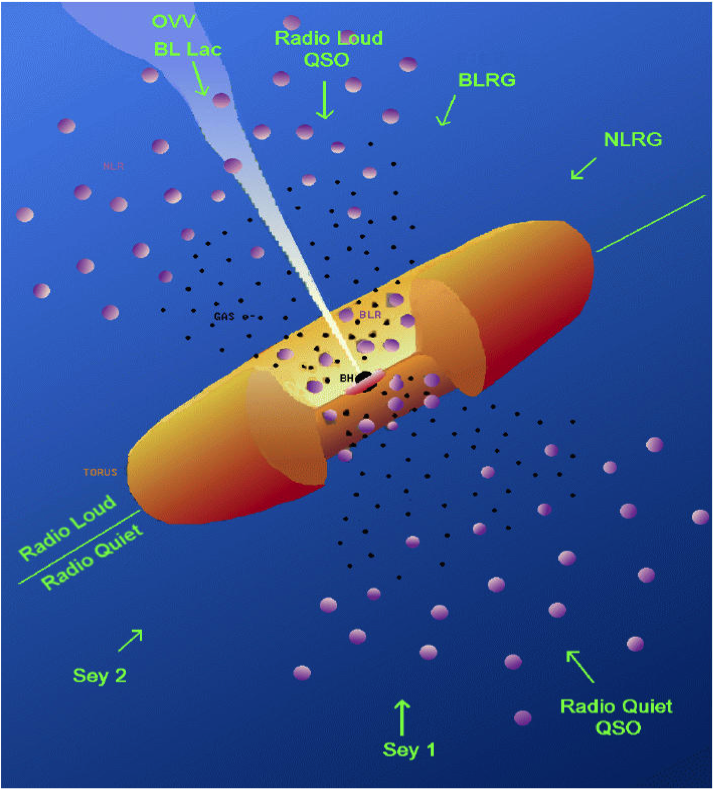
Illustrative schematic showing a torus surrounding clumps of gas around a central black hole. Different viewing angles are labeled.

The geometric dependence of AGN types in the unified AGN model. Type 1 AGN are viewed from an angle where the central engine is visible. In Type 2 AGN, a dusty torus obscures the central engine from view. [Urry & Padovani, 1995]

We know that active galactic nuclei (AGN) consist of a supermassive black hole accreting surrounding material and shining brightly across the electromagnetic spectrum. But the structure of the gas and dust close around the black hole, and the causes of the different emission we see, have remained a topic of debate.

Decades ago, scientists proposed that Type 1 and Type 2 AGN — two different categories of active galaxies with different observational properties — might be the same objects viewed from different angles. This unification scheme relies on the presence of a dusty torus — a puffed-up, donut-like dust structure close to the black hole. In this model, the torus obscures the inner, emission-line-producing gas from some viewing angles, changing the appearance of the AGN based on its orientation.

But recent infrared observations have challenged this view. With powerful mid-infrared telescopes, we’ve taken a closer look at the inner few hundred light-years of nearby active galaxies — and instead of revealing an obscuring torus of dust, these observations have shown polar dust structures.

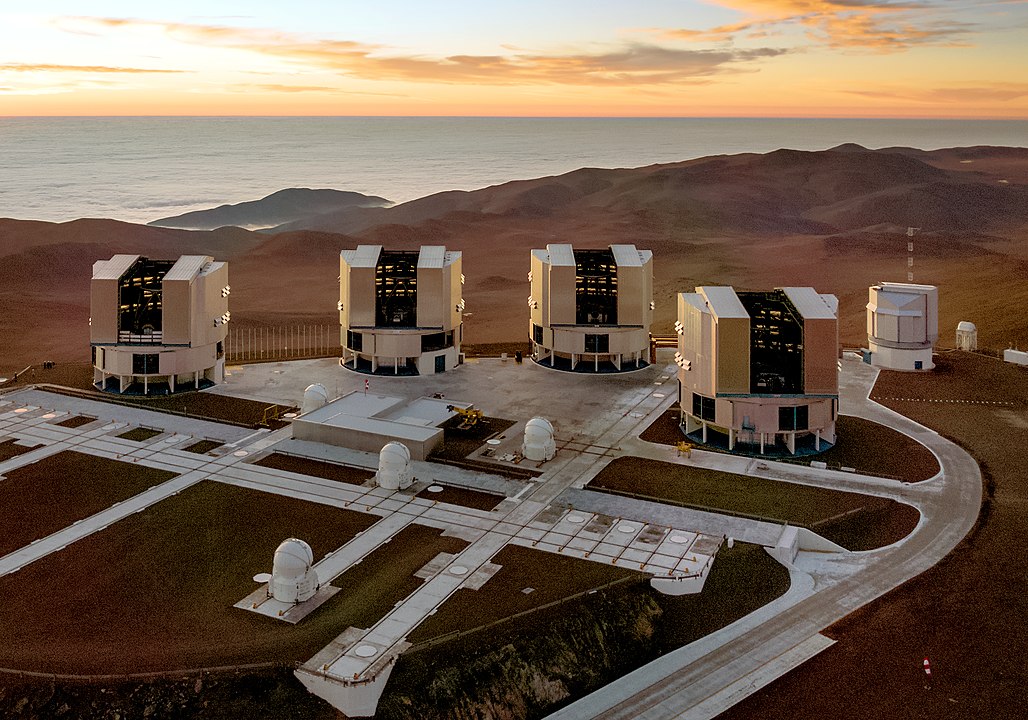
Aerial photograph of a complex of telescopes on a mountainside over the ocean.

The Very Large Telescope Interferometer (VLTI) in Chile. [ESO/G. Hüdepohl]

A Search for Distant Dust

How can we explain these observations? Theorists have a solution: in the disk–wind model, the dust close to the black hole is arranged in a hot, equatorial disk rather than a torus. Radiation pressure then blows some of this dust off into a cooler wind from the poles, producing the polar structures we’ve seen in mid-infrared observations. Obscuration comes from the disk and the launch region of the wind.

The equatorial disk in this model should lie on scales too small to have been previously observed in mid-infrared — but there’s a new tool on the scene! GRAVITY, an interferometric instrument on the Very Large Telescope Interferometer in Chile, operates in the near-infrared. This makes it the perfect instrument to search for the very hot dust that would lie in a disk at the heart of an AGN.

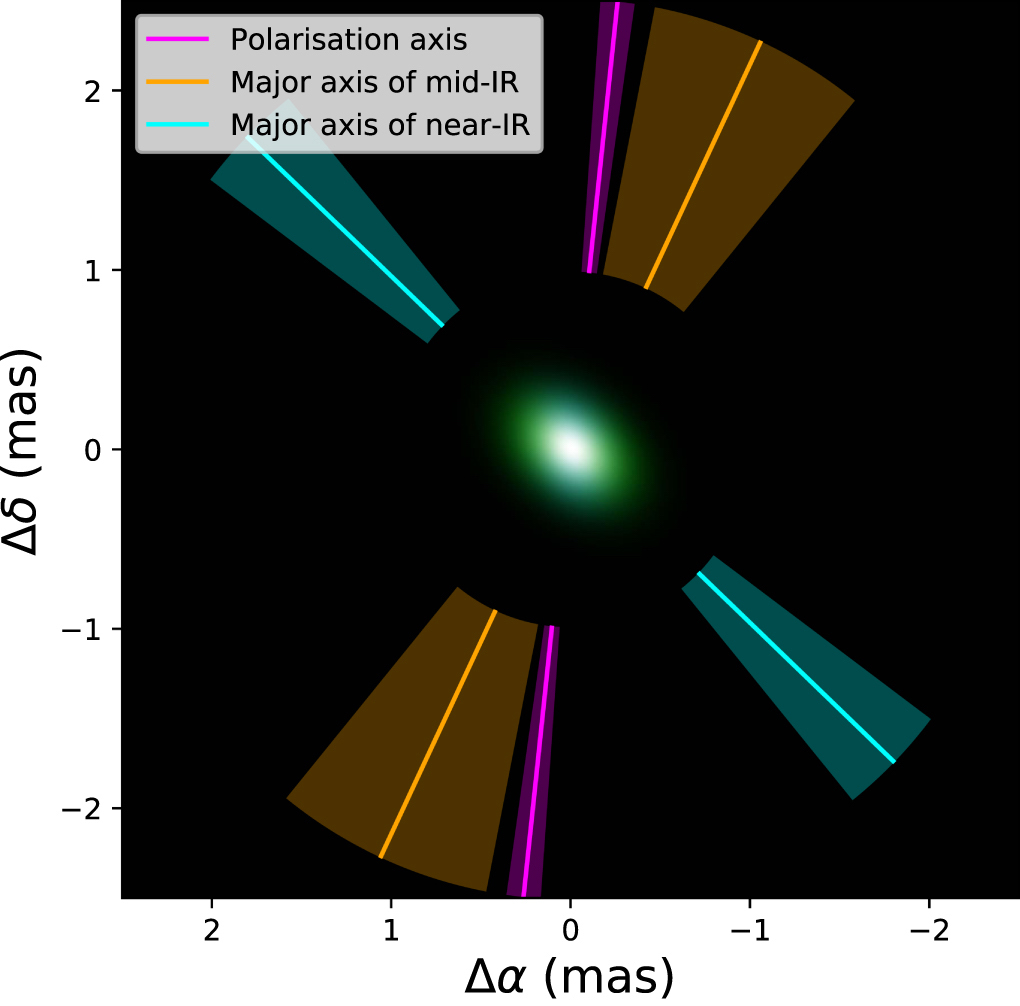
Plot of the fitted near-infrared data shows an elongated ellipse perpendicular to a designated polar region.

The Gaussian fits to the near-infrared emission show an elongated structure (center) oriented along the AGN’s equator. This is in contrast to the polar-aligned mid-infrared emission (orange region) that may represent a disk wind. [Adapted from Leftley et al. 2021]

In a new study led by James Leftley (University of Southampton, UK; Côte d’Azur University, France; ESO, Chile), a team of scientists has now used GRAVITY to obtain near-infrared observations of the center of ESO 323-G77, a local active galactic nucleus.

Getting to the Heart of the Matter

Through careful analysis and modeling, Leftley and collaborators interpret their observations on scales of less than a light-year (for an object that’s hundreds of millions of light-years away!). The result? The near-infrared observations are consistent with an extended, equatorially aligned hot dust disk. The scale of this disk neatly matches the size predicted in disk–wind models.

Though the data are still too sparse and noisy to rule out the torus model in favor of the disk–wind model, these observations represent an important step in understanding how dust may be distributed in the heart of active galaxies.

Citation

“Resolving the Hot Dust Disk of ESO323-G77,” James H. Leftley et al 2021 ApJ 912 96 6. doi:10.3847/1538-4357/abee80

black holes in a globular cluster

Since the first merger of two black holes detected in 2015, the LIGO/Virgo gravitational-wave detectors have observed a total of 47 confident collisions of black holes and neutron stars through the end of September 2019. What’s the big picture behind these events? The second gravitational-wave catalog is officially out — and the population statistics are in!

A New Catalog

In recent years, the Advanced LIGO detectors in Hanford, WA and Livingston, LA and the Advanced Virgo detector in Europe have kept a watchful vigil for ripples in spacetime that let us know that a pair of compact objects — black holes or neutron stars — has spiraled in and merged.

Plot showing masses of observed black hole and neutron star binary mergers. Plot includes black holes detected through electromagnetic observations (purple), black holes measured by gravitational-wave observations (blue), neutron stars measured with electromagnetic observations (yellow), and neutron stars detected through gravitational waves (orange).

The rapidly expanding “stellar graveyard”, a plot that shows the masses of the different components of observed compact binary mergers included in the second gravitational-wave transient catalog (GWTC–2). [LIGO-Virgo/Northwestern U./Frank Elavsky & Aaron Geller]

During LIGO’s first two observational runs (O1 in 2015–16 and O2 in 2016–17) the two LIGO detectors discovered 11 merger events. After a series of upgrades to the detectors, the system came back online in April 2019 for its third run (O3). In just the first 26 weeks of the run (O3a), LIGO/Virgo jointly found another 36 mergers!

In a new publication recently accepted to Physical Review X, the collaboration has released its second catalog of gravitational-wave events (GWTC–2), which includes data from O1, O2, and O3a. And in a companion publication in the Astrophysical Journal Letters, the team has now analyzed the broader set of all 47 mergers in the catalog, using population models to gain deeper insight into the binary properties and how these systems form and evolve.

Learning About Collisions

So what have we learned from the GWTC–2 population?

  1. Black-hole mass is more complicated than we originally thought.
    The merging black holes in O1 and O2 all had primary masses below 45 solar masses, consistent with the theory that black holes of ~50–120 solar masses shouldn’t be able to form. But O3a included several primaries above 45 solar masses, so we can’t model the primary mass distribution as a single power law with a sharp cutoff at 45 solar masses anymore. This may suggest that we’re looking at different populations of black holes that formed in different ways.
  2. Some black holes have spins that are misaligned with the angular momentum of the binary.
    Nine of the recent detections exhibit misaligned spins, which is another clue about their formation. Black hole binaries that form and evolve in isolated pairs are expected to have aligned spins, whereas black hole binaries that form dynamically — due, for instance, to interactions in clusters of stars or in the disk of an active galactic nucleus — should have isotropically distributed spins. The authors show that the spinning GWTC–2 population is consistent with 25–93% of black holes forming dynamically. That’s a large range, but what’s important is that this also indicates there’s more than one formation channel at work!
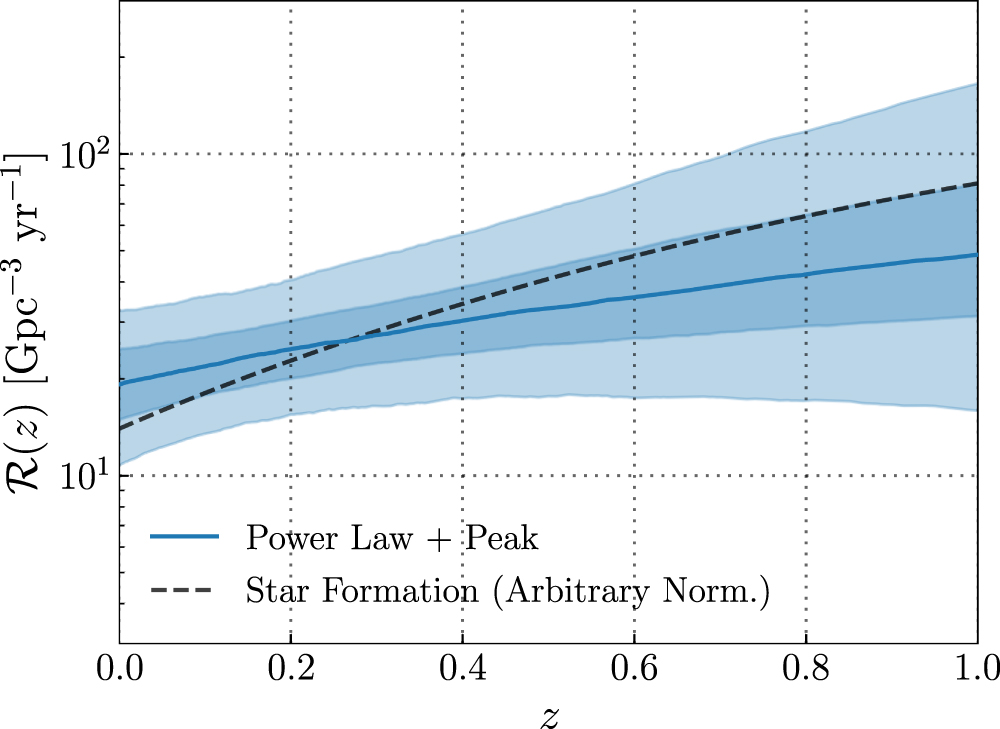
  3. The black hole merger rate probably increases with redshift.
    Plot showing how merger rate increases with redshift

    The modeled median merger rate density (solid curve) as a function of redshift suggests that the merger rate increases with redshift. Still, the increase is not as steep as the increase in the star formation rate (dashed line). [Abbott et al. 2021]

    Updated estimates suggest that binary black holes merge at a rate of 15–38 Gpc3 yr-1 and binary neutron stars at a rate of 80–810 Gpc-3 yr-1. The merger rate appears to be higher at higher redshift, but this increase doesn’t quite parallel the known increase in star formation rate with redshift. An intriguing mystery!

A Smashing Good Time Ahead

These takeaways clearly represent a dramatic increase in our understanding of how and where black hole binaries form and evolve — but we still have so much left to learn! Luckily, there’s plenty more data ahead: the collaboration is now analyzing the remaining 5 months of data from O3, and the detectors are currently undergoing upgrades in preparation for O4, which is slated to begin in mid-2022.

Citation

“Population Properties of Compact Objects from the Second LIGO–Virgo Gravitational-Wave Transient Catalog,” R. Abbott et al 2021 ApJL 913 L7. doi:10.3847/2041-8213/abe949

A spiral galaxy seen nearly edge-on. The galaxy has a bright center that is surrounded by a disk of dark black and brown clouds. Dim blue light can be seen through the clouds. To the lower left of the galaxy, just below the disk, is a bright white object with diffraction spikes. The background is mostly dark, scattered with a few small dim white objects.

Type Ia supernovae are a cornerstone of extragalactic distance measurements, so it’s important that we understand them very well. Right now, we’re fairly certain that Type Ia supernovae are the result of white dwarfs exploding. But how they explode is still an open question.

To Explode a White Dwarf

A creation mechanism for Type Ia supernovae where a white dwarf accretes mass from a companion (upper panel) till it explodes as a supernova (lower panel). [NASA/CXC/M. Weiss]

White dwarfs are remnants of relatively low-mass stars like our Sun. They are essentially exposed stellar cores, typically dominated by carbon and oxygen with an outer layer of helium. White dwarfs don’t produce energy of their own. Instead, they just cool off, slowly radiating away residual energy from when they were part of a star.

So how do you make something like a white dwarf explode? Just add mass! If a white dwarf accretes enough matter from a nearby companion, it can approach the Chandrasekhar limit of 1.4 solar masses and explode. This process seems fairly straightforward, but it turns out there are several potential ways to explode a white dwarf.

One scenario involves “double detonation”, where the helium shell of a white dwarf detonates and causes the carbon core to detonate in turn. Another scenario considers white dwarfs in a binary, with one white dwarf accreting material and exploding to knock the other one away.

Interestingly, observations suggest that a combination of these two scenarios — double detonation in white dwarf binaries — may be the likely progenitor of many Type Ia supernovae. One important constraint in this model is that the exploding white dwarf’s mass remains just below the Chandrasekhar limit.

With this in mind, a group of researchers led by Ken Shen (University of California, Berkeley) considered sub-Chandrasekhar-mass explosion scenarios with a tricky but realistic assumption: that local thermodynamic equilibrium (LTE) does not hold. 

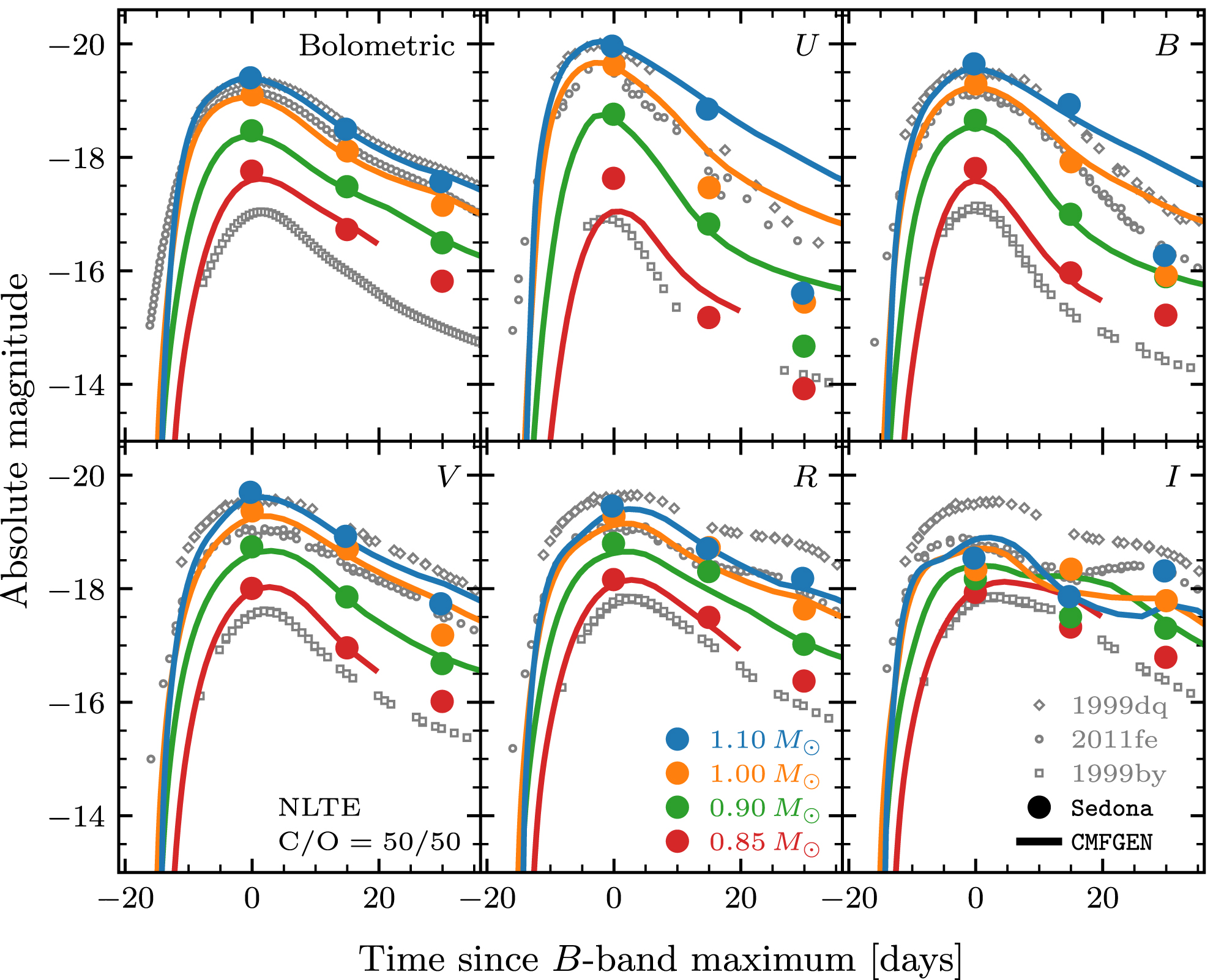
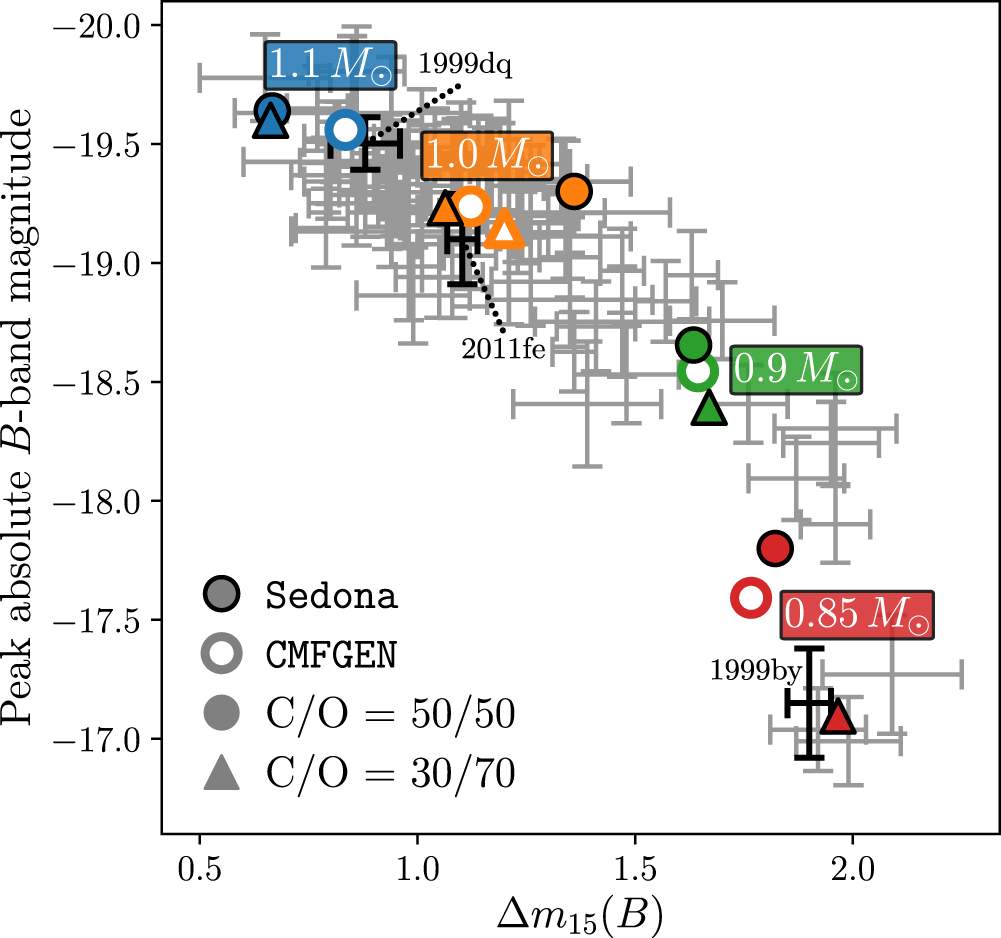
Model and observed supernova light curves in different bands. The solid lines and the colored circles represent the model, while the unfilled shapes are observed supernovae. The model colors correspond to different white dwarf masses. The white dwarf’s carbon/oxygen ratio was assumed to be 50:50. [Shen et al. 2021]

Explosions Not in Equilibrium

When a system is in LTE, the energies and ionization levels of particles in the system are in some fixed relation with each other while temperature remains consistent across the system. There are astrophysical scenarios where LTE is a safe assumption, like in stars, but LTE certainly doesn’t hold in an event like a supernova.

To model explosions with non-LTE assumptions, Shen and collabors used two different modeling codes. A major difference between the two codes was computation time, and running the same explosion scenarios through both codes allowed Shen and collaborators to determine if the more time-efficient code could stand up to the other. The model outputs included spectra of the ensuing supernovae as well as their light curves across different filters.

Model Matches

A diagram showing the Phillips relation, with peak B-band brightness plotted against the decrease in B-band magnitude 15 days after the peak. Crosses correspond to observations of Type Ia supernovae. The colored shapes correspond to the models, with color representing white dwarf mass, shape representing the carbon/oxygen ratio, and shape outline representing the modeling code used. [Shen et al. 2021]

Shen and collaborators found that the model light curves were excellent matches to observed supernovae out to 15 days after the brightest point in the B-band light curve (“B-band maximum”). This means that the codes also successfully model an observed relation called the Phillips relation — the brighter a supernova’s peak B-band magnitude, the more slowly it will evolve past that peak. This can be seen by plotting peak B-band brightness against B-band brightness 15 days after the peak.

The model spectra are also good matches to observations, sometimes even out to 30 days after the peak. They are especially accurate near the peak, save for spectral features from “intermediate mass elements”, which generally include elements heavier than carbon up to calcium.

All in all, these initial non-LTE models of sub-Chandrasekhar detonations are an excellent match to a broad range of observed Type Ia supernovae near peak brightness! Future models will have to account for more conditions, but non-LTE seems to be the way to go.

Citation

“Non-local Thermodynamic Equilibrium Radiative Transfer Simulations of Sub-Chandrasekhar-mass White Dwarf Detonations,” Ken J. Shen et al 2021 ApJL 909 L18. doi:10.3847/2041-8213/abe69b

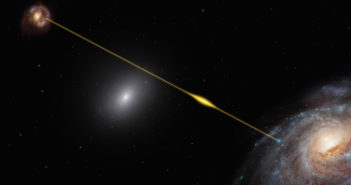
Illustration showing a distant galaxy emitting a pulse of light that passes through the halo of an intervening galaxy and arrives at the Milky Way.

In recent years, we’ve recorded hundreds of brief, powerful flashes of radio light originating from outside of our galaxy. In new work, scientists are now leveraging these enigmatic fast radio bursts to learn about the hot gas around galaxies.

An Epic Voyage

FRB

Artist’s conception of a fast radio burst originating in a distant galaxy. [Danielle Futselaar]

Fast radio bursts (FRBs) are intense bursts of radio emission that last only milliseconds. At their source, the light of these powerful eruptions contain as much energy in a single millisecond as the Sun emits across 3 days. But FRBs primarily arise from distant sources that can lie billions of light-years away — so that light has a long journey ahead of it.

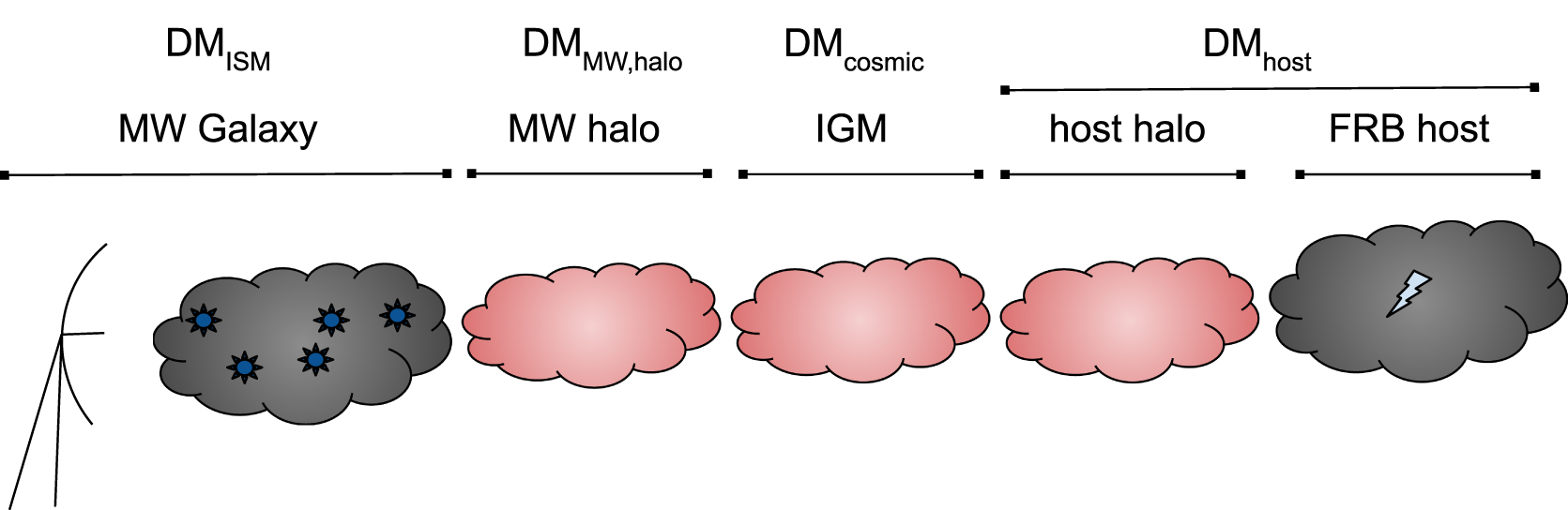
To reach us, this emission first passes through the source’s local environment, then through the interstellar medium (ISM) of its host galaxy, and then through that galaxy’s halo. Once free of the galaxy, the light must traverse the intergalactic medium (IGM) — potentially passing through intervening galactic halos — before it eventually enters the circumgalactic environment around the Milky Way. There, it travels through the halo and ISM of the Milky Way and finally arrives at our detectors here on Earth.

This epic voyage is fraught with obstructions: the burst emission encounters clumps of hot, ionized, and turbulent gas that slows its passage and leaves distinct imprints on the signal we eventually see. In a new study led by Stella Ocker (Cornell University), scientists have used these signatures to probe the ionized gas that lies between us and distant FRBs.

FRB dispersion

Schematic illustrating how transient radio signals travel to us. Pulsars (marked by sun symbols) lie in the galaxy, interior to the halo; their signals are affected only by the Milky Way’s interstellar matter. Fast radio bursts (marked by lightning symbol) lie in other galaxies; their signals travel through multiple different regions. [Platts et al. 2020]

Constraints from Bursts and Pulses

Ocker and collaborators combine multiple different diagnostics: 

  • dispersion of bursts, which occurs when different frequencies of light travel at different speeds through intervening gas
  • pulse and angular broadening, or smearing in time and space due to scatter as light travels along multiple different paths through the gas
  • scintillation, or twinkling of a compact source caused by turbulence in the intervening medium

To disentangle the relative contributions of the ionized gas in the different regions of the FRB’s journey, the authors took advantage of data from multiple FRBs along various lines of sight passing through different sections of our galaxy. They combined this information with further constraints from pulsars — pulsing, magnetized neutron stars — that lie within our galaxy, to better understand the density fluctuations along these varying lines of sight.

Downplaying Halo Contributions

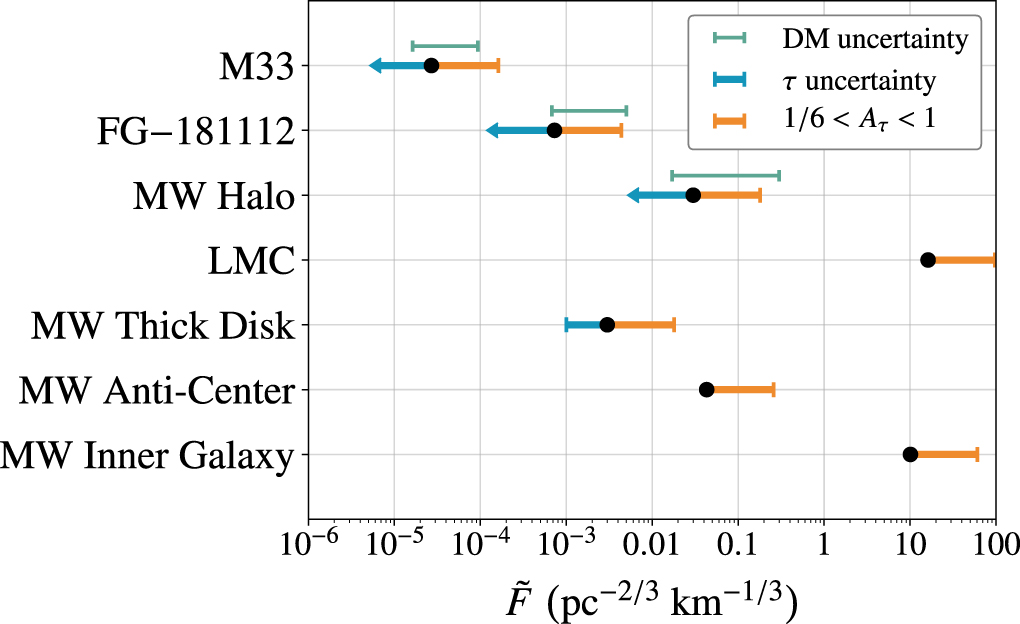
Plot showing the relative scattering contributions of different regions

A representation of the scattering contributions estimated by the authors for different regions of ionized gas. The scattering that occurs due to intervening galactic halos (M33 and FG–181112) is consistent with the upper limits found for the Milky Way’s halo (MW Halo), and substantially smaller than the scattering caused within the inner disk of our galaxy (MW Inner Galaxy). [Ocker et al. 2021]

From their work, Ocker and collaborators were able to place an upper limit on the amount of scattering contributed by the Milky Way’s halo to the FRBs that they explored. The authors then compared these results to data from FRB signals that passed through additional, intervening galaxy halos on their way to us. They found that the scattering contributions from other halos are consistent with the upper limits set on the Milky Way’s halo.

Ocker and collaborators’ study suggests that galaxy halos have only a very small impact on the scattering of light in FRBs. While additional FRB and pulsar data will be helpful in constraining more lines of sight, this work provides a valuable step in disentangling different reservoirs of ionized gas to ultimately probe the density fluctuations across our universe.

Citation

“Constraining Galaxy Halos from the Dispersion and Scattering of Fast Radio Bursts and Pulsars,” Stella Koch Ocker et al 2021 ApJ 911 102. doi:10.3847/1538-4357/abeb6e

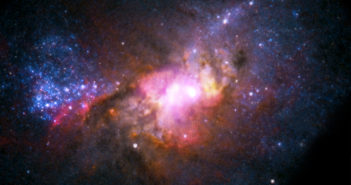
composite photo of a dwarf galaxy.

Using a new technique, scientists have identified a supermassive black hole lurking in a low-mass, low-metallicity galaxy. Could this discovery be just the tip of the iceberg? 

Hunting for Seeds

How did the first supermassive black holes — black holes of millions or billions of solar masses — form?

early quasar

Artist’s illustration of a primordial galaxy dominated by the supermassive black hole in its center. [NASA/ESA/ESO/Wolfram Freudling et al. (STECF)]

Today, we know that giant black holes lie at the heart of most galaxies. Many of them have grown substantially since they first formed, via galaxy mergers and accretion of mass around them. But did they start out as large stars? Or collapse directly from molecular clouds? Or build up rapidly from the merger of smaller black holes?

To identify the seeds of supermassive black holes and address these questions, we need to explore the least-disturbed supermassive black holes that we can find today. Small, low-metallicity galaxies — those that have had a peaceful cosmic history, devoid of the mergers that drive significant black-hole growth — are thus the perfect targets to search for the relics of supermassive black hole seeds.

The catch? These are precisely the environments in which it’s difficult to spot black holes! 

AGN

Artist’s depiction of the active nucleus of a galaxy, including an accretion disk spiraling around the supermassive black hole and jets of material flung out from both poles. [NASA/Dana Berry/SkyWorks Digital]

A New Approach

The easiest black holes to detect are those that are actively feeding, known as active galactic nuclei (AGNs). But the typical method for identifying an AGN — which relies on specific signatures in the source’s optical spectrum — is biased against low-metallicity and relatively merger-free galaxies, missing the precise population we want to find! Only a handful of AGNs have been identified in dwarf galaxies, and most of these lie in high-metallicity environments. So how do we find our seed relics?

According to a team of scientists led by Jenna Cann (George Mason University), it’s time for a different approach. Instead of relying on optical signatures, Cann and collaborators focus on finding coronal lines — near-infrared emission lines produced by ions that are excited by high-energy radiation. The presence of these lines can reveal a hidden AGN, even when a galaxy shows no sign of an AGN in optical emission.

Discovery of a Relic

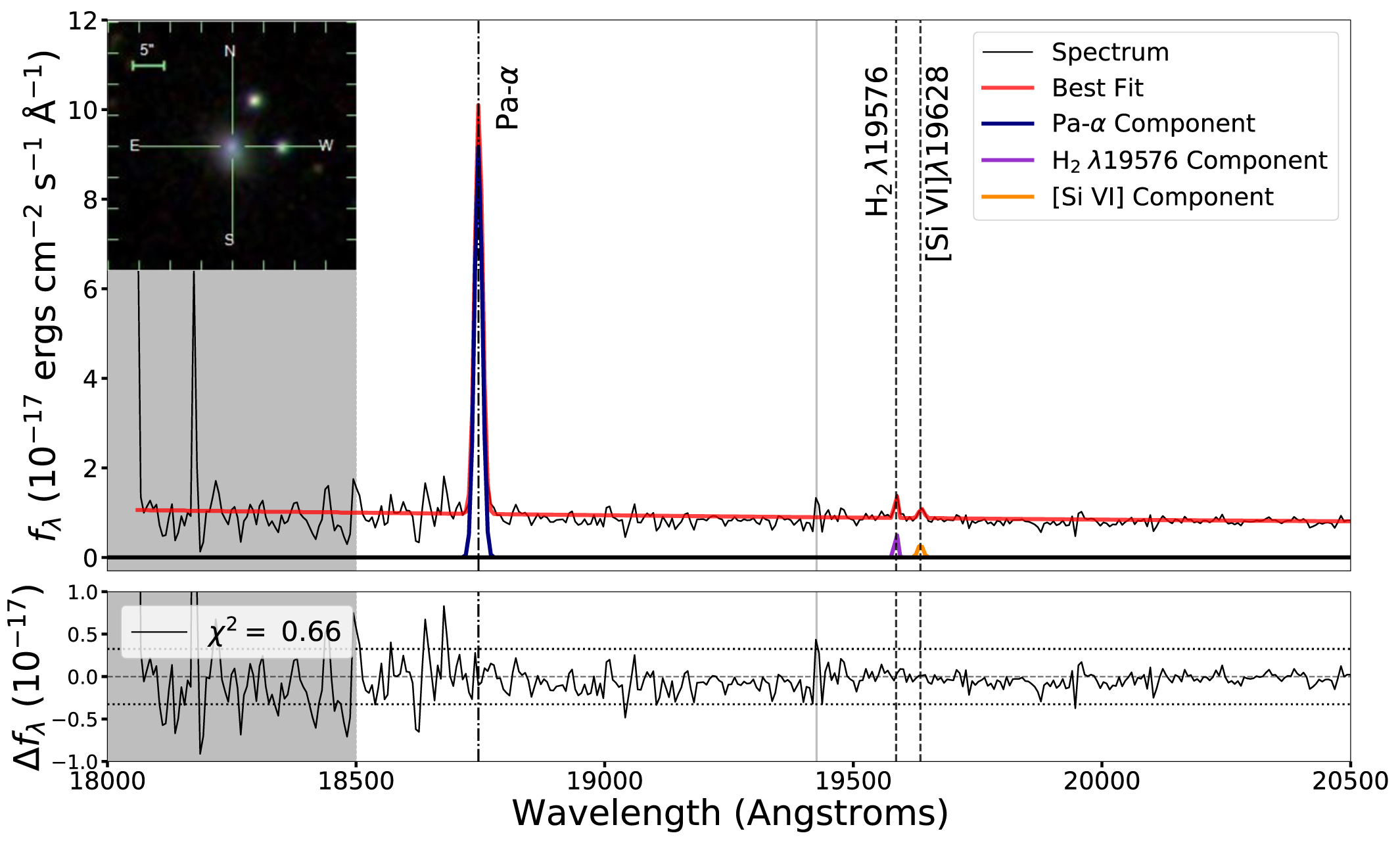
the near-infrared spectrum of a dwarf galaxy, showing a small emission line.

The near-infrared spectrum of J1601+3113, captured using the GNIRS instrument at Gemini North, shows the presence of the [Si VI] coronal line, the tiny orange bump on the right of the spectrum. This provides evidence of an AGN. [Adapted from Cann et al. 2021]

In a recent study, Cann and collaborators demonstrate that their unique method works: they detected a coronal line in J1601+3113: a nearby, low-metallicity galaxy that’s only a tenth of the mass of the Large Magellanic Cloud! The authors’ detection is consistent with the presence of a supermassive black hole of roughly 100,000 solar masses, opening a window onto precisely the relic black hole seeds we’re hoping to find.

Cann and collaborators’ discovery marks the first time that an AGN has been identified in a low-mass, low-metallicity galaxy with no optical signs of AGN activity, underscoring how the coronal-line technique can help us find AGNs that might otherwise go undetected.

And with the James Webb Space Telescope scheduled to launch this year, we’ll (hopefully!) soon be collecting infrared spectra with unprecedented sensitivity. With any luck, we’re about to have access to a remarkable new population of lightweight AGNs hiding in small, low-metallicity galaxies — and with it, valuable insight into how these objects were born.

Citation

“Relics of Supermassive Black Hole Seeds: The Discovery of an Accreting Black Hole in an Optically Normal, Low Metallicity Dwarf Galaxy,” Jenna M. Cann et al 2021 ApJL 912 L2. doi:10.3847/2041-8213/abf56d

1 50 51 52 53 54 117