Features RSS

Very Large Array antennas

What has 28 dishes, changes size every four months, and surveys the sky day and night? The Very Large Array, of course! After the conclusion of the 242nd AAS meeting in Albuquerque, NM, AAS Media Fellow Ben Cassese and I joined members of the media for a tour of this exceptional facility.

A Telescopic Tour

a view of a VLA dish from below

Looking up at one of the 25-meter dishes. [AAS Nova/Kerry Hensley]

The Very Large Array, or VLA, is a premier radio astronomy observatory located two hours south of Albuquerque in the Plains of San Agustin. The VLA’s storied history began in the 1960s, when astronomers began to push for an array of radio dishes to complement the science being done with single dishes like the ones at Green Bank and Arecibo. Science operations at the VLA began in 1976. The VLA’s dishes work together as an interferometer, in which signals from multiple telescopes are combined to give the sensitivity of a single dish with an area equal to the combined area of the dishes in the array and the resolution of a single dish as wide as the largest distance between dishes in the array.

The VLA is sited on a flat expanse of desert surrounded by mountains, and the dry climate, high altitude, and isolation from civilization make it an ideal location for a radio observatory. The isolation is necessary because of the dishes’ sensitivity, which makes them vulnerable to terrestrial radio interference — compare the strength of a typical 5-Watt cellphone signal from someone standing nearby to a 10-23 W/m2/Hz signal from a distant galaxy. Luckily, having multiple dishes working together provides another defense: signals spotted by only some of the antennas or that arrive at some antennas before the rest are suppressed.

A Very Large Array antenna transporter sitting on the railroad tracks

To enter or exit the maintenance barn, the antenna-laden transporter must execute a 90-degree turn. [AAS Nova/Kerry Hensley]

Another feature of the VLA is its maneuverability. Every four months, operators guide the VLA’s enormous dishes into a new configuration, cycling through four configurations every 16 months. Yes, that’s right — the 220-ton dishes move, taxiing to their new locations on the back of a transporter that glides along railroad tracks at 5 miles per hour. In its most compact form, the array’s antennas are snuggled together within a square mile. At its most extended, the dishes span 22 miles. Because of the need to cycle through the observing configurations, observations for a single project can take more than a year if the project requires several different observing configurations.

Astronomers who use the VLA for research will be familiar with the process of applying for time on the array and eagerly awaiting the data if time is awarded — but what goes on behind the scenes to support our science?

Getting a Bird’s-Eye View

A dish in the antenna assembly barn

Dish number 28 undergoing maintenance in the antenna assembly barn. Remarkably, there are only three points of contact between the base of the antenna and the transporter. [AAS Nova/Kerry Hensley]

As our tour of the observatory grounds began, Rob Selina and Bill Hojnowski explained what goes into maintaining and upgrading the VLA. In the antenna assembly barn, we were able to see one of the VLA’s 28 dishes undergoing maintenance. While the VLA contains 28 dishes, only 27 are active in the array at a time, with the final dish undergoing regular maintenance in the barn. An antenna typically spends about three years taking data in the array in between trips to the barn along the railroad tracks. The miles of railroad track along which the dishes travel are a considerable source of maintenance work, with about 2,000 railroad ties and 30,000 pounds of ballast needing to be replaced each year.

Next, we were treated to a rare opportunity: climbing into one of the dishes! After donning mandatory hard hats, our group scaled a narrow metal staircase that zigzagged up to the top of the support structure — not recommended if you have an intense fear of heights — and emerged through a trapdoor into the dish itself.

Kerry Hensley and Ben Cassese in a VLA antenna dish

Media Fellow Ben Cassese and I staying cool (and taking in the very cool views!) up in the dish. Hard hat required, sunglasses highly recommended! [AAS Nova/Kerry Hensley]

From that vantage point, we could see the dish’s eight radio receivers, each of which is optimized for a different frequency range. As Rick Perley (the VLA’s first postdoc, who has worked at the VLA since 1977) and Rob Long explained, having multiple receivers allows for observations at frequencies from 74 megahertz to 50 gigahertz, depending on what the science requires. Up in the dish, one thing was clear: things can get hot up here! Keeping things cool is a major challenge at the VLA; the New Mexico desert gets hot, and the sensitive instruments need to be cooled to perform their best. Most of the VLA’s $3 million annual electricity bill goes toward the compressors in the cooling system.

A view of a Very Large Array antenna from the ground

If you zoom in closely, you’ll see a bird’s nest in the supports. [AAS Nova/Kerry Hensley]

The cooling issue is just one of many engineering and maintenance challenges that have been surmounted by the VLA staff over the decades. They’ve handled everything from finding the best way to paint the dishes without affecting their performance, to figuring out how to connect wires from a rotating dish to a stationary platform, and even managing the birds that build their nests in the dish support structures — and as the VLA expands in the coming decade, new challenges are sure to arise.

A panorama of the interior of a VLA dish

A panoramic view from up in the dish. The receivers are visible jutting out from the surface of the disk. [AAS Nova/Kerry Hensley]

What’s Next for the VLA?

The next phase for the VLA, known as the Next Generation VLA or ngVLA, will include 263 antennas spread across 500 miles. Because of the immense distances involved, the dishes can no longer travel back to the barn when maintenance is needed. Instead, technicians will need to meet the dishes where they are, as far afield as Hawaii, Puerto Rico, and New Hampshire.

An artist's impression of the ngVLA

An artist’s impression of the ngVLA. [Sophia Dagnello, NRAO/AUI/NSF; CC BY 3.0]

Each dish will be roughly half the size of the current VLA dishes but more sensitive, yielding about the same observing power as the current dishes. The result will be an array with ten times the sensitivity of the VLA and up to one thousand times finer resolution. The new dishes passed preliminary design review in December 2022 and will be shipped to the site in early 2024. If things go smoothly, full science operations should be underway in 2035 — and I can’t wait to see the great research made possible by the ngVLA!

Visitation Information

If visiting the VLA sounds fun to you, you’re in luck — the VLA is open to the public 362 days a year with guided tours on the first and third Saturdays of each month. Unfortunately, the antenna climb isn’t part of the standard tour package! Visitation details can be found here.

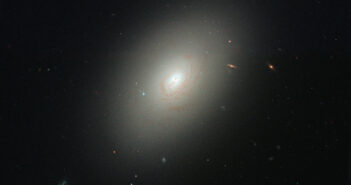
Hubble image of the quasar 3C 273

Researchers have peered back to the first billion years of the universe to study the behavior of quasars. What they learned about the typical luminosities of quasars during that era can tell us about the role quasars played during the epoch of reionization.

Quasars in the Early Universe

simulation of galaxies during the epoch of reionization in the early universe

Simulation of galaxies ionizing hydrogen gas (bright areas) during the epoch of reionization. [M. Alvarez (http://www.cita.utoronto.ca/~malvarez), R. Kaehler, and T. Abel/ESO; CC BY 4.0]

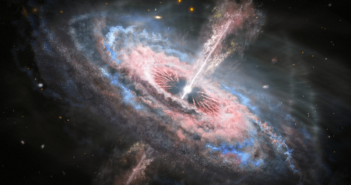
Quasars are incredibly luminous galactic centers powered by growing supermassive black holes. The advent of all-sky surveys enabled the discovery of quasars in the first billion years of the universe’s history, and astronomers study these powerful objects to understand the conditions in the early universe and get a sense of how quickly supermassive black holes grew at that time.

With the population of known quasars ever growing, researchers can begin to study the characteristics of quasars as a whole rather than focusing on single objects. This means we can probe the role that quasars played during the epoch of reionization: the period during which the universe’s neutral hydrogen gas was ionized by light from the first stars. Researchers are still debating precisely when reionization occurred, how long this period lasted, and which galaxies or cosmic objects contributed the most ionizing photons to the cause.

Plot of quasar luminosity functions measured from several sources

The quasar luminosity function from this work (magneta circles and black lines) compared to luminosity functions measured in other studies. Click to enlarge. [Adapted from Matsuoka et al. 2023]

Finding a Functional Form

Yoshiki Matsuoka (Ehime University) and collaborators studied a sample of 35 quasars around a redshift of z = 7, which corresponds to roughly 800 million years after the Big Bang. The team set out to determine the quasar luminosity function, which describes the number of quasars present at a given luminosity. If the function is flat, that means that quasars of all luminosities are equally common, while a top-heavy function is skewed toward bright quasars and a bottom-heavy function is weighted toward faint quasars.

Using data from Pan-STARRS1, the DESI Legacy imaging Surveys, the UKIRT/VISTA Hemisphere Surveys, the WISE survey, and the Subaru High-z Exploration of Low-luminosity Quasars (SHELLQs) project, the team found that the “knee” of the distribution is located at a magnitude of –25.6. The shape of the quasar luminosity function at z = 7 is similar to the shapes of the luminosity functions at lower redshifts, though there are fewer quasars at any given luminosity at z = 7 than at lower redshifts.

Reckoning with Reionization

plot of quasar luminosity functions at different redshifts

The z = 7 quasar luminosity function determined in this work (magenta) compared to the luminosity functions at lower redshift. Click to enlarge. [Adapted from Matsuoka et al. 2023]

Matsuoka’s team used their measured quasar luminosity function to determine the number of ionizing photons contributed by quasars during reionization. Bright though quasars may be, the team found that they contributed less than 1% of the photons necessary to achieve the rate of reionization at that time.

There will be more to learn about quasars’ role during reionization once we establish observatories and surveys capable of detecting substantial numbers of quasars even farther back in the universe’s history; the team noted that upcoming data from the Vera C. Rubin Observatory, the Nancy Grace Roman Space Telescope, and the Euclid space telescope will push the quest for quasars out to even higher redshifts.

Citation

“Quasar Luminosity Function at z = 7,” Yoshiki Matsuoka et al 2023 ApJL 949 L42. doi:10.3847/2041-8213/acd69f

A photograph looking down a trail lined with tall trees and mossy rocks on either side. Fog obscures the view along the trail and up towards the sky.

In the coming decade, astronomers plan to discover thousands of rare, poorly understood, exotic transients. However, telling these apart from the torrent of “normal” flashes quickly enough for useful follow up observations will pose a daunting challenge. Thankfully, new algorithms powered by machine learning techniques may be able to triage for us.

Transient Triage

Though it may appear tranquil and unchanging to the casual observer, if one looks carefully, they find that the night sky is actually crackling with small, slow flashes. Thanks to modern cameras and computers, astronomers have grown increasingly attentive and now catch more of these flashes than ever before. The community flags about 20,000 so-called “transients” each year, and the rate is only expected to grow in the next decade.

A large number of astronomical events, such as thermonuclear and core collapse supernovae, produce roughly similar-looking flashes, so simply spotting one does not reveal much useful information. To better study the underlying physics powering each transient, astronomers must revisit each with different types of detectors. Unfortunately, the staggering pace of discovery is too fast to thoroughly follow up on every transient. Faced with finite telescope time, astronomers need to play a constant game of triage: which transients could uncover something interesting with additional follow up, and which are just more run-of-the-mill supernovae that we can allow to fade unwatched without worry of missing something exciting? An increasingly promising way to decide is to cede the choice to a machine learning algorithm.

FLEET and the Forest

A 2D scatterplot where each point represents a single archival transient. The X axis marks the probability assigned by FLEET 2.0 of a transient corresponding to a superluminous supernova, and the Y axis marks the same but from FLEET 1.0. True known superluminous supernovae are shown in blue, and in general, they either lie in the upper right corner, or further along the X axis than Y.

A comparison of the old FLEET 1.0 algorithm and the improved FLEET 2.0. Here, both random forests were asked to consider archived observations of many previous transients. FLEET 2.0 generally outperformed its predecessor and uncovered tens of transients that may have actually been superluminous supernovae but went undiagnosed before fading. [Gomez et al. 2023a]

A pair of recent articles in the Astrophysical Journal led by Sebastian Gomez (Space Telescope Science Institute) details the performance and recent upgrades of one such algorithm. Named “Finding Luminous and Exotic Extragalactic Transients,” or FLEET, this random-forest classifier takes in the first few days of observations of a transient and metadata about its host galaxy, then outputs the probability that the transient is a certain type of astronomical event.

Gomez and collaborators were particularly interested in two types of rare explosions: superluminous supernovae and tidal disruption events. The community has only ever observed a handful of each, though more are likely hiding in the constant stream of transient discoveries. By training FLEET to latch onto subtle differences between transients and quickly extract the underlying event, the team could prioritize follow-up resources to target promising candidates and expand their so-far sparse catalogs.

A histogram with redshift on the X axis and number of TDEs/year on the Y. Below a redshift of 1, LSST should find 10^4 TDEs/year, of which FLEET would recover roughly 1,000.

They expected number of tidal disruption events the Vera C. Rubin Observatory will observe each year during its LSST program, and the number of those which FLEET is expected to confidently flag as a candidate worthy of follow up. Note that currently astronomers have observed fewer than 100 tidal disruption events. [Gomez et al. 2023a]

Since its original release in 2020, FLEET is responsible for flagging 41% of all recorded superluminous supernovae. Even more exciting than its previously impressive performance, however, is its future potential. The team made sure that their algorithm could plug into data streams of future surveys, like the upcoming Vera C. Rubin Observatory Legacy Survey of Space and Time (LSST) and Roman High Latitude Time Domain Survey, the former of which is expected to observe, but not immediately recognize, up to 10,000 tidal disruption events alone each year. Using FLEET, the community could extract up to 2,000 of these events each year for further study. Considering that our current understanding of these chaotic processes is built on fewer than 100 observations, this would revolutionize the field in ways we can’t yet predict.

Citations

“Identifying Tidal Disruption Events with an Expansion of the FLEET Machine-learning Algorithm,” Sebastian Gomez et al 2023 ApJ 949 113. doi:10.3847/1538-4357/acc535

“The First Two Years of FLEET: An Active Search for Superluminous Supernovae,” Sebastian Gomez et al 2023 ApJ 949 114. doi:10.3847/1538-4357/acc536

JWST image of the Phantom Galaxy

The Physics at High Angular resolution in Nearby GalaxieS (PHANGS) program predates JWST, beginning with observations of carbon monoxide gas in 90 nearby spiral galaxies with the Atacama Large Millimeter/submillimeter Array (ALMA). Observations with the Hubble Space Telescope and the Very Large Telescope followed, diving deeper into a subset of these galaxies. Now, JWST has embarked on a new phase of the survey, aiming to perform 2–21 micron (1 micron = 10-6 meter) imaging of 19 galaxies in the PHANGS sample. The PHANGS–JWST First Results focus issue introduces JWST data of four galaxies, delving into the complex relationship between star formation, stellar feedback, and the conditions of the interstellar medium.

Janice Lee (NOIRLab and Steward Observatory) and collaborators introduced the survey, describing the 19 galaxies that JWST will observe by mid-2023. Importantly, all 19 of these galaxies have also been observed by Hubble, ALMA, and the Very Large Telescope, providing a broad multi-wavelength view of star formation in nearby galaxies. The four galaxies analyzed in the focus issue — NGC 7496, IC 5332, NGC 628, and NGC 1365 — were observed in summer 2022 using JWST’s Near Infrared Camera (NIRCam) and Mid-Infrared Instrument (MIRI). The articles published in the focus issue are introduced below, loosely grouped into four research themes.

Perspectives on Polycyclic Aromatic Hydrocarbons

Polycyclic aromatic hydrocarbons (PAHs) are organic molecules made up of multiple rings of carbon atoms. These sooty molecules are an important component of a galaxy’s interstellar medium; PAHs absorb the light from young stars and reprocess it, shining warmly in the infrared. About 20% of the infrared light we see from a star-forming galaxy comes from these molecules.

maps of NGC 628 showing emission from PAHs and stars

Maps of the galaxy NGC 628 showing the 3.3-micron emission due to PAHs (left) and stars (right). [Sandstrom et al. 2023]

Karin Sandstrom (University of California, San Diego) led two research groups on studies of PAHs in nearby galaxies. In the first article, the team mapped four galaxies at 3.3 microns, separating the PAH emission from the stellar emission. They showed that the proportion of 3.3-micron light arising from PAHs relative to stars varies from galaxy to galaxy and radially within each galaxy, reaching a value as high as 65% in some regions. In the second article, the team explored the possibility of using PAH emission as a way to trace the density of gas and dust in the interstellar medium. Ultimately, while the technique needs further refinement, calibration, and study, it’s a promising way to study the stuff between the stars.

Two research teams led by Jérémy Chastenet (Ghent University) also tackled aspects of PAH emission. In the first article, the team studied how the fraction of interstellar dust found in the form of PAHs changes with a variety of factors, including the abundance of metals (elements heavier than helium). In the second article, the team found that PAHs tend to be hotter and more ionized in the vicinity of HII regions — bubbles of glowing ionized hydrogen gas created by young stars.

images of three galaxies with star clusters indicated

Locations of star clusters (white circles) in three of the four galaxies in the sample. The background images are taken in JWST’s 7.7-micron filter. The scale bar is 1 kiloparsec/3,262 light-years. Click to enlarge. [Dale et al. 2023]

Daniel Dale (University of Wyoming) and collaborators studied how the intense radiation from young stars affects the properties of PAHs in their surroundings. By analyzing 1,063 tight-knit star clusters and 2,654 looser stellar associations and comparing the results to models, Dale’s team showed that PAHs tend to be more ionized in the vicinity of star clusters.

A collaboration led by Oleg Egorov (Heidelberg University) investigated how PAHs in star-forming regions might meet their demise. In their analysis of 1,529 HII regions across four galaxies, the team found that PAHs are likely destroyed by ultraviolet radiation from young stars.

Tracing Structures of Gas and Dust

Using JWST’s precision imaging, researchers can examine and interpret fine structures traced by gas and dust. David Thilker (Johns Hopkins University) and collaborators studied filamentary dust structures, creating maps that allowed them to compare structures seen in infrared PAH emission and those seen via scattering or absorption of visible photons.

Adam Leroy (Ohio State University) led two teams in using emission lines to trace gaseous structures. In one article, Leroy’s team compared JWST data to previous observations of the four galaxies in the sample made at optical and submillimeter wavelengths. The mid-infrared emission seen with JWST was well correlated with the optical (H-alpha) and submillimeter emission, suggesting that JWST can trace both the presence of dust and heating by stars. In the second article, the team explored correlations between the mid-infrared emission measured by JWST and submillimeter emission from carbon monoxide molecules. These correlations, many of which were remarkably intact across all of the galaxies studied, can be used to inform future studies of mid-infrared emissed seen by JWST.

Three-color multi-wavelength image of the galaxy NGC 628

A three-color image of NGC 628 composed of 21-micron JWST imaging (red), H-alpha emission imaged by the Very Large Telescope (green), and carbon monoxide emission imaged by ALMA (blue). The two spurs are outlined in orange and cyan. [Williams et al. 2023]

Sharon Meidt (Ghent University) and collaborators investigated the formation of the detailed gas and dust structures seen by JWST. The team found that the web of filamentary structures in the four galaxies follow patterns in their length, spacing, and orientation that suggest the structures formed as the result of the fragmentation and collapse of a rotating disk of gas.

A team led by Thomas Williams (University of Oxford; Max Planck Institute for Astronomy) focused on star formation in two spurs emerging from a spiral arm of NGC 628. This study showed that star formation does take place outside the galaxy’s spiral arms, within these two spurs, with similar star-formation efficiencies in each spur despite differences in the properties of the interstellar medium within them.

Pursuing Stellar Feedback

As young stars begin to form, they heat up their cold cradles and disrupt the surrounding gas with powerful winds. These processes, known as stellar feedback, impact the formation of future stars. JWST allows for precise tracing of dust and cool gas in star-forming galaxies, enabling a refined look at how stars forming today are impacted by previous generations of stars.

An annotated view of NGC 628 showing the location of its voids

Numerous bubbles populate the spiral structure of NGC 628. Click to enlarge. [Barnes et al. 2023]

Ashley Barnes (University of Bonn and European Southern Observatory) and collaborators report on numerous “bubbles” or voids of low-density gas that appear to have been blown by newly forming stars in the galaxy NGC 628. The largest bubble appears to have been created not just by young stars — though the authors expect baby stars got the bubble started — but also by supernovae pushing the walls of the bubble outward with explosive force.

Elizabeth Watkins (Heidelberg University) and coauthors analyzed NGC 628’s voids as well, amassing a catalog of 1,694 hand-selected bubbles ranging from 40 to 3,600 light-years in diameter. Analysis of the cataloged bubbles suggests that bubble mergers are common, and the presence of a bubble has important impacts on star formation down the line. In addition, elongation of bubbles along the curve of the galaxy’s spiral arms suggests that spiral arms play a defining role in star formation as well.

A team led by Jaeyeon Kim (Heidelberg University) tackled another aspect of the galaxy NGC 628: the earliest, most obscured phase of star formation. The team showed that young stars can remain embedded within their natal molecular cloud — and therefore hidden from the eyes of visible-light telescopes like Hubble — for 5 million years, which is about 20% the lifetime of a molecular cloud.

A Cluster of Star-Cluster Results

image of the galaxy NGC 1365 with known and new star clusters labeled

Hubble image of NGC 1365 showing the locations of previously known star clusters (yellow and white circles) and those newly discovered with JWST (red circles). Click to enlarge. [Whitmore et al. 2023]

A team led by Bradley Whitmore (Space Telescope Science Institute) used JWST’s infrared eyes to pierce the shroud of dense gas and dust surrounding young stars in the starburst galaxy NGC 1365. The team discovered 16 new massive star clusters, making NGC 1365 the uncontested star-cluster champ within about 100 million light-years. Given the ages of these newly discovered clusters, Whitmore and collaborators estimated that it takes a couple million years for young stars to start to peek out from beneath their natal dust blankets, finally becoming unobscured after about four million years.

Nils Hoyer (Donostia International Physics Center; Max Planck Institute for Astronomy; Heidelberg University) and collaborators tackled the nuclear star cluster at the heart of the spiral galaxy NGC 628. After determining the properties of the cluster, the team concluded that it likely hadn’t experienced much star formation over the past few billion years, though the reason for the cessation is unknown.

Infrared image of the galaxy IC 5332 showing newly discovered compact sources

Three-color image of IC 5332, a spiral galaxy 30 million light-years away, with compact sources indicated by the different symbols in the zoomed-in region. Click to enlarge. [Adapted from Hassani et al. 2023]

Jimena Rodríguez (Steward Observatory and Institute of Astrophysics of La Plata) and coauthors used a new technique to identify candidate star clusters in NGC 7496. The team picked out 67 cluster candidates, nearly all of which were invisible to Hubble in previous observations of the galaxy. These young clusters — six of them have yet to reach their millionth birthday — trace the galaxy’s well-defined spiral arms and follow previously observed patterns of dense, cold carbon monoxide gas.

Hamid Hassani (University of Alberta) scoured the 21-micron JWST data for signs of compact sources, which may indicate the presence of star clusters hidden within the dust. At such a long wavelength, even JWST isn’t capable of resolving individual star clusters, so Hassani’s team found a way to use the sources’ colors to classify them as interstellar medium sources, dusty stars, or background galaxies.

Photograph and diagram of the central regions of NGC 1365

Optical image of NGC 1365 from the Dark Energy Survey (left) and schematics illustrating the structures within the central galactic bar (right). Click to enlarge. [Schinnerer et al. 2023]

Daizhong Liu (Max Planck Institute for Extraterrestrial Physics) and coauthors studied star formation in the nucleus of NGC 1365, which hosts a starburst ring at its center. Their results illuminate the connection between star formation and the larger gas dynamics of the galactic center, showing that gas channeled by the galaxy’s central bar promotes the formation of massive star clusters.

Eva Schinnerer (Max Planck Institute for Astronomy) and collaborators also investigated the center of NGC 1365, pairing the new JWST images with archival ALMA data to probe the conditions within the galaxy’s central bar. This study revealed streams of gas within the bars, the convergence of which sets the stage for star formation.

Citation

The full list of research articles in the PHANGS–JWST First Results focus issue can be found here. Individual articles are linked to in the text above.

Distant Galaxy GN-z11 as seen in the GOODS North Survey field

One of the most distant known galaxies, GN-z11, might be unusually rich in nitrogen. Researchers suggest that supermassive stars could provide a pathway for nitrogen to be enhanced in this early galaxy.

A New Look at a Distant Galaxy

GN-z11 was once the most distant cosmic object known. This luminous galaxy was discovered with the Hubble Space Telescope in 2015, and now JWST has turned its exquisite spectrometer to the task of precisely determining the galaxy’s distance and extracting its properties.

illustration of a blazar

Artist’s impression of the jet from an active galactic nucleus directed toward Earth. [NASA/Goddard Space Flight Center Conceptual Image Lab]

A new spectrum of GN-z11 shows bright emission lines from several atoms including nitrogen. Strong emission lines in a galaxy’s spectrum can mean that the galaxy hosts an active galactic nucleus — a supermassive black hole that’s consuming superheated gas from its surroundings — but some researchers suspect that’s not the case for GN-z11. Instead, this galaxy’s strong nitrogen lines might mean that it’s unusually rich in that element, but it’s not clear where this supply of nitrogen might have come from. In a recent research article, Chris Nagele and Hideyuki Umeda of the University of Tokyo suggest that supermassive stars might be the cause.

Supermassive Stars in the Spotlight

Supermassive stars are hypothesized to contain more than a hundred times the mass of the Sun, and the most massive of them might have clocked in at more than 100,000 solar masses. If stars at the upper end of this mass range existed in the early universe, they could give rise to the seeds of supermassive black holes and explain the properties of galaxies like GN-z11.

Nagele and Umeda simulated the evolution of supermassive stars of 1,000, 10,000, 50,000, and 100,000 solar masses. Each of these enormous stars started out with an abundance of metals (elements heavier than helium) just one-tenth the Sun’s, which is representative of the conditions a few hundred million years after the Big Bang. The team’s simulations combined fluid dynamics, nuclear reactions, and general relativity to follow the stars as they evolve. The vastly different masses of the simulated stars resulted in vastly different outcomes; the 100,000-solar-mass star exploded and the 50,000-solar-mass star collapsed before the end of the hydrogen-burning phase, while the two less weighty stars evolved off the main sequence without incident.

A Matter of Timing

Plot of simulated elemental abundances relative to solar abundances

Abundances of chemical elements relative to the amount contained in the Sun. Note that the higher-mass models produce super-solar nitrogen (Z=7) and sub-solar oxygen (Z=8), while the lower-mass models produce super-solar amounts of both elements. Click to enlarge. [Nagele and Umeda 2023]

How long each star lived before exploding or collapsing determined how much it enriched its surroundings with metals, and it also determined the ratios of various metal species relative to one another. For example, the longer-lived lower-mass stars produced enhanced amounts of both nitrogen and oxygen via their powerful stellar winds. Because GN-z11 does not show signs of abundant oxygen, this means that 1,000- and 10,000-solar-mass stars are unlikely sources of the galaxy’s nitrogen.

The more massive stars, though, produced enhanced amounts of nitrogen but not oxygen, leading to a chemical abundance pattern that is consistent with what we see for GN-z11. Nagele and Umeda note that there are nuances that will need to be explored by future simulations with finer time resolution, but as of now supermassive stars remain a promising candidate source for GN-z11’s nitrogen. And as for the origins of the stars themselves, the authors pointed out that one way supermassive stars could form is through the collision of massive galaxies — and new observations show a “haze” around GN-z11 that might be a sign of such a collision.

Citation

“Multiple Channels for Nitrogen Pollution by Metal-enriched Supermassive Stars and Implications for GN-z11,” Chris Nagele and Hideyuki Umeda 2023 ApJL 949 L16. doi:10.3847/2041-8213/acd550

A graphic of a spacecraft with a large dish antenna flying past Jupiter. The Milky Way and numerous stars are in the background.

Using a network of faraway telescopes in the outskirts of the solar system, astronomers could measure the distance to much farther away galaxies with exquisite precision. A recent study describes how this tactic works and explores what else we could learn with such a bold experiment.

Very, Very Long Baselines

Distance is notoriously a tricky quantity to measure in astrophysical contexts, and astronomers have struggled to size up the universe since Hubble first drew his famous diagram. While they have certainly made progress over the last century, it’s natural to wonder if modern technology could enable an entirely new, more precise way to measure the gaps between galaxies.

A plot showing a source of radio emission surrounded by concentric circles, each meant to represent a wavefront. Below the source are 3 detectors in a horizontal line. The same wavefront is touching, ahead of, and behind the three detectors respectively, illustrating how it strikes them at different times.

A sketch of three detectors and a fast radio burst source. Since the wavefront is slightly curved, the same emission will strike each detector at different times. Using measurements of those differences, astronomers can back out the distance to the source. [Boone and McQuinn 2023]

This thinking led Kyle Boone and Matthew McQuinn (University of Washington) to propose a bold new experiment. Their idea, described in a recent publication in the Astrophysical Journal Letters, is to scatter a fleet of radio telescopes throughout the solar system and instruct them to all observe the same flashing, repeating fast radio burst at the same time. Since each flash is emitted equally in all directions at the same time, the wavefront will be slightly curved when it arrives and will strike each satellite at a very slightly different time. Add up these nanosecond delays between each, and with some geometry you can back out the distance to the source.

Such a mission would require solving numerous intense, but feasibly surmountable, engineering challenges. Chief among these, astronomers would have to know the distances between the telescopes to within just a few centimeters, a demanding requirement considering the millions of miles separating them and the many subtle forces that affect their motion. Also, each satellite would need to nurture an ultra-precise atomic clock in the face of the unforgiving vacuum of space. But, should engineers resolve these hindrances, a constellation of four or more telescopes drifting in the outer solar system could pin down the distance to each observed flash to within 1% uncertainty.

Spanning Distances and Disciplines

A line plot of fractional uncertainty vs. distance. Five curves are shown for five different spacecraft baselines, ranging from 12.5 AU to 200 AU. Generally, the larger the baseline, the smaller the fractional uncertainty, and the closer the source, the smaller the fractional uncertainty.

The uncertainty in a measurement of the distance to a source as a function of the true distance to the source for a number of different satellite configurations. Each color represents a different possible baseline separation, and the thickness of each region marks how the uncertainty changes if the resolution of their separation varies between 0.5 and 2 cm. Note that for a source closer than 100 megaparsecs (approximately 300 million light-years), a 25 AU baseline could measure its distance to better than 1%. [Boone and McQuinn 2023]

This experiment was conceived explicitly with precision cosmology in mind, and as Boone and McQuinn show, would be demonstrably revolutionary in that field. However, should astronomers be audacious enough to build a solar system–sized hammer, there are more than a few outstanding nails the same hardware could bludgeon. Take dark matter, for example: several models suggest that invisible clumps of the stuff should occasionally fly through the solar system at high speed. This experiment would necessarily be sensitive enough to notice the slight gravitational tug of such an encounter, meaning even a non-detection of occasional jostles could help constrain our theories of dark matter’s form. Similarly, the much debated “Planet 9” would be unable to evade such an exquisitely sensitive instrument: over time, even from hundreds of AU away, any large planets lurking in the outer solar system would eventually nudge these radio telescopes out of place.

While this study may never grow into more than a thought experiment, such an exercise is constructive nonetheless and gives the astronomical community a chance to reflect on its current capabilities and muse about its future. That said, a more hopeful interpretation is to take this as a starting point for a grand, exacting, colossal mission that could one day uncover secrets of the universe, and our own backyard, all at once.

Citation

“Solar System-scale Interferometry on Fast Radio Bursts Could Measure Cosmic Distances with Subpercent Precision,” Kyle Boone and Matthew McQuinn 2023 ApJL 947 L23. doi:10.3847/2041-8213/acc947

JWST image of the cartwheel galaxy

JWST has given us a new look at galaxies as they were in the first few billion years of the universe. Among the newly discovered galaxies is a population of flat, red, extended disks that may have been entirely missed by previous surveys.

Dusty Galaxies in the Distant Universe

To understand how today’s galaxies came to be as they are, we need to study galaxies in the distant past. Among the galaxies we know to have existed at redshift (z) greater than 2 — up to when the universe was a little more than 3 billion years old — are massive, dusty galaxies forming stars at a furious rate.

comparison of galaxies seen by the Hubble Space Telescope to those seen by JWST

JWST has the potential to reveal galaxies that were invisible to Hubble, like the red galaxy shown here. Click to enlarge. [Adapted from Nelson et al. 2023]

To study the structure and evolution of these galaxies, we need a telescope that can resolve fine details and is sensitive to dust-reddened photons. The Hubble Space Telescope has the resolving power but doesn’t span the necessary wavelength range. The Spitzer Space Telescope could see the sought-after infrared wavelengths but lacked the ability to pick out the fine details. JWST marries these two requirements, opening a window onto the “Hubble-dark” universe of dusty galaxies.

Three-color infrared images of the 12 elongated galaxies in the sample

Three-color infrared images of the 12 elongated galaxies in the sample. [Nelson et al. 2023]

JWST Spies Hidden Galaxies

In a recently published article, a team led by Erica Nelson (University of Colorado) has reported on their analysis of JWST observations from the Cosmic Evolution Early Release Science (CEERS) Survey. This survey was conducted at infrared wavelengths of a few microns (1 micron = 10-6 meter). The same field of view surveyed by CEERS was also visited by the Hubble Space Telescope during the Cosmic Assembly Near-infrared Deep Extragalactic Legacy Survey (CANDELS), though Hubble viewed the area at shorter wavelengths.

Nelson and collaborators noticed that the new JWST images contained galaxies that were absent in the Hubble images of the same region. By selecting for galaxies with certain color characteristics, the team picked out 26 galaxies that were bright in the JWST images but missing in the Hubble images. Among these newfound galaxies are a dozen that are remarkably extended rather than compact — a potentially unexplored population of galaxies present 1–3 billion years after the Big Bang.

Red Through and Through

plot comparing the colors of the newly detected galaxies to other galaxies at similar redshift

Comparison of the colors of the newly discovered ultra-red flattened objects (UFOs; red circles) and other galaxies at a similar redshift (black points). Redder galaxies are found at higher F227W-F444W values. [Nelson et al. 2023]

These 12 galaxies are surprising in two key ways. First, these galaxies are not just red — they are also red from their cores to their outskirts. Typically, we think of disk galaxies as having reddish cores that host older stars and bluish spiral arms that are home to young, hot stars. These newly discovered galaxies are red through and through, which Nelson and collaborators interpret to mean they are incredibly dusty.

Second, these galaxies are remarkably flat, and they appear to be seen nearly edge on. Nelson and collaborators suggest that the color criteria they used to select the galaxies might be biased toward edge-on, dusty galaxies, which would appear redder than their face-on counterparts. The team notes that galaxies in this size and mass range would be expected to evolve into the massive galaxies we see today, but their lack of a distinct central bulge of stars is surprising. Luckily, spectroscopy, radio-wavelength observations, and simulations all have the potential to improve our understanding of these curious galaxies.

Citation

“JWST Reveals a Population of Ultrared, Flattened Galaxies at 2 ≲ z ≲ 6 Previously Missed by HST,” Erica J. Nelson et al 2023 ApJL 948 L18. doi:10.3847/2041-8213/acc1e1

Artist's impression of a blazar

Astronomers have spotted a distant blazar behaving in a new way. Understanding its behaviour could lead to a deeper knowledge of these immensely powerful objects.

The Quintessential Blazar

BL Lacertae is the active centre of a distant galaxy almost one billion light-years from Earth. Despite this large distance, it can match the brightness of objects within our own solar system such as Pluto. When it was first discovered in 1929, BL Lacertae was thought to be a star in our own Milky Way. As such, it is an example of a quasi-stellar object — a quasar.

plot of BL Lacertae's magnitude over time

An example of BL Lacertae’s optical variability over less than one day in 2020. [Adapted from Kalita et al. 2023]

BL Lacertae was also the first known blazar — a quasar that varies its brightness. In fact, the BL from its name was combined with quasar to coin the term blazar in the first place.

Quasars and blazars are so bright because they are powered by a supermassive black hole that holds sway over the centre of the galaxy. It’s devouring, ripping, and swirling material around. Its brightness varies depending upon what it is snacking on. Starting in August 2020, and lasting for over a year, BL Lacertae was particularly bright in wavelengths stretching from the optical to very high-energy gamma rays.

plot of BL Lacertae's color

Illustration of how BL Lacertae’s color changed over time. The color bar indicates the number of days since the modified Julian date 2459122. [Adapted from Kalita et al. 2023]

Old Blazar, New Tricks

A team led by Nibedita Kalita (Shanghai Astronomical Observatory and Polar Research Institute of China) used the 1.26-metre telescope at the Xinglong Observatory to observe BL Lacertae between October and November 2020. The team found that even within this short period it got up to 30% brighter. Sometimes these brightness variations unfolded in less than an hour.

This short variation time implies that the source is fairly compact. The team estimated the source area to measure about 100 times the radius of the black hole. As well as intra-night variability, they also saw a longer variation pattern that lasted approximately 11 days. They also noticed colour changes in the blazar’s spectrum as it brightened that had never been seen in other blazars before.

composite optical and radio image of the galaxy Hercules A and its jets

Magnetic fields can help shape and power narrow jets, like those of the radio galaxy Hercules A shown here. [NASA, ESA, S. Baum and C. O’Dea (RIT), R. Perley and W. Cotton (NRAO/AUI/NSF), and the Hubble Heritage Team (STScI/AURA)]

Reasons for Change

Kalita’s team suspects that this longer-term variability is due to changes in the jet of material associated with the black hole. Strong magnetic fields corral material into a narrow column that if pointing at Earth can be particularly bright. It can quickly get brighter if particles within it are accelerated to relativistic speeds by some sudden change. This could be shock waves within the material or perhaps a process called magnetic reconnection. Also responsible for flares on the Sun, reconnection happens when two oppositely orientated magnetic fields are forced together. They snap into a new configuration releasing a lot of stored energy.

Citation

“Optical Flux and Spectral Variability of BL Lacertae During Its Historical High Outburst in 2020,” Nibedita Kalita et al 2023 ApJ 943 135. doi:10.3847/1538-4357/aca801

WISE image of the Circinus Molecular Cloud Complex

The radioactive atoms found in meteorites tell a subtle and complicated story about the Sun’s birth. In a recent article, researchers translated this story to discover that our solar system could have formed in a dense molecular cloud buffeted by a supernova.

Meteorites as Messengers from the Early Solar System

illustration of the hub–filament model

In the hub–filament model of star formation, low-mass stars form in dense molecular cloud filaments, while high-mass stars form where filaments meet. [Adapted from Arzoumanian et al. 2023]

Meteorites — remnants of primordial solar system rubble that fall to Earth — contain information about the early days of the solar system, including when it formed and what elements were present at that time. Among the information contained in a meteorite comes in the form of radioactive atoms, as well as the stable atoms they decay into. These atoms are produced by massive stars and spread throughout the galaxy by winds and supernova explosions. As a result, the abundance of radioactive atoms in meteorites can tell us something about the environment in which the Sun was born, and models of solar system formation must be able to explain the abundances of these elements.

In a recent research article, Doris Arzoumanian (National Astronomical Observatory of Japan) and collaborators discussed the radioactive content of meteorites in the context of what’s known as the hub–filament model. In this model, Sun-like stars form along narrow, dense clouds of molecular hydrogen gas known as filaments, while massive stars form where two or more filaments meet — at a hub. Arzoumanian and coauthors suggested that the hub–filament model might provide a natural way to explain the amounts of radioactive species found in meteorites.

diagram of high-mass star evolution providing feedback to nearby stellar systems

Nearby high-mass stars of spectral type O and B suffuse their surroundings with high-energy photons, heating the gas. A dense filament might shield a young star from this radiation. [Adapted from Arzoumanian et al. 2023]

Forming on a Filament

Radioactive atoms can be incorporated into a budding solar system in a few ways. They can be present in the cloud material from which the planetary system forms, placed there by previous generations of massive stars; they can be produced when atoms within the cloud are bombarded by high-energy charged particles from outside the galaxy; or they can be injected by a nearby massive star through winds or a supernova explosion. Based on the particular blend of radioactive atoms found in meteorites, Arzoumanian’s team favors the last explanation, though that opens a new question: how did our nascent solar system survive a supernova next door?

This is where the hub–filament model shows its usefulness. While a planetary system in the early stages of formation should be disrupted by a supernova, a dense filament could shield the young Sun and its planet-forming material. Not only does the filament protect the planetary system, it may also provide a natural way to funnel radioactive-species-rich material to the system via accretion streamers, which have been observed in young star systems.

A Supernova Solution

Illustration of the effects of a massive evolved star being near a molecular cloud filament

Massive stars add short-lived radionuclides (SLRs) like aluminum-26 to their surroundings. [Adapted from Arzoumanian et al. 2023]

Arzoumanian and collaborators delved deeper into the model by estimating the abundance of aluminum-26 (a radioactive form of aluminum) initially present in the molecular cloud where the Sun formed. They then added an extra dose of aluminum from either a supernova explosion or a nearby massive star with powerful winds. This material diffuses into the cloud and snakes onto the young star via accretion streamers.

These calculations show that a 25-solar-mass star exploding as a supernova or an even more massive (40–60 solar masses) star shaking off material through stellar winds could provide the abundance of aluminum and its daughter elements that we find in meteorites. Future simulations should explore these scenarios in more detail.

Citation

“Insights on the Sun Birth Environment in the Context of Star Cluster Formation in Hub–Filament Systems,” Doris Arzoumanian et al 2023 ApJL 947 L29. doi:10.3847/2041-8213/acc849

An image of the night sky featuring a wispy gas cloud and many stars. Tiny and at the center, the supernova remnant is flanked by a pair of rings of debris.

These days, astronomers find so many possible supernovae each night with automated photometric surveys that it’s impossible to follow up on all of them. Recently, however, a new article takes the first steps toward using unrelated spectroscopic surveys to fill in the gaps when luck allows.

Industrial Flash Detection

When a distant, massive star explodes as a supernova, the only sign of the monstrous violence seen from Earth is a tiny, modest flash in the night sky. Consequently, observations of these brief and easy-to-miss eruptions used to be pretty rare: astronomers would have to patiently and manually check the same patch of sky over and over again, hoping that in one of their images they’d see a bright speck of light that wasn’t there before.

But no more. With the advent of large telescopes, advanced imagers, and sophisticated software, this tedious process has been supplanted by a much more efficient workflow. These days, large surveys such as the Zwicky Transient Facility (ZTF) image huge swaths of the sky every night and automate the flash-detection process. While astronomers previously treasured each “transient” as a unique discovery, observers tapped into the data stream of these programs have the luxury to examine any number of the million or so transients detected each night. 

And yet, even as these surveys churn out transients on an industrial scale, astronomers usually want to know more about each one than the fact of their existence. Historically, they’ve gone about this by recording not just images, but also spectra of each object. Unfortunately, although spectroscopic surveys have also grown immensely more efficient, they have not kept pace with their photometric counterparts, meaning that most transients discovered by ZTF will never see their spectra documented.

When Telescopes Align

9 small images of a patch of sky, each with a bright transient in the center circled in red. Several appear next to small galaxies, and several appear next to a large region of masked-out pixels.

Cutout images of the nine transients which were “active” according to ZTF when HETDEX happened to observe them. [Vinkó et al. 2023]

As a team led by József Vinkó (University of Texas at Austin) demonstrated in a recent article, however, sometimes we get lucky. Vinkó and collaborators looked at data collected through the Hobby-Eberly Telescope Dark Energy eXperiment (HETDEX) survey, which from 2018 to 2022 was minding its own business taking spectra of high-redshift galaxies in one corner of the sky while ZTF frantically and repeatedly snapped away at the whole northern hemisphere. By comparing ZTF’s alerts with logs of where HETDEX was pointing each night, the team found that 538 transients went off in the exact same area the unrelated project was already observing. Even more fortuitously, nine of these transients were still glowing as HETDEX took its unrelated measurements.

A multi-panel plot depicting wavelength on each x axis and flux on each y. The data is shown in black, and the best fitting model, which tracks the data closely, is shown in red.

The HETDEX spectrum of ZTF20aatpoos compared to the best-fitting template of a supernova spectrum. [Vinkó et al. 2023]

Out of all of these overlapping events, Vinkó and collaborators successfully identified two supernovae and managed to classify hundreds of others as either fussy active galactic nuclei or other known astronomical objects using the HETDEX spectra. While there was nothing particularly remarkable about the supernovae themselves, the circumstances of its classification are much more exciting: this discovery marks the first serendipitous classification of a transient event by HETDEX and a step forward into an era of automated transient follow-up. As more industrial-style surveys come on line in the coming decade, we can hopefully look forward to more of these lucky alignments in the near future.

Citation

“Searching for Supernovae in HETDEX Data Release 3,” József Vinkó et al 2023 ApJ 946 3. doi:10.3847/1538-4357/acbfa8

1 32 33 34 35 36 119