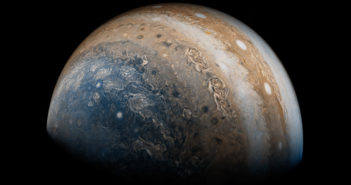
Why Jupiter Spins Fast, but Not Really Fast
Astrobites reports on a theory that could explain why Jupiter spins at the rate that it does.

Astrobites reports on a theory that could explain why Jupiter spins at the rate that it does.
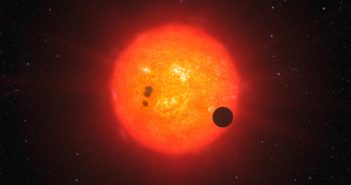
Astrobites reports on the challenge of starspots: if we don’t understand them, we won’t understand exoplanet atmospheres.
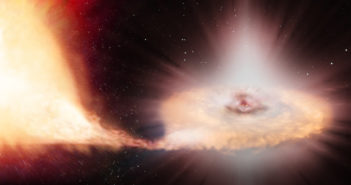
Astrobites reports on the first known white dwarf to have survived the partial explosion of a (failed) Type Ia supernova.
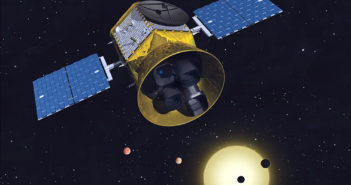
Astrobites reports on how the Transiting Exoplanet Survey Satellite (TESS) will hunt for variable objects in its crowded fields.
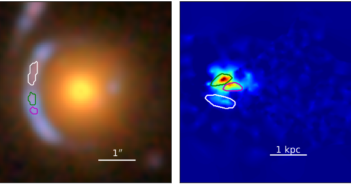
Astrobites reports on observations of a gravitationally lensed galaxy, providing a window onto early star formation in our universe.
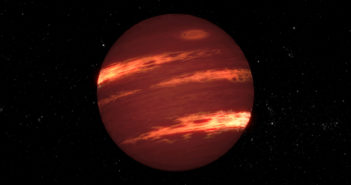
Does a newly explored, unusual planetary-mass object belong to the AB Doradus moving group? And what does it means if it does?
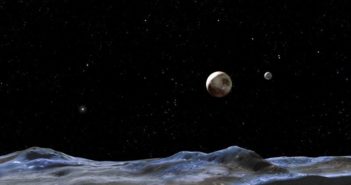
Astrobites reports on just one of Pluto’s many mysteries: the formation of its complex five-moon system.
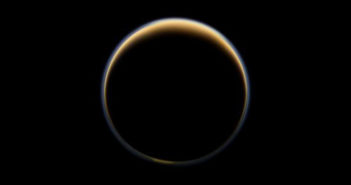
Cool, hazy exoplanets might look a lot like Saturn’s moon Titan. A new study explores the possible atmospheres of exo-Titans around a variety of host stars.
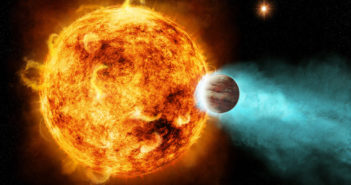
Astrobites reports on how cues from stellar atmospheric chemistry can help explain observations of the atmospheres of very hot gas giants.
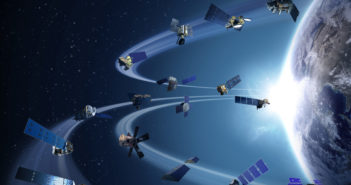
Astrobites explores a possible new detection strategy in the search for extraterrestrial intelligence.