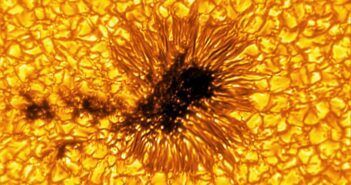
Astronomers See Braided Magnetic Fields Above a Sunspot
Thanks to increasingly high-resolution images of the Sun, researchers are catching magnetic reconnection as it happens.

Thanks to increasingly high-resolution images of the Sun, researchers are catching magnetic reconnection as it happens.

After the DART spacecraft smashed into Dimorphos, a cloud of ejecta expanded outward. A recent study builds a 3D reconstruction of the ejecta and determines that it’s more complex than previous models considered.
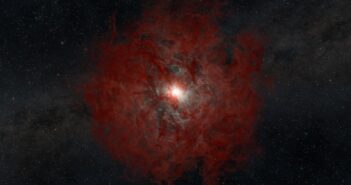
Did the disappearance of a star in the Andromeda Galaxy signal the creation of a black hole? New infrared and X-ray data help to discern what remained after the star disappeared.
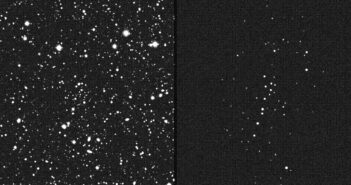
Researchers investigate whether the Milky Way’s smallest known satellite is a tiny dwarf galaxy or a star cluster.
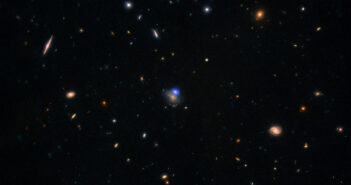
What’s new with AT 2024wpp, GRB 250702B, and GW231123? Get updates on these three exceptional astrophysical transients in today’s Monthly Roundup.
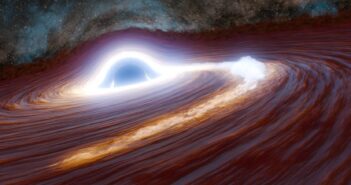
Researchers search for a connection between short-lived black hole accretion events and neutrinos — elusive, neutral, nearly massless particles.

A satellite-rich dwarf galaxy poses a potential problem for current cosmological models.
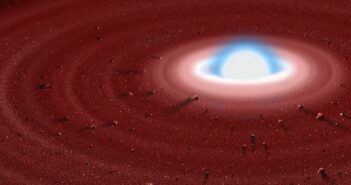
JWST spectra illuminate the composition of the debris disk around GD 362, one of the most polluted white dwarfs known.
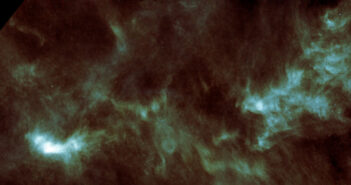
Astronomers search for a simple organic molecule in Lynds 1544, a cold, dense clump of gas that will one day become a star.

A chance alignment between galaxies allows astronomers to study a single star system as it was when the universe was just 6 billion years old.