Features RSS

illustration of the solar system

Editor’s Note: In these last two weeks of 2022, we’ll be looking at a few selections that we haven’t yet discussed on AAS Nova from among the most-downloaded articles published in AAS journals this year. The usual posting schedule will resume in January.

System Architecture and Planetary Obliquity: Implications for Long-term Habitability

Published September 2022

Main takeaway:

Pam Vervoort (University of California, Riverside) and collaborators used N-body simulations and climate models to study how the presence of a Jupiter-like planet affects the long-term habitability of an Earth-like planet in the same planetary system. The team’s simulations showed that if Jupiter’s orbit were more elliptical, more of Earth’s surface might be habitable than it is today.

Why it’s interesting:

With the number of confirmed exoplanets now above 5,000, many astronomers have switched from finding planets to characterizing them. Among the possible characterizations of an exoplanet is determining if it’s within its host star’s habitable zone. While the concept of the habitable zone is simple — and it’s straightforward to estimate if a planet is currently in a star’s habitable zone based on the luminosity of the star and the orbital distance of the planet — the actual location of a star’s habitable zone is expected to change over time. As stars age, their luminosity changes, and the dynamics of multi-planet systems can shift a planet’s orbital distance. Vervoort and collaborators’ simulations provide a way to estimate the impacts of some of these changes.

How a neighboring Jupiter-like planet affects habitability:
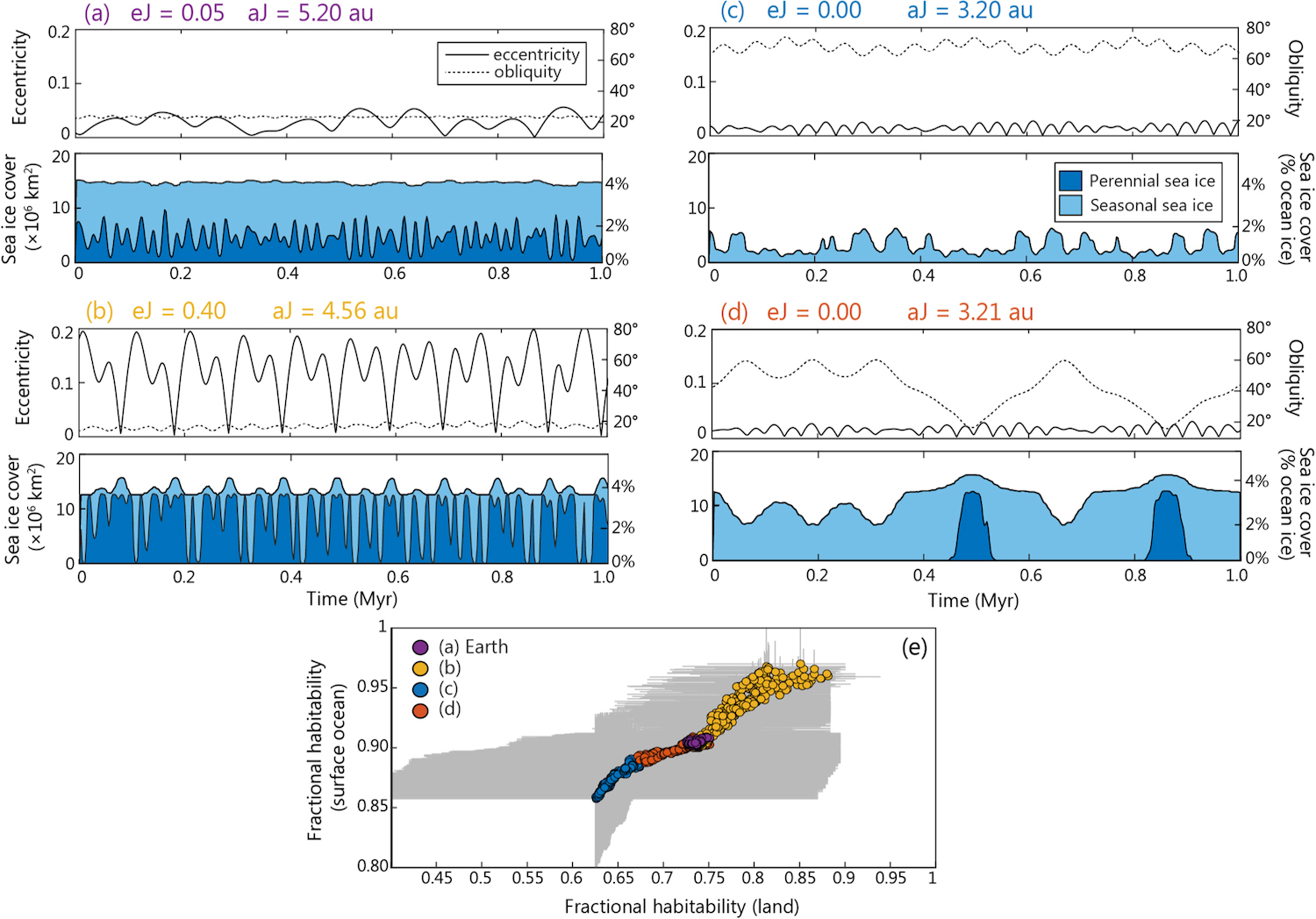
plots of simulated sea ice cover, eccentricity, obliquity, and fractional habitability for four versions of the model

Sea ice cover, eccentricity (how elliptical the orbit is), and obliquity (how tilted the planet is), and fractional habitability of an Earth-like planet in a system with a Jupiter-like planet with varying orbital parameters. Click to enlarge. [Vervoort et al. 2022]

Jupiter is often credited with helping to keep Earth habitable — by redirecting certain comets safely out of the inner solar system, for example — but is the largest planet in our solar system as helpful as it could be? Not so, say Vervoort and collaborators. The team’s simulations show that Earth’s habitability (as measured by the fraction of the planet with a hospitable air temperature and no sea ice) would be higher if Jupiter’s orbit were significantly more elliptical than it is today. While we won’t be coaxing Jupiter into a more elliptical orbit to boost Earth’s habitable area anytime soon, the results of this study can inform our investigations of potentially Earth-like planets around other stars, helping us to discern which of the growing population of exoplanets might be habitable.

Citation

Pam Vervoort et al 2022 AJ 164 130. doi:10.3847/1538-3881/ac87fd
artist's impression of an active galactic nucleus emitting a jet

Editor’s Note: In these last two weeks of 2022, we’ll be looking at a few selections that we haven’t yet discussed on AAS Nova from among the most-downloaded articles published in AAS journals this year. The usual posting schedule will resume in January.

Probing the Innermost Regions of AGN Jets and Their Magnetic Fields with RadioAstron. V. Space and Ground Millimeter-VLBI Imaging of OJ 287

Published January 2022

Main takeaway:

A team led by José Gómez (Institute of Astrophysics of Andalusia – Spanish National Research Council) presented new observations of OJ 287, an active galactic nucleus that hosts one of the most massive supermassive black holes currently known. These new data allowed researchers to study the magnetic fields very close to this superlative active galactic nucleus.

Why it’s interesting:

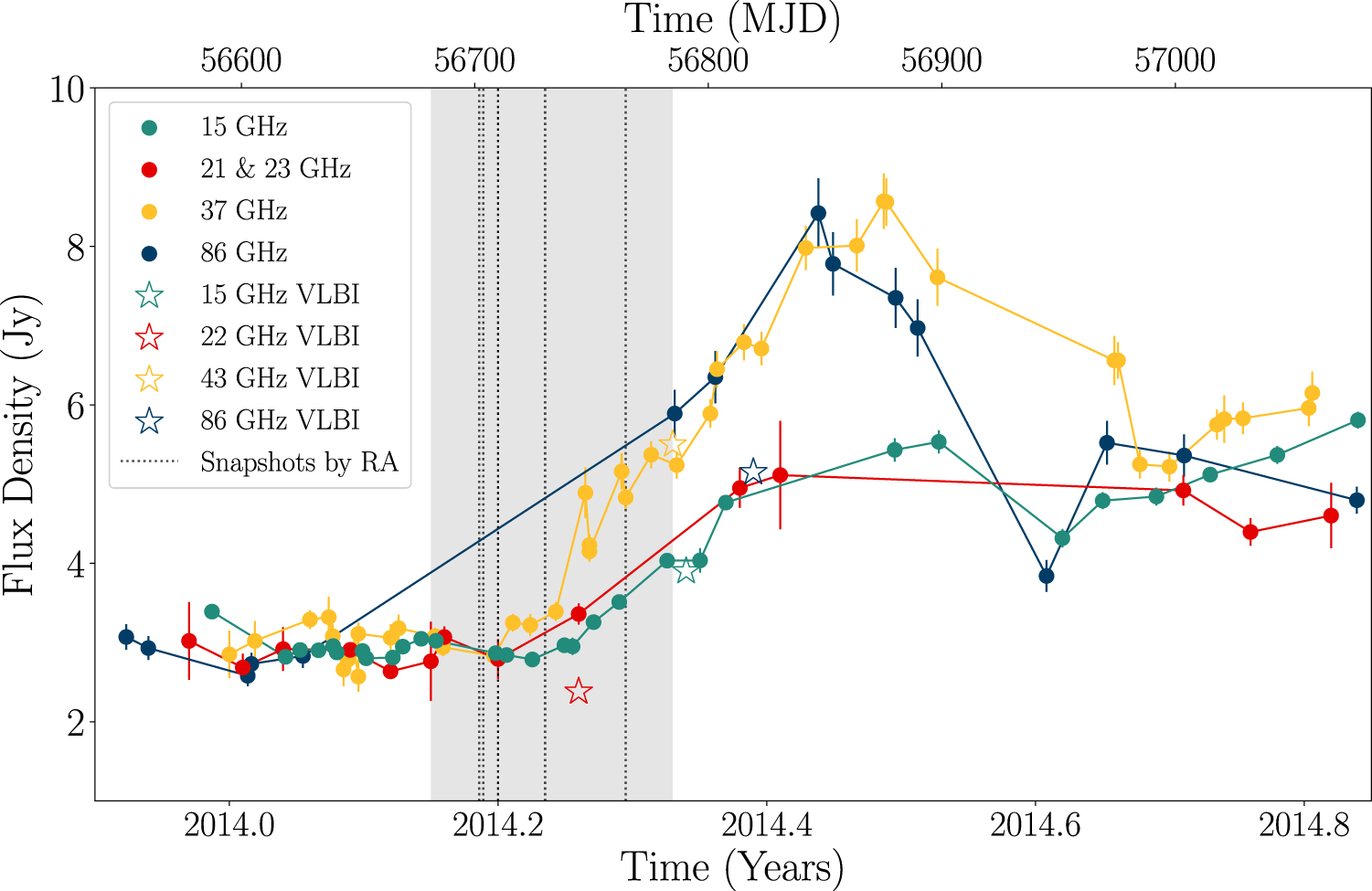
Radio flare seen from OJ 287

An example of a flare from OJ 287, seen at multiple radio frequencies. Click to enlarge. [Gómez et al. 2022]

OJ 287 is a well-studied target that has shown intriguing behavior in the past. Even among active galactic nuclei, OJ 287 is active, flaring so brightly due to material accreting onto its supermassive black hole that its outbursts were captured on photographic plates in the late 19th century. Notably, its outbursts follow a roughly 12-year pattern, which astronomers believe is due to the presence of a second supermassive black hole in orbit about the first. OJ 287 also emits a jet, the orientation of which is thought to vary considerably every 24–30 years, though the reason for this variation is unclear.

More details on these new observations:

Gómez and collaborators used arrays of radio telescopes (including one telescope in space!) to perform long-baseline interferometry. This technique combines data from multiple telescopes to yield the same resolving power as a single telescope as large as the greatest distance between two telescopes in the array. These data included information about the polarization (i.e., orientation) of the radio waves, which in turn helped the team understand OJ 287’s magnetic field structure. The new observations showed that the jet emitted by OJ 287 is bent — likely due to the accretion disk very close to the central black hole changing over time — and has a helical magnetic field. The observed magnetic field structure aligns with our theories of how active galactic nucleus jets are produced.

Citation

José L. Gómez et al 2022 ApJ 924 122. doi:10.3847/1538-4357/ac3bcc

JWST image of a galaxy cluster

Editor’s Note: In these last two weeks of 2022, we’ll be looking at a few selections that we haven’t yet discussed on AAS Nova from among the most-downloaded articles published in AAS journals this year. The usual posting schedule will resume in January.

The Sparkler: Evolved High-Redshift Globular Cluster Candidates Captured by JWST

Published September 2022

Main takeaway:

Lamiya Mowla and Kartheik Iyer from the University of Toronto, Canada, led an analysis of JWST observations of the SMACS J0723.3-7327 field — the first JWST image ever released. The team focused on multiple compact sources surrounding a strongly lensed galaxy in this image. These compact sources, dubbed “sparkles” by the research team, are likely globular clusters.

Why it’s interesting:

close-ups of the three images of the Sparkler galaxy

Left panel: Portion of the SMACS J0723.3-7327 field with the three images of the Sparkler labeled. Panels 1, 2, and 3: Close-ups of each of the three images of the Sparkler. Click to enlarge. [Mowla et al. 2022]

SMACS J0723.3-7327 is a galaxy cluster located about 4 billion light-years from Earth. While the galaxies within the cluster are spectacular in their own right, it’s a galaxy behind the cluster that’s the subject of this study; the immense gravity of the galaxy cluster bends the light from an even more distant galaxy dubbed “the Sparkler,” creating three distinct images of the galaxy. The three images of the Sparkler each contain up to a dozen sparkles, and further analysis of these sparkles reveals them to be spatially unresolved, red in color, and with no evidence of active star formation. Based on these properties, the team suggested that we’re seeing individual globular clusters in a galaxy billions of light-years away!

What the Sparkler can tell us about globular cluster formation:

The timeline for the formation of globular clusters is uncertain, with competing theories suggesting that they either require the particular conditions present very early in the universe to form, or they form continuously as galaxies evolve. Given the red color of these clusters and their lack of star formation, Mowla and Iyer’s team suggest that these clusters are highly evolved, with an age of 3.9–4.1 billion years. This means that the clusters formed at a redshift of 7–11, corresponding to when the universe was roughly 400–800 million years old, shortly after the first stars began to shine. While more analysis of these observations is required to fully understand the nature of the sparkles, early results suggest that globular cluster formation coincides with the earliest stages of galaxy assembly.

Citation

Lamiya Mowla et al 2022 ApJL 937 L35. doi:10.3847/2041-8213/ac90ca

photograph of the asteroid Ryugu

Editor’s Note: In these last two weeks of 2022, we’ll be looking at a few selections that we haven’t yet discussed on AAS Nova from among the most-downloaded articles published in AAS journals this year. The usual posting schedule will resume in January.

CI Asteroid Regolith as an In Situ Plant Growth Medium for Space Crop Production

Published July 2022

Main takeaway:

Steven Russell (University of Wisconsin−Madison; University of North Dakota) and collaborators studied the possibility of growing plants in soil derived from the loose surface material, or regolith, of asteroids. While lettuce, radishes, and peppers all grew in mixtures of simulated regolith and peat moss, increasing the amount of regolith decreased the yield of each plant, and no seeds sprouted in pure regolith.

Why it’s interesting:

If humans want to explore the solar system, we’re going to need a way to produce substantial amounts of food in space. One possible plant-growing medium is asteroid regolith, which is abundant in our solar system. Recent studies of meteorites as well as spacecraft missions to asteroids, such as the Hayabusa2 mission to Ryugu and the OSIRIS-REx mission to Bennu, have suggested that certain types of asteroids called carbonaceous asteroids contain nearly unaltered material left over from the formation of our solar system. These primitive asteroids are particularly promising sources of “soil” since they contain small amounts of carbon, minerals, and nutrients.

What we learned from sowing seeds in asteroid dirt:

experimental results

Experimental results 55 days after planting. The pots with no visible growth contain pure simulated regolith. [Adapted from Russell et al. 2022]

Russell and collaborators found that all three vegetable types grew in a mixture of simulated asteroid regolith and peat moss, but no vegetable seeds sprouted in pure simulated regolith. On average, seeds planted in more regolith and less peat moss showed less growth, as measured by the leaf area, plant height, and overall mass of plant matter. The authors attributed this trend to how compact the simulated regolith is — preventing air and water from reaching the plants’ roots — as well as the dearth of necessary nutrients. This suggests that asteroid regolith will need to be adapted in some way before it can be used to grow plants, such as by mixing in plant matter to make it less compact.

Citation

Steven. J. Russell et al 2022 Planet. Sci. J. 3 155. doi:10.3847/PSJ/ac74c9

photograph of the Large Magellanic Cloud

Editor’s Note: In these last two weeks of 2022, we’ll be looking at a few selections that we haven’t yet discussed on AAS Nova from among the most-downloaded articles published in AAS journals this year. The usual posting schedule will resume in January.

Discovery of PSR J0523-7125 as a Circularly Polarized Variable Radio Source in the Large Magellanic Cloud

Published May 2022

ASKAP polarized light images of the Large Magellanic Cloud and the new pulsar

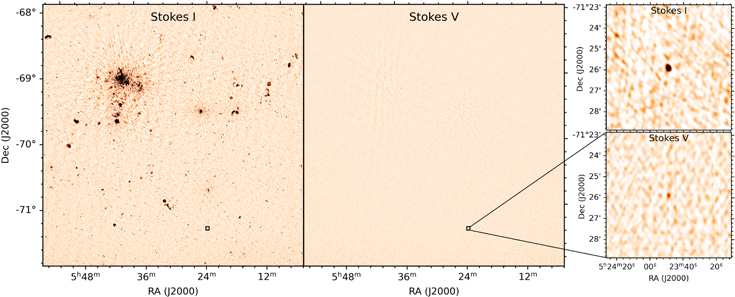
Total intensity (left) and circularly polarized intensity (right) images of part of the Large Magellanic Cloud at 888 megahertz, as seen by ASKAP. The zoomed-in images show the location of the newly discovered pulsar. Click to enlarge. [Wang et al. 2022]

Main takeaway:

A team led by Yuanming Wang (The University of Sydney, Australia) reported the discovery of a pulsar — the dense, rapidly spinning remnant of a massive star’s core — using radio continuum data from the Australian Square Kilometre Array Pathfinder (ASKAP). The newfound pulsar is located in the Large Magellanic Cloud, a satellite galaxy of the Milky Way, and its discovery may pave the way for astronomers to find other extragalactic pulsars with unusual properties.

Why it’s interesting:

The newly discovered pulsar, PSR J0523−7125, is one of the most luminous known radio pulsars, but several aspects of its radio signal made it difficult to find: while most pulsars are identified via their brief flashes of radio emission, PSR J0523−7125’s pulses are uncharacteristically broad, and its radio emission falls off sharply at higher frequencies. Wang and collaborators observed the new pulsar as part of the Variables and Slow Transients (VAST) survey and identified it based on its high degree of circular polarization and lack of a multiwavelength counterpart.

Prospects for finding further pulsars:

This work by Wang and collaborators shows that radio surveys are a viable means of discovering pulsars with unusual pulse properties. The combination of circular polarization data with multiwavelength images is especially useful, allowing researchers to identify sources that emit circularly polarized light but are absent in optical images. The authors also posit that future searches with the Next Generation Very Large Array — a network of 263 radio dishes scheduled to begin construction in 2026 — could lead to the first discovery of a pulsar in another neighboring galaxy, Andromeda.

Citation

Yuanming Wang et al 2022 ApJ 930 38. doi:10.3847/1538-4357/ac61dc

photograph of a butte near Jezero crater on Mars

Humans have used robotic surrogates to explore Mars’s geology since 1997, when the Sojourner rover crawled the length of a football field on the red planet’s surface. But while the robots we’ve sent to Mars have grown more sophisticated over time, one question in particular lingers: would rover-collected and human-collected data from the same rocks lead us to the same conclusions?

Remote Investigations of the Red Planet

The Mars rovers have advanced our understanding of Mars’s current geology and past history, including providing evidence that our neighboring planet once had persistent liquid water on its surface. But while the Mars rovers have extended geologists’ reach by millions of miles, robotic rovers and human geologists are not the same: a rover’s resources are exceedingly scarce, requiring teams of scientists on Earth to plan its observations carefully, while a human team can operate more flexibly and make decisions on the fly.

It’s possible that the inherent limitations of rover data affect the conclusions that scientists on Earth draw from those data. Since we can’t (yet) send human geologists to Mars to compare their observations to those made by the Mars rovers, scientists got creative and instead used human rovers on Earth to learn more about this issue.

Thinking Like a Rover

aerial view of the field site

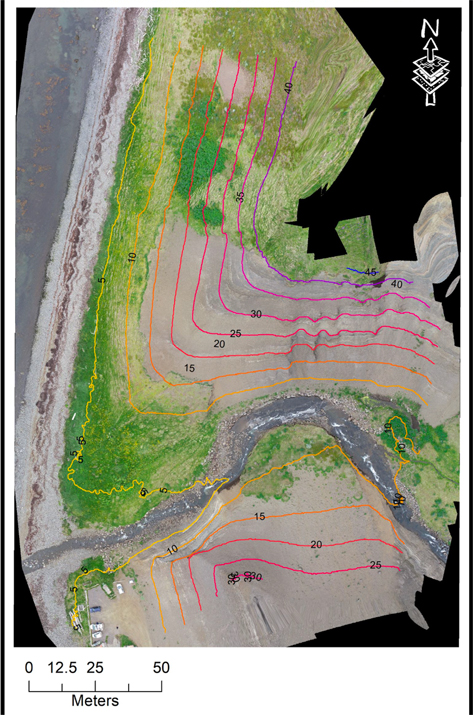
Aerial view of the field site in Iceland, acquired with a drone to mimic orbital data. [Yingst et al. 2022]

Aileen Yingst (Planetary Science Institute) and collaborators traveled to Tjörnes peninsula in Iceland to study a 60-meter-high rock outcropping that could serve as an analogue for the layered rocks seen in Jezero crater on Mars, which the Perseverance rover is currently exploring. The rocks in Jezero crater, similar to those on the Tjörnes peninsula, likely contain layers of volcanic and sedimentary materials.

Yingst and coauthors asked a human team and a “rover” team to investigate the rock outcropping using commercial instruments with similar resolution to those on the Mars rover. The human team used standard field techniques to study the outcropping while the rover team studied the rocks remotely, directing just two team members to act as the “rover” and take measurements based on the instructions of team members who were not at the field site. Both teams planned their investigations using aerial photographs of the region, similar to how rover missions use images from orbiting spacecraft for reconnaissance.

images collected by the rover team

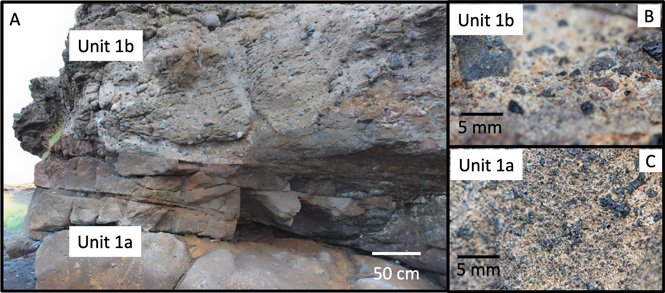
Images collected by the rover team. Click to enlarge. [Yingst et al. 2022]

Notes for the Future

Yingst and collaborators found that the rover team was typically able to determine if materials were volcanic or sedimentary, but the human team made more accurate and more detailed assessments, and they were able to place the materials in context. This may have been because the human team was able to trace rock layers horizontally and make observations from various distances, which allowed them to determine if certain features were continuous between regions as well as determine the scale of the features.

The authors noted that the ability to make observations from different distances or angles was crucial to the traditional field team’s success. This finding might prompt future Mars rover investigations to allocate more time to collecting images at certain resolutions, if those images might hold the key to correct identifications.

Citation

“Using Rover-analogous Methodology to Discriminate Between Volcanic and Sedimentary Origins in Successions Dominated by Igneous Composition,” R. Aileen Yingst et al 2022 Planet. Sci. J. 3 240. doi:10.3847/PSJ/ac8429

artist's impression of a collapsar and an associated gamma-ray burst

Researchers are still working out where heavy metals are made in the universe. A recent publication explores ways to tell if elements heavier than iron can be created when extremely massive stars collapse to form black holes.

Making Heavy Metals

In the cores of stars, nuclear fusion combines light elements into heavier ones, with the largest stars generating elements up to iron. But elements bulkier than iron must arise elsewhere, since a star that attempts to create anything heavier is doomed to collapse in a supernova explosion.

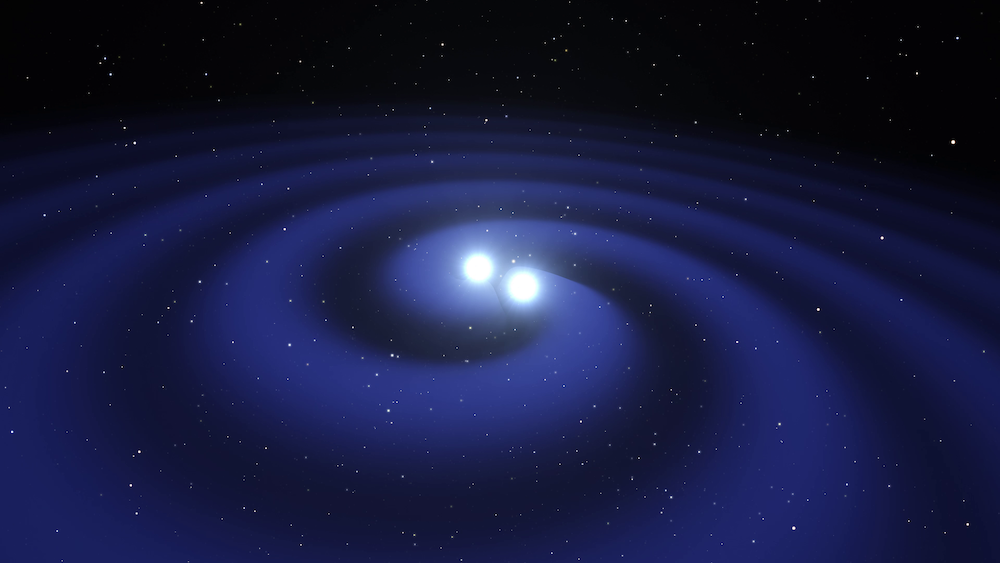
illustration of two neutron stars approaching a merger.

An illustration of two neutron stars approaching a merger. [ESO/L. Calçada; CC BY 4.0]

About half of the elements beyond iron on the periodic table are thought to form through something called the r-process, in which atoms rapidly capture multiple neutrons in a dense, hot environment. Core-collapse supernovae were early contenders for r-process production, but simultaneous observations of light and gravitational waves from colliding neutron stars cemented mergers as an important source of heavy elements. Now, researchers are searching for ways to determine if certain supernovae could be sites of r-process element creation after all.

Collapsars as Candidates

Collapsars are rapidly rotating massive stars that explode as supernovae when they can no longer sustain nuclear fusion, ultimately creating a black hole. As the star’s core collapses, material in the outer layers forms an accretion disk, in which conditions for r-process element formation may exist. To probe the possible role that collapsars play in generating r-process elements, Jennifer Barnes (University of California, Santa Barbara) and Brian Metzger (Columbia University and Flatiron Institute) modeled the effects of r-process nucleosythesis on the light curves of collapsars exploding as supernovae.

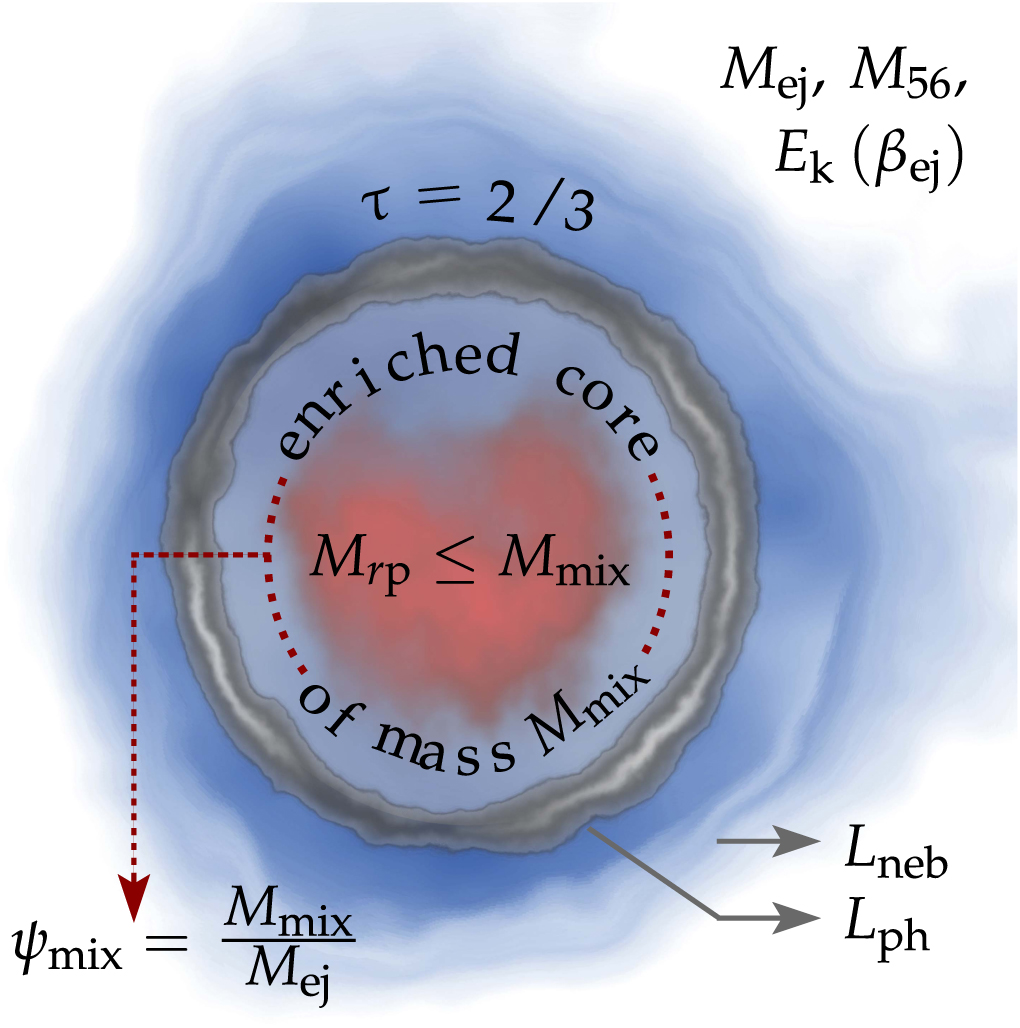
illustration of the authors' model

An illustration of the authors’ model, in which r-process-enriched material is surrounded by an r-process-poor shell. [Barnes & Metzger 2022]

Barnes and Metzger first used an analytical model to predict when the presence of r-process products might be observable as the supernova’s emission rises and falls, as well as how best to observe these effects. The team found that it may be possible to discern whether a collapsar explosion contains r-process material by making long-wavelength observations several months after the explosion, depending on how the material is distributed, but early in the explosion might offer a better chance of identifying these events.

Light Curve Modeling

As a follow-on to their initial investigation, the team modeled the evolution of light curves from collapsar explosions that produce varying amounts of r-process material. These models explore how supernova light curves change as a function of the mass ejected in the explosion, the velocity of the ejected mass, the amount of nickel-56 (a radioactive form of nickel that decays into cobalt-56, creating the characteristic shape of many supernova light curves), and the amount and distribution of r-process material.

modeled light curves showing the effect of changing the degree of mixing.

Demonstration of how the degree of mixing (ψmix) affects the resultant light curve. As the degree of mixing increases (higher ψmix), the emission shifts toward the near-infrared. Click to enlarge. [Barnes & Metzger 2022]

In general, the presence of r-process material causes supernova light curves to shift toward redder frequencies, though the distribution of the material plays a large role in how visible this effect is; material concentrated at the center of the explosion will have little effect, while material mixed throughout will have a larger effect. Ultimately, the authors concluded that monitoring supernovae for ~75 days after they explode could be a viable way to identify collapsars that produce r-process elements, paving the way for near-infrared follow-up observations with JWST.

Citation

“Signatures of r-process Enrichment in Supernovae from Collapsars,” Jennifer Barnes and Brian D. Metzger 2022 ApJL 939 L29. doi:10.3847/2041-8213/ac9b41

A photograph-like image of an Earth-like planet in the foreground and its host star in the distant background.

Initial discovery is one thing, but true knowledge of a new exoplanet system requires careful follow-up studies. Sometimes, this extra effort simply refines what astronomers had already inferred; other times, it can turn up a surprise. In the best cases, such as a recent study focused on a planet circling GJ 3929, it can do both.

Suggestions of a Planet

It all started with the Transiting Exoplanet Survey Satellite (TESS), NASA’s latest planet-hunting lookout. Over its now four years in orbit, TESS has stared at millions of stars, checking each for signs of any attendant planets buzzing nearby. While TESS has been great at its job, it’s more of a scout for the exoplanet community than a detective: with so much sky to search, this busy satellite usually watches a star for only a few days at a time before moving on, alerting astronomers when it sees something suspicious but leaving the confirmation to others.

TESS phoned home to report on one of these candidate planets, GJ 3929b, in May of 2020. This one caught the eye of several teams long accustomed to scanning TESS reports: if this one was real, it was interesting. Although it was purportedly similar in size to Earth, it whipped around its tiny host star once every two days, making our languid year-long trip around the Sun seem lazy.

Earlier in 2022, another team published their analysis of GJ 3929b, which confirmed it was indeed an exo-Venus, and which hinted at a possible second, slightly farther out planetary companion. Recently, a team led by Corey Beard (University of California, Irvine) revealed their own exhaustive analysis, which went a step further and confirmed the second planet.

Many Methods

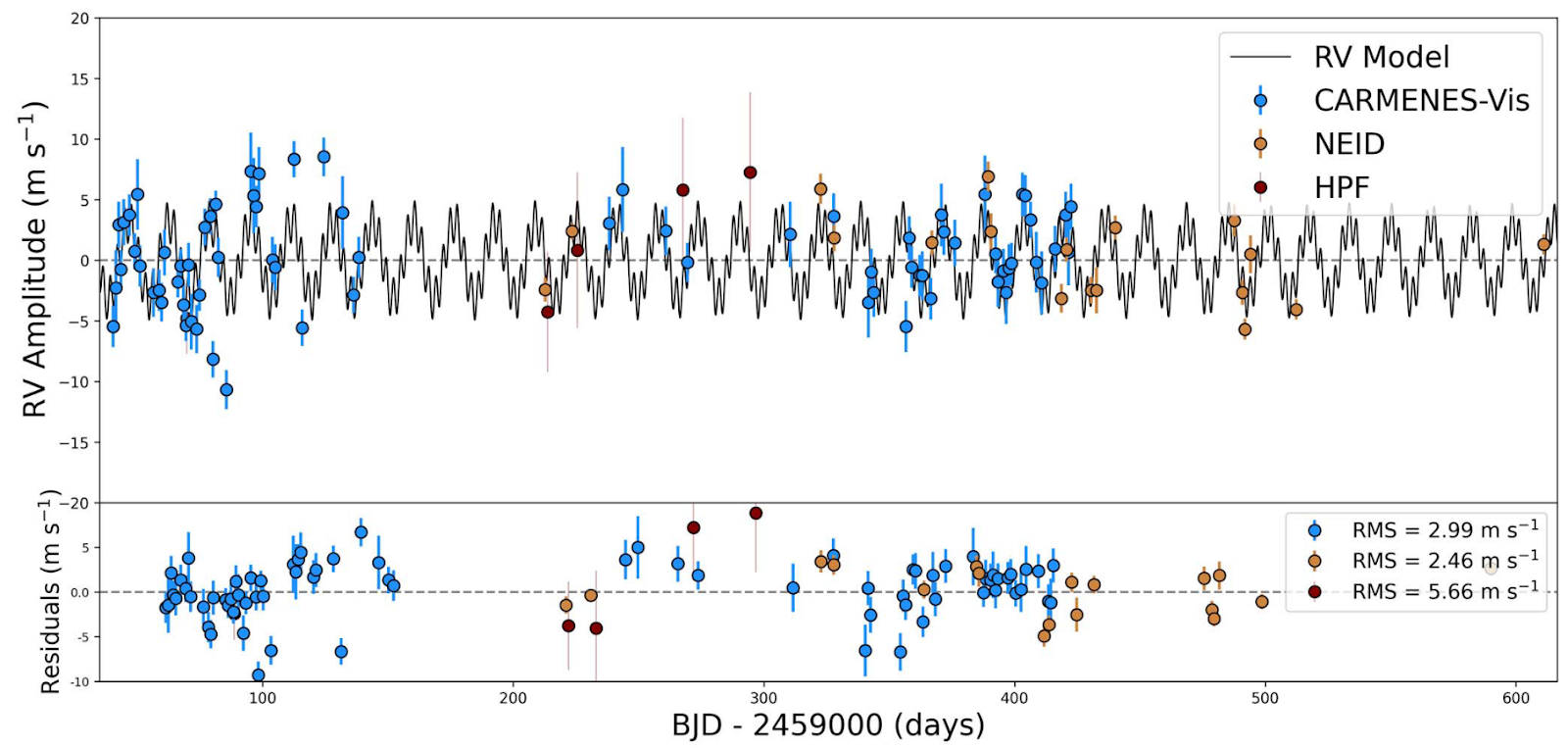
A two-panel plot, both with time on the X axis and line of sight velocity on the Y. The top panels shows data points colored by which of 3 telescopes collected them. The bottom panel shows the residuals of each point, which are approximately even about zero.

The best-fitting model of the radial velocity of GJ 3929, with data collected from multiple telescopes overplotted. The long-period component is from the newly confirmed planet c, while the faster sinusoid marks the influence of the inner planet b. [Beard et al. 2022]

To both refine the initial measurements TESS sent back and to search for other planets hiding nearby, Beard and collaborators employed an entire flotilla of telescopes. Each of which was tasked with gathering some new type of information: some took high-resolution images to search for nearby dim red stars which TESS missed, some acquired diagnostic spectra of the host star, and others recorded additional transits of the initial planet.

The centerpiece of their analysis, however, turned on a particularly powerful new tool: the NEID (rhymes with “fluid,” from the Tohono O’odham word meaning “to see”) spectrometer at the Kitt Peak National Observatory. With a spectral resolution of R=110,000 and the ability to detect changes in the star’s motion down to 1.18 m/s, the team not only pinned down the mass of GJ 3929b, they also confirmed that GJ 3929c really was another planet circling a bit farther out on an a 15-day orbit.

A Special Planet

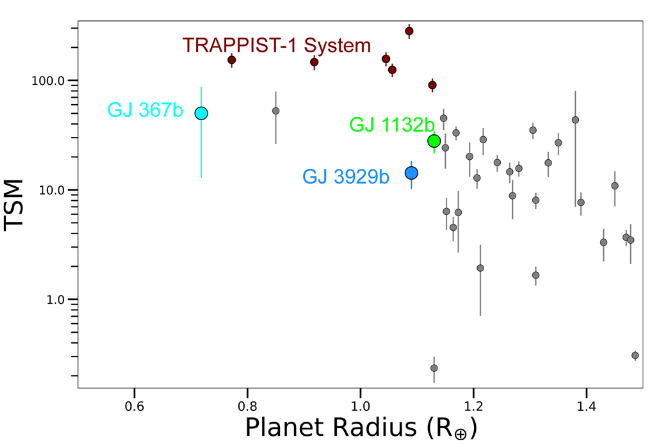
A plot with planet radius on the X axis and TSM on the Y. The TRAPPIST-1 planets occupy the upper left corner, though GJ 3929 is nearby. Two additional systems are also labeled, and many others are included without labels.

A scatterplot showing how amicable planets of different radii are to atmosphere characterization (Transmission Spectroscopy Metric (TSM)). GJ 3929b, the main focus of this work, is shown in blue: it is one of the most promising known small planets for future atmospheric studies. [Beard et al. 2022]

Every newly discovered planet is equally special, but in the era of JWST, some are more equal than others. That’s because JWST has a preference for puffy planetary atmospheres around puny stars: that’s the combination which is easiest for it to sniff out different molecules floating in the exoplanet’s air. Excitingly, Beard and collaborators showed that if GJ 3929 has an atmosphere, it’s likely perfect for this type of follow up. So, perhaps in a few years, we’ll see more follow-up of this system, but this time from another space-based informant.

Citation

“GJ 3929: High-precision Photometric and Doppler Characterization of an Exo-Venus and Its Hot, Mini-Neptune-mass Companion,” Corey Beard et al 2022 ApJ 936 55. doi:10.3847/1538-4357/ac8480

infrared JWST images of the interacting galaxy pair VV 114

There’s more to interacting galaxies than what meets the eye — and luckily, telescopes across the electromagnetic spectrum can reveal what our eyes can’t see. What can recent JWST observations tell us about the source of the infrared emission from the interacting galaxy pair VV 114?

A Partially Shrouded Interaction

visible-light image of the interacting galaxies VV 114

Optical image of the interacting galaxies in VV 114 taken by the Hubble Space Telescope. The galaxies are shown in the same orientation as in the cover image. [NASA, ESA, the Hubble Heritage (STScI/AURA)-ESA/Hubble Collaboration, and A. Evans (University of Virginia, Charlottesville/NRAO/Stony Brook University)]

The interacting galaxy pair VV 114 is made up of VV 114W and VV 114E. In visible-light images, VV 114W shines brightly, with dozens of young star clusters dotting its indistinct spiral arms, but VV 114E is obscured by dark, dusty filaments. In infrared images, the galaxies exchange roles: the optically bright VV 114W takes a backseat to VV 114E, which is extremely luminous at longer wavelengths. In fact, most of the energy released in the interaction of the two galaxies comes from VV 114E’s brilliant infrared emission!

Although astronomers have studied the infrared light from these interacting galaxies before, JWST is able to resolve substantially finer details than previous infrared space telescopes — and that means gaining a better understanding of where and how the galaxies’ infrared emission is generated.

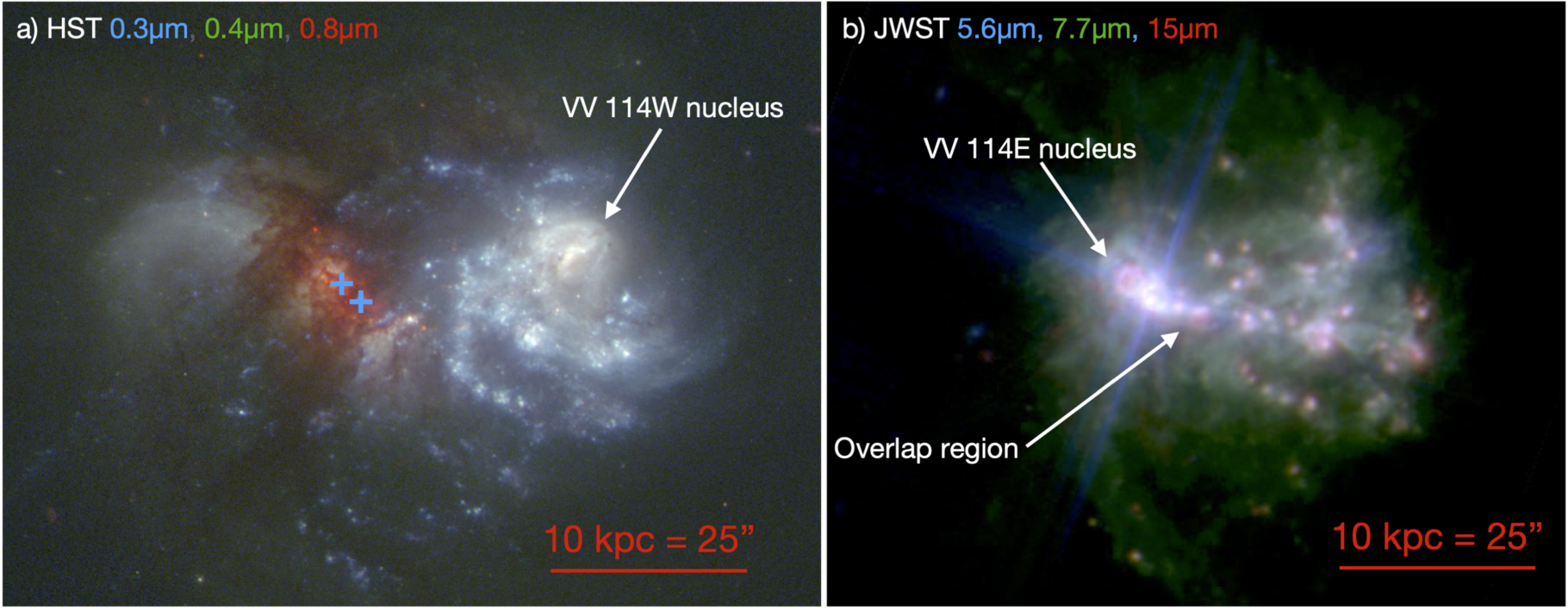
multiwavelength views of VV 114 from several different ground- and space-based telescopes

Images of VV 114 from the Hubble and Spitzer space telescopes (top row), JWST (middle row), and the Very Large Array (VLA) and the Atacama Large Millimeter/submillimeter Array (ALMA) (bottom row). Click to enlarge. [Evans et al. 2022]

Infrared Investigation

A team led by Aaron Evans (University of Virginia) obtained new observations of the VV 114 galaxies with JWST’s Mid-Infrared Instrument (MIRI) at wavelengths of 5.6, 7.7, and 15 microns (1 micron = 10-6 meter). These observations showed that the bright nucleus of VV 114E contains two cores separated by about 2,050 light-years, and one of these two cores is itself divided into two components.

Previous radio-wavelength observations suggested that one of VV 114E’s nuclear cores contains an active galactic nucleus: a supermassive black hole that is accreting gas from its neighborhood. Intriguingly, the new JWST observations suggest that the proposed active galactic nucleus–containing core is actually a star-forming region — but the other core might host an active galactic nucleus instead!

Star-Forming Regions Abound

comparison of visible and near-infrared images of the galaxies VV 114

Comparison of visible-light observations of VV 114 by the Hubble Space Telescope (left) with mid-infrared observations of the galaxy pair with JWST (right). VV 114E’s bright nucleus and many star-forming regions become visible in the JWST image. Click to enlarge. [Evans et al. 2022]

In the outskirts of VV 114E, Evans and collaborators counted about 40 small knots of emission, the colors of which suggest that they are star-forming regions. Nearly a third of these star-forming regions were hidden in optical images, and the authors estimated that VV 114E’s star formation rate is higher than in typical star-forming galaxies.

The authors also noticed an abundance of emission in the 7.7-micron band, which encompasses emission from polycyclic aromatic hydrocarbons — molecules that consist of multiple rings of carbon atoms — indicating that the light from young stars is exciting these molecules throughout the galaxy. Future work, including analysis of spatially resolved spectra of the galaxy, will likely produce more details to consider — stay tuned!

Citation

“GOALS-JWST: Hidden Star Formation and Extended PAH Emission in the Luminous Infrared Galaxy VV 114,” A. S. Evans et al 2022 ApJL 940 L8. doi:10.3847/2041-8213/ac9971

Visible-light image of sunspots on the Sun's surface

What makes some sunspots produce solar flares while others don’t? A recent research article compares the properties of common, quiescent sunspots to those that are raring to flare.

magnetic field map of a single large sunspot

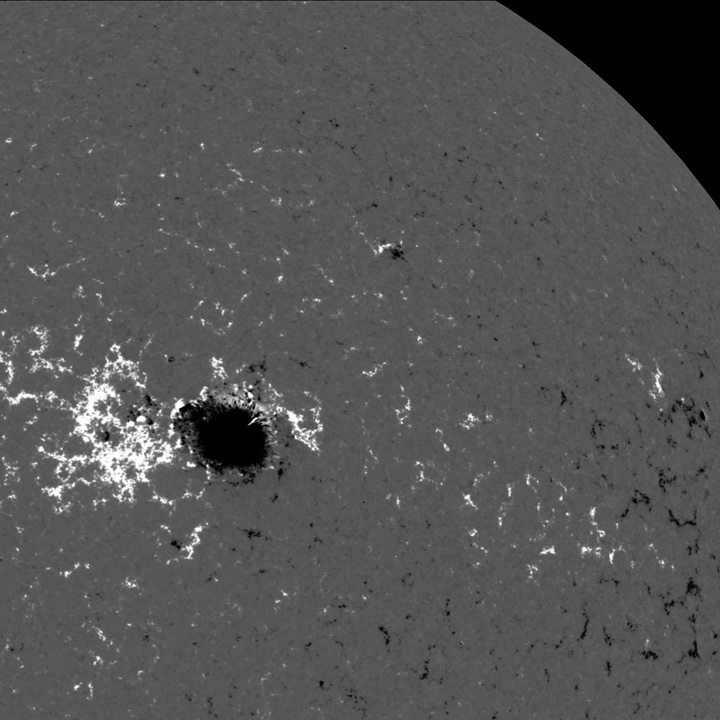
The magnetic field of this single, large sunspot pair was mapped by the Helioseismic and Magnetic Imager on the Solar Dynamics Observatory. The outward-pointing magnetic field is white and the inward-pointing magnetic field is black. [NASA/Solar Dynamics Observatory]

From Sunspots to Solar Flares

Sunspots form where the Sun’s magnetic field pokes through the solar surface, creating small regions of cool, dark plasma. Sunspots are dark only in comparison to the surrounding solar surface; if you could scoop out a sunspot and hold it against the night sky, it would shine brighter than the Moon.

While many sunspots form and fade without incident, some are associated with bursts of high-energy radiation called solar flares. A longstanding goal of solar physics is to understand the conditions that lead to solar flares and other solar outbursts, which can, in turn, help us understand the Sun’s complex magnetic field. The question is, what makes some sunspots flare rather than fade?

Characterizing Sunspots

Some sunspot terminology before we dig into the details: when you look at an image of a sunspot, you’ll see a dark spot ringed by a slightly lighter area. The dark spot at the center is the umbra (Latin for “shade”), where the magnetic field is the strongest and runs nearly vertically out of or into the Sun’s surface. The surrounding area is the penumbra, where the magnetic field is weaker and less vertical.

four diagrams of magnetic flux tube configurations

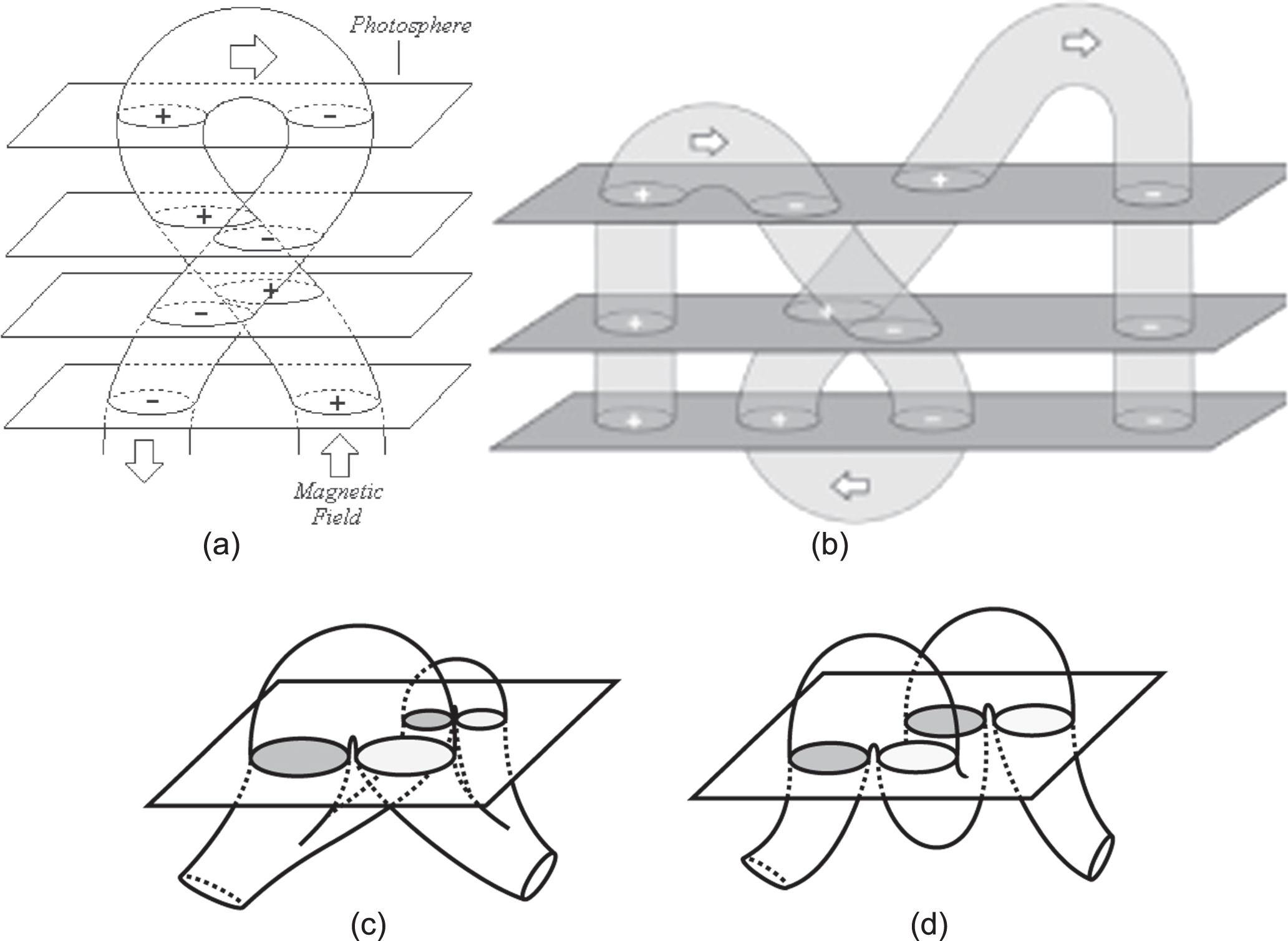
Four possible configurations of the solar magnetic field that could create delta sunspots. Click to enlarge. [Norton et al. 2022]

Sunspots usually come in pairs, with the solar magnetic field pointing out of one spot and into the other. The umbrae of these paired sunspots can each have their own penumbra, or they can be squished into a single penumbra. It’s umbrae in this latter configuration, referred to as magnetic knots, that tend to cause solar flares.

Aimee Norton (Stanford University) and collaborators used data from the Helioseismic and Magnetic Imager aboard the Solar Dynamics Orbiter to compare the characteristics of sunspot groups that contain magnetic knots, called delta sunspots, to those that don’t, called beta sunspots. Beta sunspots are common, making up 64% of all sunspots, but they are less likely to be associated with solar flares than delta sunspots.

Delta Versus Beta

intensity and magnetic field strength of an active region over the course of several days

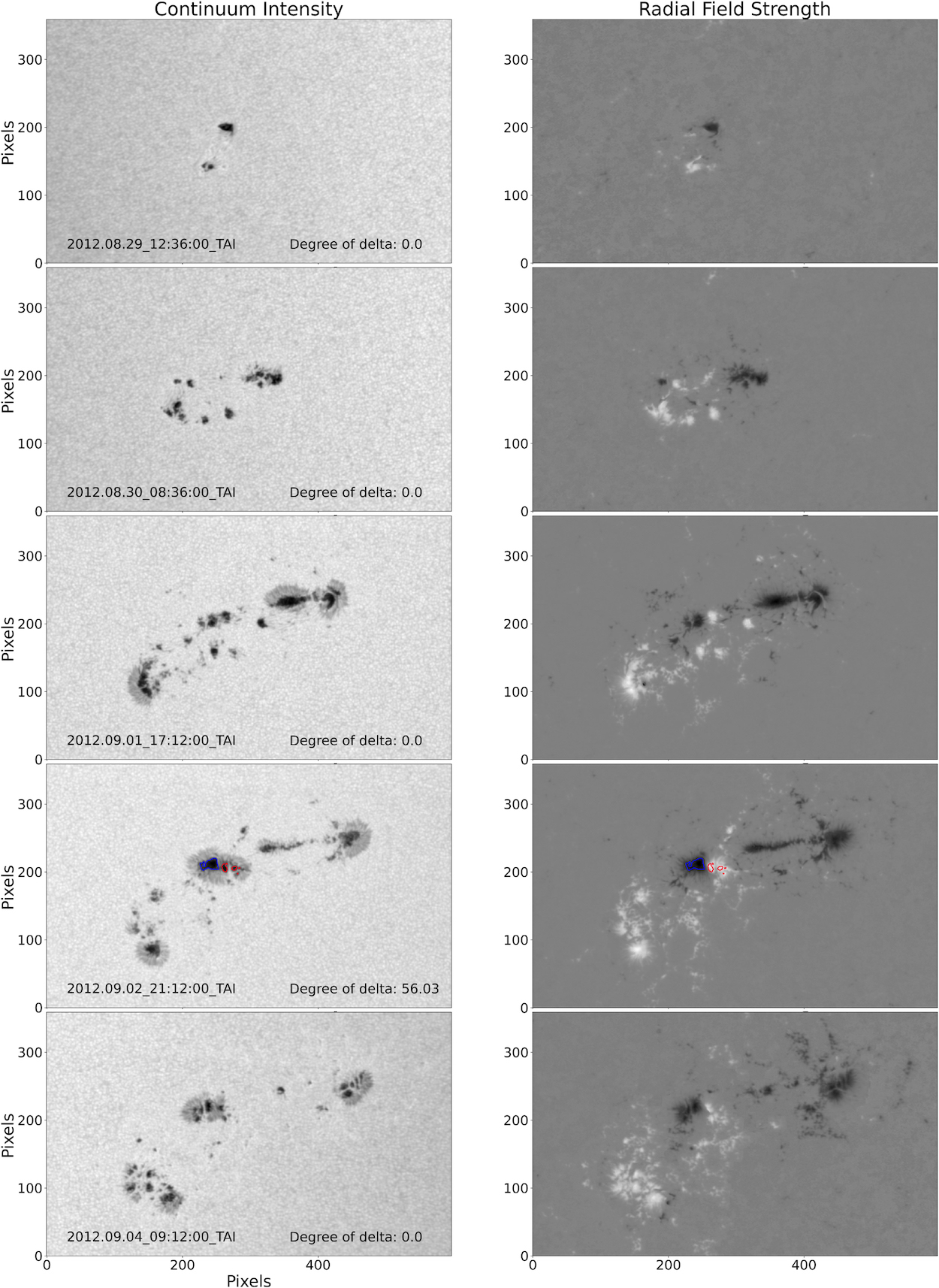
Intensity (left column) and magnetic field strength and direction (right column) for a single active region at five different times. The sunspots within the active region move into and out of the delta configuration over several days. [Norton et al. 2022]

As Norton and coauthors tracked delta sunspots throughout their lives, they found that delta sunspots are not born, but made: as the sunspot umbrae evolved, they spent just 55% of their time in the delta-sunspot configuration. The authors quantified the properties of their sample of delta sunspots in several ways, including measuring their rotation rate (more than eight times higher than for beta sunspots) and their typical umbral flux (2.6 times higher than for beta sunspots).

The team also sought to understand whether delta and beta sunspots tended to follow established trends, such as the leading sunspot in a pair being located closer to the equator than the trailing sunspot. Intriguingly, delta sunspots are much more likely to break the rules, bucking established trends 72% of the time while beta sunspots fell in line all but 9% of the time.

This work presents an important step along the path to understanding why some sunspots are associated with solar flares. For a complete analysis of the properties of delta and beta sunspots, be sure to check out the original research article linked below!

Citation

“Characterizing the Umbral Magnetic Knots of δ-Sunspots,” Aimee A. Norton et al 2022 ApJ 938 117. doi:10.3847/1538-4357/ac8eb2

1 39 40 41 42 43 122