Astrobites RSS

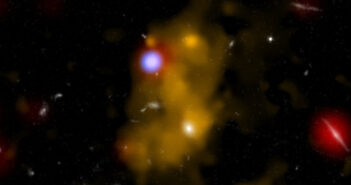
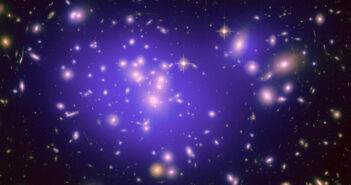
composite optical and X-ray image of NGC 1068

Editor’s Note: Astrobites is a graduate-student-run organization that digests astrophysical literature for undergraduate students. As part of the partnership between the AAS and astrobites, we occasionally repost astrobites content here at AAS Nova. We hope you enjoy this post from astrobites; the original can be viewed at astrobites.org.

Title: Solving the Multi-Messenger Puzzle of the AGN-Starburst Composite Galaxy NGC 1068
Authors: Björn Eichmann et al.
First Author’s Institution: Norwegian University for Science and Technology; Ruhr University Bochum, Germany; Ruhr Astroparticle and Plasma Physics Center
Status: Published in ApJ

Pieces of the Multi-Messenger Puzzle

Starburst galaxies have an extremely high rate of star formation (between 10 and 300 times the mass of our Sun per year, while the Milky Way forms new stars at a rate of about 2 masses of the Sun per year)1 and supernova explosions, making them an incredibly interesting source for astronomers studying the evolution of stars and galaxies. But starburst galaxies can also be intriguing multi-messenger sources because of their emission of high-energy gamma rays, indicating that these sources can accelerate particles up to extremely high energies.

When high-energy particles (usually called cosmic rays) are accelerated to extreme energies, they can smash into each other, producing high-energy gamma rays and neutrinos. These messengers (cosmic rays, photons, and neutrinos) can give us immense amounts of information about their sources. Today’s authors delve into the starburst galaxy NGC 1068, which also has an active galactic nucleus at its center, making it an interesting source for multi-messenger study. The authors describe their model for emission of gamma rays and neutrinos from NGC 1068 and compare the model to observations from multiple telescopes (VLA, ALMA, Fermi-LAT, MAGIC, and IceCube).

What Does a Starburst Galaxy Look Like?

Figure 1 shows a sketch of the structure of NGC 1068, including its active galactic nucleus.

a cartoon of an active galactic nucleus in a starburst galaxy

Figure 1: A sketch of the active galactic nucleus in a starburst galaxy (not to scale), highlighting different regions for the model. The active galactic nucleus can be seen at the center, surrounded by the corona (yellow, Zone I) and its accretion disk. At the edges, just past the torus, is the starburst region (purple with stars, Zone II). These show the two zones for emission in the model discussed in this research article. [Eichmann et al. 2022]

Starting from the center of the sketch, the supermassive black hole central to the active galactic nucleus can be seen. An accretion disk surrounds the active galactic nucleus, and this matter is being pulled inward towards the black hole (this is called accretion of the material, hence the name). Outside the plane of the accretion disk is the corona region of the active galactic nucleus. Moving outward, there is a torus region of colder gas. Outside of the torus region is the starburst region, where the rest of the galaxy resides and orbits around the active galactic nucleus.

Also on this sketch we can see the three different types of messengers that are being emitted by different regions. Cosmic rays (labeled CR) are shown in red, and they can be seen to meander due to the presence of magnetic fields acting on these charged particles. Photons can be seen in sine-wave-like lines, with the frequency indicated by the frequency of the sine wave. This article focuses on the highest energy photons, gamma rays, here labeled in pink, and other photons are labeled in black. However, NGC 1068 has also been observed with other frequencies of photons, so the authors incorporate radio and infrared data for NGC 1068 into the fit.

The green arrows represent neutrinos, which are being produced in cosmic ray interactions. Because neutrinos rarely interact, they travel away from the source virtually unimpeded.

So, what do we see when we look for gamma rays and neutrinos from this source? The authors describe emission from two main zones of NGC 1068:

Zone 1: Active galactic nucleus corona: here, particles are accelerated by the active galactic nucleus.

Zone 2: Starburst region: where nearby supernovae and star formation happens.

Only by using both of these regions, not a model only for a single region as has been done in previous works, can these authors explain both the photons and neutrinos seen from NGC 1068.

What Can This Model Say About NGC 1068?

After fitting their model using radio, infrared, gamma-ray and neutrino observations of NGC 1068, the authors plot the result of those fits and the total contributions in gamma rays and neutrinos. This plot can be seen in Figure 2.

plot of modeled energy fluxes for various photons, particles, and neutrinos

Figure 2: This plot shows the predictions of photon and neutrino energy fluxes from this model across many orders of magnitudes in energy. The lines described by the legend on the right side of the figure show different parts of the model, with all red lines for emission from the corona (Zone I), all blue lines emission from the starburst region (Zone II), and black lines for total contributions of photons (solid black) and neutrinos (black with green outline). Overlaid on this are measurements from several radio (VLA, ALMA), gamma-ray (4FGL, MAGIC), and neutrino (IceCube) telescopes (legend on the top left of this plot). [Eichmann et al. 2022]

The authors show many individual processes that are fitted in the model to give the total expected emission in photons across a wide range of energies, from radio to gamma rays. The emission at the highest and lowest energies is expected by this model to come from the starburst region (blue solid line), while the middle energies come from the active galactic nucleus corona (red solid line). In neutrinos, the model expectation falls near the observations from IceCube of NGC 1068, shown here in the green region, which appear to come from the active galactic nucleus corona.

The model is able to explain all of the data across multiple wavelengths and messengers, with some small deviations. The authors see that the gamma-ray emission at the highest energies (above 1 GeV) comes from the starburst region (Zone II), while the high-energy neutrinos (around 1 TeV) come from the active galactic nucleus corona (Zone I). By using both zones in the model, all of the emission in both neutrinos and gamma rays can be explained by this model.

This is the first multi-messenger fit including photons over a wide range of energies and neutrinos for an active galactic nucleus–starburst composite galaxy. The entire model works well to explain all of the observed data seen in photons and neutrinos, making it an exciting evolution of astronomers’ understanding of NGC 1068, and other active galactic nucleus–starburst composite galaxies.

1 Source: Schneider, Peter. Extragalactic Astronomy and Cosmology: An Introduction. Berlin, Heidelberg: Springer Berlin Heidelberg, 2015.

Disclaimer: The author of this astrobite works with article coauthor Julia Becker Tjus but was not involved in this research.

Original astrobite edited by Pratik Gandhi.

About the author, Jessie Thwaites:

Jessie is a PhD student at the Wisconsin IceCube Particle Astrophysics Center at the University of Wisconsin-Madison. They study possible astrophysical sources for high energy neutrinos through multimessenger astrophysics. Outside of physics, they play horn and enjoy spending time outdoors, especially skiing and biking.

illustration of the Castor system, showing which stars are in orbit around each other

Editor’s Note: Astrobites is a graduate-student-run organization that digests astrophysical literature for undergraduate students. As part of the partnership between the AAS and astrobites, we occasionally repost astrobites content here at AAS Nova. We hope you enjoy this post from astrobites; the original can be viewed at astrobites.org.

Title: The Orbits and Dynamical Masses of the Castor System
Authors: Guillermo Torres et al.
First Author’s Institution: Center for Astrophysics | Harvard & Smithsonian
Status: Published in ApJ

In today’s bite, astronomers study the orbits of a sextuple system — an absurdly complex arrangement of six stars in orbit around one another — in order to measure the stars’ masses once and for all. To do so, the team ended up using nearly 200 years’ worth of data!

Stellar Ballrooms: Laboratories for Weighing Stars

Stellar multiples — binaries, triple stars, and even higher-order configurations of four, five, or, in today’s case, six stars — have a lot to teach us. By measuring stars’ orbits and applying Kepler’s laws, astronomers can determine the masses of stars (and other bodies, like planets and black holes). These are extremely important measurements to make, because other measurements of stars (and planets, and other things) can only be used to infer an object’s mass by making an assumption based on the kinds of light it emits. A lot of our understanding of stars is thanks to these “dynamical” mass measurements from binary stars.

Stellar multiples are also interesting in their own right — how they orbit and in what way tells astronomers a lot about how star formation occurs and what the likely and unlikely outcomes of star formation are.

Castor: Six Stars in a Trench Coat

Castor holds the distinction of being the first true physical binary to be recognized as such (Herschel 1803), based on changes in the direction of the line joining the two stars observed over a few decades. This has been regarded by some as the first empirical evidence that Newton’s laws of gravitation apply beyond the solar system.

Torres et al. 2022, §1, ¶1

Castor is the second brightest star in the constellation Gemini, next only to Pollux. With the advent of telescopes, astronomers in the 18th and 19th centuries discovered that Castor was actually a binary, Castor AB. Then, it became a triple star system when YY Geminorum (Castor C) was found to orbit Castor AB. Trouble really started brewing when, in 1896, Castor B was measured twice with a spectrograph, the measurements taken four days apart. The radial velocity of the star had changed dramatically between the two observations, and further measurements indicated the star was a spectroscopic binary. Subsequent observations of Castor A and Castor C proved them to be spectroscopic binaries as well! One star became six stars, all dancing about each other (Figure 1).

illustration of the Castor system, showing which stars are in orbit around each other

Figure 1: An artist’s impression of the Castor system, showing each binary pair and their orbits around each other. The system is a hierarchical triple in which each component is a spectroscopic binary. [Adapted from NASA/JPL]

The motion of Castor AB has been recorded since the 18th century, and so today’s astronomers had a lot of archival data to work with when they fit an orbit to their data. But they didn’t stop at the archive, since they wanted to fully characterize the orbits of this system. Even triple star systems can be complicated to model, because the contribution to a given star’s motion from the other stars must be accounted for. A full orbital solution can’t be determined just from radial velocity measurements because radial velocities only tell you about the motion of a star towards or away from the observer. The spectroscopic binaries are so close together, though, that even the largest telescopes with powerful adaptive optics couldn’t resolve them apart. Without measuring the on-sky motion of the binaries, their orbits and therefore their true masses remained unknown.

Interferometry to the Rescue!

Today’s authors took new observations of Castor A and Castor B using the Center for High Angular Resolution Astronomy (CHARA) array, a long-baseline optical interferometer located on Mt. Wilson in California. With the resolving power of interferometry, the authors were able to directly measure the position of each spectroscopic binary pair over time, mapping out each orbit in all three dimensions for the first time (Figure 2). Combined with archival astrometry and radial velocity measurements from as far back as 1778, the authors were able to fit each orbital path and determine the dynamical masses for all of the components in the system.

Diagrams of the best-fitting orbits of Castor A and B

Figure 2: The interferometric measurements of the positions of Castor Ab and Bb around Castor Aa and Ba respectively, and the best-fit orbit to the interferometric and radial velocity measurements. [Adapted from Torres et al. 2022]

The authors determined the masses of the stars to a precision of 1%, which allowed them to fully characterize the stars and infer their ages (another notoriously difficult measurement to make). They discovered that the orbits of the binary pairs around each other were all misaligned, but they nevertheless believe the entire system to be dynamically stable. These measurements will enable future studies of the dynamical stability of the system in even greater detail and help us understand what the eventual fate of these rare sextuple systems might be.

Original astrobite edited by Pratik Gandhi.

About the author, William Balmer:

William Balmer (they/them) is a PhD student at JHU/STScI studying the formation, evolution, and composition of giant planets, brown dwarfs, and very low mass stars. They enjoy reading, tabletop games, cycling, and astrophotography.

artist's impression of a brown dwarf

Editor’s Note: Astrobites is a graduate-student-run organization that digests astrophysical literature for undergraduate students. As part of the partnership between the AAS and astrobites, we occasionally repost astrobites content here at AAS Nova. We hope you enjoy this post from astrobites; the original can be viewed at astrobites.org.

Title: The Perkins INfrared Exosatellite Survey (PINES) II. Transit Candidates and Implications for Planet Occurrence around L and T Dwarfs
Authors: Patrick Tamburo et al.
First Author’s Institution: Boston University
Status: Published in AJ

Today’s authors search for planets — not around stars, but around brown dwarfs!

Not a Star and Not a Planet

Brown dwarfs are mysterious cosmic objects.

Are they stars? They can fuse deuterium, and the largest ones can even fuse lithium! But they are not massive enough to fuse hydrogen into helium, so they are not classified as stars.

If they are not stars, are they planets? Again, no. They are self-luminous, unlike their less massive gas giant counterparts.

Confusingly, brown dwarfs are not stars and not planets, but their own class of celestial object.

Not Stars, but Still Planet Hosts?

Historically, astronomers and the general public alike have viewed stars as the hosts of planets. In fact, one of the facets of the International Astronomical Union (IAU) definition of a planet is that a planet is “in orbit around the Sun” (check out these two astrobites to learn more about the IAU). We now know of many planets that orbit stars other than the Sun, but today’s authors go one step further: they have begun searching for planets that orbit brown dwarfs.

Research has shown that the occurrence rate of short-period, super-Earth-sized planets increases with decreasing stellar mass; M dwarfs host about three times as many of these planets as F dwarfs. This anti-correlation could continue beyond the main sequence and into the brown dwarf mass range. However, models have shown that the protoplanetary disks around brown dwarfs may not have enough material to form planets. Prior to today’s article, only one planet around a brown dwarf was known. Today’s authors search for additional planets orbiting brown dwarfs to learn more about these fascinating systems.

In the PINES

Today’s authors obtained 131 brown dwarf light curves using the Mimir instrument on Boston University’s 1.8-meter Perkins Telescope. They then developed an algorithm to search for transiting planets in their light curves. They have designated their search “PINES” (Perkins INfrared Exosatellite Survey).

This search yielded two brown dwarfs with candidate transits. The first — 2MASS J18212815+1414010 — is known to be a variable brown dwarf, so it is unlikely that the signal they detected was from a transiting planet.

The second transit candidate, however, is more intriguing. The authors detected a potential super-Earth around 2MASS J08350622+1953050 (see Figure 1). The potential planet’s radius could be as large as 5.8 Earth radii if the host is young or as small as 4.2 Earth radii if the host is old. Brown dwarfs contract considerably as they age and cool, so the estimate of the planet candidate’s radius is highly dependent on the brown dwarf’s age. The surface gravity of 2MASS J08350622+1953050 indicates that the brown dwarf is more than 100 million years old, but it could be as old as ten billion years! The authors state that it is more likely 2MASS J08350622+1953050 is fully contracted, but they cannot rule out larger planetary radii without placing firmer constraints on the brown dwarf’s age.

Uncorrected and corrected light curves for a brown dwarf showing the potential transit of a planet

Figure 1: Top: The uncorrected light curve for 2MASS J08350622+1953050. The model fit is shown as a blue line. It is flat, indicating no apparent variability. Bottom: The corrected light curve, which is very similar to the uncorrected light curve due to the flat model. The signal-to-noise ratio of the suspected transit event is indicated with an arrow. [Adapted from Tamburo et al. 2022]

As demonstrated by this range in potential ages and planetary radii, very little is known about 2MASS J08350622+1953050, so the authors had to carry out various tests to determine the nature of the signal. They ran diagnostic checks, investigated astrophysical false positives, took follow-up observations, and carried out Markov chain Monte Carlo simulations.

The authors also performed injection and recovery tests to estimate the likelihood of detecting a planet with a radius similar to the one estimated for 2MASS J08350622+1953050’s planet candidate. Assuming that brown dwarfs host the same number of short-period planets as M dwarfs, the authors calculate a 1% chance of detecting a planet if the host is old, and a 0.13% chance of detecting a planet if the host is young. These results indicate that we are unlikely to detect a planet of this radius with these 131 brown dwarf light curves, unless brown dwarfs host more short-period planets than M dwarfs. This conclusion supports the anti-correlation between planet occurrence rates and stellar mass, which challenges current planet formation models and opens up the possibility of detecting additional worlds orbiting our brown dwarf neighbors.

More Brown Dwarf Planets to Come

The authors are continuing their search for planets around brown dwarfs. As they are searching for single transit events, the periods of these planets are unknown, and their transits cannot be predicted. This makes them unfavorable targets for oversubscribed space missions such as Hubble or JWST. However, ground-based surveys like PINES are perfect for finding these single-transit planets around not-quite-planets.

Original astrobite edited by Isabella Trierweiler.

About the author, Catherine Clark:

Catherine Clark is a PhD candidate at Northern Arizona University and Lowell Observatory. Her research focuses on the smallest, coldest, faintest stars, and she uses high-resolution imaging techniques to look for them in multi-star systems. She is also working on a Graduate Certificate in Science Communication. Previously she attended the University of Michigan, where she studied Astronomy & Astrophysics, as well as Spanish. Outside of research, she enjoys spending time outdoors hiking and photographing, and spending time indoors playing games and playing with her cats.

Hubble Space Telescope image of the galaxies NGC 7469 and IC 5283

Editor’s Note: Astrobites is a graduate-student-run organization that digests astrophysical literature for undergraduate students. As part of the partnership between the AAS and astrobites, we occasionally repost astrobites content here at AAS Nova. We hope you enjoy this post from astrobites; the original can be viewed at astrobites.org.

Title: GOALS-JWST: Resolving the Circumnuclear Gas Dynamics in NGC 7469 in the Mid-Infrared
Authors: Vivian U et al.
First Author’s Institution: University of California, Irvine
Status: Published in ApJL

As supermassive black holes accrete matter, they often like to blow off some steam in the form of outflows. Supermassive black holes are thought to power active galactic nuclei, which are often obscured by dust. Astronomers are interested in how active galactic nucleus outflows impact a galaxy’s interstellar medium and to what extent outflows could trigger or halt star formation in the interstellar medium. Since active galactic nuclei are often dusty, obscuration has made it difficult to study outflows — at least, until JWST came onto the scene.

Today’s authors inspect NGC 7469, a nearby galaxy uniquely suited for studying the relationship between active galactic nucleus outflows and star formation. NGC 7469 contains a Seyfert nucleus surrounded by a ring with active star formation, and previous observations show evidence of outflows. With new spectroscopy from JWST, the authors take a detailed look at how the gas and dust of NGC 7469 are affected by outflows.

Hunting for Outflows with Spectroscopy

With mid-infrared integral field spectroscopy from JWST’s Mid-InfraRed Instrument (MIRI), the authors use several emission lines to study where outflows occur and how they interact with the interstellar medium. In Figure 1, a map of the flux for [Fe II], H2, and [Ar II] emission lines reveals that the H2 flux, from molecular gas, is mostly concentrated around the nucleus, while [Fe II] and [Ar II], forbidden lines emitted from ionized gas, are brightest in the ring of NGC 7469.

Maps of the emission from iron II, argon II, and diatomic hydrogen in NGC 7469

Figure 1: Regions of the ring and the nucleus of NGC 7469 are bright in [Fe II] and [Ar II] while H2 is mainly bright in the nucleus. [Adapted from U et al. 2022]

Additional features emerge in the spectra from nine regions arrayed in a 3×3 grid around the nucleus of NGC 7469 (shown in Figure 2). One such feature is [Mg V]. Producing this line requires a lot of energy, and it’s quite bright. What’s more, in the region to the east of NGC 7469’s center, the [Mg V] peak is noticeably shifted to shorter wavelengths (blueshifted) relative to its central region. This blueshifted emission indicates that matter in this region of the galaxy is moving toward us — in other words, there is an outflow of gas in the eastern region of NGC 7469. The outflow only appears to occur in the eastern region, although the authors note that matter could be moving away from us in the western region, but the redshifted component is too weak to be detected.

spectra from different regions within NGC 7469

Figure 2: Top left: A grid of the regions where spectra were taken on top of an image of NGC 7469, with the different regions labeled according to their direction relative to the center. Bottom: The spectra from all nine regions, with spectral lines labeled. Top right: The spectra zoomed in around the [Mg V] emission line. The spectrum taken in the region east of the center is shown in turquoise, and its peak is blueshifted relative to the spectrum from the central region. [U et al. 2022]

How Do Outflows Affect the Interstellar Medium?

Plot of the brightness ratio of H2 and polycyclic aromatic hydrocarbon emission as as function of the H2 luminosity density

Figure 3: The ratio of the brightness of an H2 emission line to the brightness of a PAH emission line at 6.2 microns is plotted as a function of the density of brightness in H2 for nine regions around the center of NGC 7469. [Adapted from U et al. 2022]

The spectra of NGC 7469 also show lines caused by polycyclic aromatic hydrocarbons (PAHs), which are molecules that form part of the galaxy’s dust. Although emission from both PAHs and molecular gas is expected to be strong around star-forming regions, PAHs are ripped apart by active galactic nucleus outflows. The influence of outflows can be traced by taking the ratio of the brightness from H2 emission to the brightness from PAH emission (L(H2)/L(PAH)) — if this ratio is high, then the gas likely has experienced shocks due to an outflow. Figure 3 shows that the regions to the north and west of the center have the highest ratios of L(H2)/L(PAH) while the regions at the corners of the grid have the lowest ratios. Since the corner regions include the star-forming ring of NGC 7469, the emission from PAHs is expected to be high there, while the H2 emission is mostly concentrated in the nucleus. The authors propose that the high L(H2)/L(PAH) ratio in the north and west is the result of shocks in these regions powered by the active galactic nucleus outflow seen through [Mg V].

With new JWST data, today’s authors took a high-resolution view of the gas and dust around NGC 7469’s nucleus and found that an active galactic nucleus outflow appears to interact with its interstellar medium. As high-resolution spectroscopy from JWST allows astronomers to study active galactic nuclei and their outflows in unprecedented detail, surely more will be discovered about the role of active galactic nuclei in regulating star formation.

About the author, Sarah Bodansky:

I’m a first-year graduate student at the University of Massachusetts Amherst studying galaxies. My current research is focused on using observations to better understand the evolution of dust mass in star-forming galaxies. Outside of research, I enjoy reading, cooking, and hanging out with my cat.

Hubble and Chandra telescope image of Eta Carinae

Editor’s Note: Astrobites is a graduate-student-run organization that digests astrophysical literature for undergraduate students. As part of the partnership between the AAS and astrobites, we occasionally repost astrobites content here at AAS Nova. We hope you enjoy this post from astrobites; the original can be viewed at astrobites.org.

Title: Pre-Supernova Alert System for Super-Kamiokande
Authors: The Super-Kamiokande Collaboration
First Author’s Institution: Institutions affiliated with the Super-Kamiokande Collaboration
Status: Published in ApJ

Let me start with a fun fact that you might have heard before: there are literally trillions of neutrinos flying through you every second while you are reading this. You might have noticed that you don’t feel these neutrinos at all (see also this article). It gets really weird knowing that most neutrinos casually fly through Earth without noticing the thousands of kilometers of planet they are passing through, and it’s even weirder to consider that these particles were only first detected in the 1950s.

This immediately shows the problem with neutrinos: they really don’t like to talk to us. In a more scientifically correct way, we can say that neutrinos are weakly interacting. In fact, the only forces that have any sway on them are gravity and the weak force, the weakest of the four fundamental forces of nature. Of course, this doesn’t stop physicists from looking for neutrinos anyway. To do so, researchers build huge detectors, usually deep underground to shield the detectors from other cosmic radiation. These detectors are typically, although not always, filled with thousands of metric tons of heavy water that is surrounded by tens of thousands of light detectors in order to have a chance of seeing a few neutrinos.

Now, how does a large pool of heavy water (no, you can’t swim in it) and a bunch of extremely sensitive light sensors help us detect a particle that doesn’t even care about an entire planet of material? This astrobite explains it swimmingly (pun intended). In short, neutrinos can only interact on very short distances and mainly do so with neutrons, so a good detector contains a large number of neutrons. We can provide an abundance of neutrons by either using a very dense material that naturally increases the amount of neutrons per volume, or by using materials that have more neutrons per atom. Heavy water fulfills the latter requirement. The light emitted by a neutrino interacting with a neutron is then seen by the light detectors, helping us find our neutrinos. Or at least a few of them — most still just fly through the detector without doing anything.

Take It with a Grain of Gadolinium

Today’s article discusses an improvement made to the Super-Kamiokande detector and how that improvement helps astronomers predict when a supernova might occur. In 2020, researchers added some 13 tons of gadolinium sulfate octahydrate to the water of the detector. Of course, they didn’t just add tons of a random molecule — gadolinium is around 100,000 times more likely to interact with neutrinos than hydrogen. Overall, this addition helps the the detector capture twice as many neutrinos as well as harder-to-detect low-energy neutrinos.

It is exactly these lower-energy neutrinos that are relevant to predicting supernovae. In the cores of stars that are expected to go supernova, more and more violent nuclear reactions occur as the star approaches its end. In these last moments, just hours before the supernova, silicon atoms start to fuse and neutrinos are emitted as a result. With tons of new gadolinium molecules in the Super-Kamiokande detector, some of the neutrinos from this silicon fusion could be detected. For a well-known star like Betelgeuse, the silicon fusion would start about 10 hours before the star goes supernova. This would give astronomers an extra 10-hour warning, allowing them time to point every telescope and detector they can get their hands on towards the supernova candidate. The authors of today’s article predict how we would see these neutrinos coming in, shown in Figure 1.

plot of the predicted number of neutrino detections as a function of energy

Figure 1: Predicted number of neutrino detections in the Super-Kamiokande detector (y axis) per neutrino energy (x axis) in mega electron volts (MeV). The prediction is based on calculations with a Betelgeuse-like star and the neutrinos are expected to come mainly from silicon fusion adding up in the last 10 hours of the star’s life. The different colors highlight the different simulations used, while the full and dashed lines show the neutrinos expected from normal (NO) and inverted (IO) mass ordering, respectively. [Super-Kamiokande Collaboration 2022]

How sensitive the Super-Kamiokande detector is to these neutrinos depends on a number of things:

  • The star’s mass: Less-massive stars have a lower probability of emitting detectable neutrinos, simply because they will emit fewer neutrinos overall.
  • The distance to the star: The detectable neutrinos are less likely to be observed if the star is farther away because the neutrinos are spread farther apart.
  • Evolution of the star: Stars live their lives in very different ways. For example, stars with more metals will behave differently, which influences when and how many detectable neutrinos they will spew out.
  • Neutrino mass ordering: Neutrino masses aren’t well constrained, since we have no reliable measurements of their masses. It is even uncertain which neutrino flavors have more or less mass, so the authors assume a normal and an inverse mass ordering based on these different neutrinos (see also Figure 1).

The detector’s sensitivity could also be increased considerably by adding more of the gadolinium molecule to the detector’s water.

All in all, the authors are fairly confident that the Super-Kamiokande detector can tell them whether a star up to nearly 2,000 light-years away from Earth will go supernova, giving us a warning several hours before the star finally and spectacularly kicks the bucket.

Original astrobite edited by Alice Curtin.

About the author, Roel Lefever:

Roel is a first-year PhD student at Heidelberg University, studying astrophysics. He works on massive stars and simulates their atmospheres/outflows. In his spare time, he likes to hike/bike in nature, play (a whole lot of) video games, play/listen to music (movie soundtracks!), and to read (currently The Wheel of Time, but any fantasy really).

illustration of an active M-dwarf star

Editor’s Note: Astrobites is a graduate-student-run organization that digests astrophysical literature for undergraduate students. As part of the partnership between the AAS and astrobites, we occasionally repost astrobites content here at AAS Nova. We hope you enjoy this post from astrobites; the original can be viewed at astrobites.org.

Title: The Mouse That Squeaked: A Small Flare from Proxima Cen Observed in the Millimeter, Optical, and Soft X-ray with Chandra and ALMA
Authors: Ward S. Howard et al.
First Author’s Institution: University of Colorado, Boulder
Status: Published in ApJ

Most stars like to flare. Stellar flares are rapid, short-duration increases in brightness that are particularly common in M-dwarf stars — a class of stars that is very likely to host Earth-like planets. Studying the variety of stellar flares from M dwarfs is important to understand their effects on the atmospheres of planets around these stars. Today’s article describes detailed observations of a flare in a nearby M-dwarf star: Proxima Centauri.

What Are M-dwarf Flares?

M-dwarf stars have strong magnetic fields and convective envelopes. The magnetic field lines are dragged around due to convective motion in the envelope. This magnetic activity can cause a sudden energy release through a mechanism known as magnetic reconnection. This burst of energy causes the star to flare and emit a pulse of radiation across the electromagnetic spectrum. Several flares in M-dwarf stars have been studied to date, but only the most energetic flares have been studied at multiple wavelengths. The lower-energy flares (or “squeaks,” as the authors call them) have received comparatively lesser attention. Understanding these low-energy flares is crucial because they are expected to be far more common than their more energetic counterparts, and they are thus expected to have significant effects on the planets that orbit the star.

The Flare from Proxima Centauri

The authors conducted a campaign to monitor an M-dwarf star at multiple wavelengths across the electromagnetic spectrum to search for low-energy flares. For the subject of this study, they chose the star Proxima Centauri — the closest M-dwarf star to Earth. They monitored this star with X-ray, optical, and radio telescopes, and on 6 May 2019, they detected a flare!

On this day, the authors observed the star with the Atacama Large Millimeter/submillimeter Array (ALMA) and the Chandra X-ray Observatory. ALMA is a radio telescope operating at millimeter wavelengths, while Chandra is a space telescope that operates at X-ray wavelengths. Both telescopes detected a flare from Proxima Centauri. In X-rays, Chandra witnessed a 40-minute-long burst in the soft X-ray band, which has energies of ~1,000–10,000 eV (for comparison, the energy of a visible photon is ~1 eV). The X-ray flare shows a complex structure with a rapid rise followed by a slow second peak and a final third peak on the decline. The ALMA telescopes also detected the flare at a wavelength of 1.3 mm (for comparison, the wavelength of visible light is on the order of 10-4 mm!). Unlike the X-ray flare, the millimeter flare lasted only for a few seconds and showed only two peaks — coincident with the final two peaks seen in X-rays. It turns out that during the first X-ray peak, ALMA suffered a calibration glitch, which is why it did not detect the first peak.

In addition to X-ray and millimeter wavelengths, the flare was also detected at optical wavelengths (i.e., visual light) by the Las Cumbres Observatory Global Telescope Network telescopes. These telescopes clearly detected the flare in the U band (~300 nm wavelength) for a duration of ~30 mins.

The profile of the flare at different wavelengths is shown in Figure 1. The shorter duration of the flare in the millimeter bands compared to the optical and X-ray bands isn’t very surprising. The millimeter emission traces the sudden initial acceleration of charged particles, which heats up the outer layers of the star. These hot layers then subsequently emit at X-ray and optical wavelengths over a longer time duration.

Plots of the time variation of the flux in three wavelength ranges during the flare

Figure 1: X-ray (top), optical (middle), and millimeter (radio; bottom) profiles of the observed flare from Proxima Centauri. [Adapted from Howard et al. 2022]

What Did We Learn from This Flare?

From their multiwavelength observations, the authors calculate that the total energy released in this flare was about 1026 ergs. While this is a tremendous amount of energy (the energy released by an atomic bomb explosion is ~1021 ergs), it is still small compared to M-dwarf flares that have been studied in the past, which have energies of ~1034 ergs. Such low-energy flares have been extensively studied for the Sun, which underwent 175 such flares during its last 11-year solar cycle. The observations of this flare thus provide a unique opportunity to compare solar flares to M-dwarf flares.

The authors find that the ratios of both the millimeter to X-ray flux and the optical to X-ray flux are much larger for the Proxima Centauri flare than solar flares. However, several properties such as the temperature and relative timing of the flare in different wavelengths are similar to those of solar flares. This suggests that the flare emission properties are similar across a broad range of flare energies. If the flare emission properties are the same for M-dwarf and solar flares, this observation could suggest that millimeter emission should be present in all M-dwarf flares as well. This is important because millimeter emission helped the authors understand the nature of the plasma in the M-dwarf envelope.

Motivated by these observations, the authors are continuing their multiwavelength campaign to search for additional flares from other M-dwarf stars with a variety of ages and activity levels. These multi-wavelength observations will help us to understand similarities of these flares with their solar counterparts, the nature of the plasma in their envelopes, and their effects on the stars’ orbiting planets.

Original astrobite edited by Benjamin Cassese.

About the author, Viraj Karambelkar:

I am a second-year graduate student at Caltech. My research focuses on infrared time-domain astronomy. I study dusty explosions and dust enshrouded variable stars using optical and infrared telescopes. I mainly work with data from the Zwicky Transient Facility and the Palomar Gattini-IR telescopes. I love watching movies and plays, playing badminton and am trying hard to improve my chess and crossword skills.

JWST image of the galaxy cluster SMACS 0723

Editor’s Note: Astrobites is a graduate-student-run organization that digests astrophysical literature for undergraduate students. As part of the partnership between the AAS and astrobites, we occasionally repost astrobites content here at AAS Nova. We hope you enjoy this post from astrobites; the original can be viewed at astrobites.org.

Title: Panic! At the Disks: First Rest-frame Optical Observations of Galaxy Structure at z>3 with JWST in the SMACS 0723 Field
Authors: Leonardo Ferreira et al.
First Author’s Institution: University of Nottingham
Status: Published in ApJL

Ever since the first data release from JWST in July, it has become clear that this telescope is going to completely transform our view of the distant universe. Galaxies that looked like featureless blobs when viewed through the Hubble Space Telescope can now be resolved in incredible detail (see Figure 1), despite the fact that Hubble has been one of the world’s leading telescopes for the past 30 years.

comparison of galaxy images from Hubble and JWST

Figure 1: Four galaxies from the SMACS 0723 field (the focus of today’s article), as seen by the Hubble Space Telescope (top row) and JWST (bottom). Each galaxy displays features that were undetected with Hubble, but can easily be seen with JWST. [Figure by Roan Haggar using data from Hubble and JWST.]

Being able to measure the shapes of galaxies (known as their morphology) is vital if we want to understand how galaxies, including our own, were formed. Galaxies typically come in two shapes — thin, delicate disk-shaped galaxies and spheroid-shaped elliptical galaxies — but it is still not really clear how and when these different galactic structures emerged. Today’s article uses early JWST observations of a large galaxy cluster called SMACS 0723 to measure the shapes of very distant galaxies. With these exciting new data, the authors hope to expand our knowledge of galaxy evolution all the way to the very dawn of our universe.

Zooming In on the First Galaxies

This photo of SMACS 0723 is one of the first images to be released from JWST. The cluster is located about four billion light-years away at a redshift of 0.4, but today’s article actually looks at even more distant galaxies in the background of this image, many of which have been magnified by the gravitational lensing of the cluster. Specifically, the authors look at 280 background galaxies at redshifts between 1.5 and 8, meaning we are seeing them just 1–4 billion years after the beginning of the universe.

The authors first measure galaxy shapes using quantitative properties of galaxies, such as their concentration and asymmetry. Their really exciting findings, however, come from classifying these galaxies by eye, splitting them into three categories: disks, spheroids, and “peculiars.”

Galaxies in this third class have an irregular shape, which can be caused by processes such as starbursts or tidal interactions. Alternatively, collisions between galaxies (known as galaxy mergers) that are currently in progress can lead to these “peculiar” galaxies. These violent events are thought to play a major role in galaxy evolution; in the early universe, mergers allow large amounts of mass to clump together, which can later form a galactic disk. Later on, mergers can destroy these fragile disk structures, turning disk galaxies into featureless ellipticals.

It turns out that at high redshifts (between 3 and 6), about half of galaxies have a disk shape (Figure 2). This is much higher than we previously thought — the data from the Hubble Space Telescope suggested a disk fraction of less than 10% at similar redshifts! Interestingly, according to JWST, the disk fraction also stays roughly constant across the whole range of redshifts.

scatter plots showing galaxy shapes as a function of redshift

Figure 2: Fraction of spheroid, disk, and peculiar galaxies at different redshifts, measured with JWST (circles) and Hubble (HST; squares). The trends found by Hubble had predicted the number of disks would decrease at redshifts greater than three, and that most galaxies would be peculiar. JWST shows that this is not the case. [Ferreira et al. 2022]

A Less Turbulent Universe?

The idea that mergers assemble galaxies in the early universe means that we would expect to find lots of peculiar galaxies and few disk galaxies at high redshift, as these disks are still in the process of forming. However, the near-constant disk fraction found in this study indicates that disk galaxies (like the Milky Way) have existed in a fairly stable state for more than 10 billion years, seemingly contradicting our old ideas.

So, what’s going on? There are several ways to interpret these results. It could be that almost all mergers occur extremely early in the universe, quickly forming disk galaxies, and that these disks survive until the present day because recent mergers are far less common than our current theories suggest. Alternatively, it could be that only some classes of galaxies are built up by mergers, or even that mergers are simply far less likely to destroy disk structures than we previously thought.

Whatever the case, it indicates that we may need to refine current theoretical ideas about how galaxies assemble and evolve through mergers, which is one of the key predictions of our widely accepted model of the universe (the Lambda cold dark matter, or ΛCDM, model). Some articles based on this work have gone a step further, stating that this research disproves ΛCDM or even the Big Bang. However, despite the homage to noughties emo-pop in the title of this article, there’s really no reason to panic. Tuning and re-tuning theories to fit new data is a normal part of the scientific process. In fact, these results are exciting: they tell us that we still do not truly know where galactic structure came from, but that new science carried out using this new telescope will finally give us a chance to understand the origins and lives of galaxies.

Original astrobite edited by Aldo Panfichi.

About the author, Roan Haggar:

I’m a PhD student at the University of Nottingham, working with hydrodynamical simulations of galaxy clusters to study the evolution of infalling galaxies. I also co-manage a portable planetarium that we take round to schools in the local area. My more terrestrial hobbies include rock climbing and going to music venues that I’ve not been to before.

images of the stellar streams surrounding two galaxies

Editor’s Note: Astrobites is a graduate-student-run organization that digests astrophysical literature for undergraduate students. As part of the partnership between the AAS and astrobites, we occasionally repost astrobites content here at AAS Nova. We hope you enjoy this post from astrobites; the original can be viewed at astrobites.org.

Title: A Ghost in Boötes: The Least Luminous Disrupted Dwarf Galaxy
Authors: Vedant Chandra et al.
First Author’s Institution: Center for Astrophysics | Harvard & Smithsonian
Status: Published in ApJ

Some Stellar Snacks

When you think of a galaxy, your mind might conjure up images of grandiose spirals with beautiful dusty arms or the beautiful JWST image of Stephan’s Quintet: five galaxies sweeping out gas and dust while engaging in a complex dance. And when it comes to the Milky Way’s neighborhood, it may seem that Andromeda and its companions Messier 32 and Triangulum are the only other residents of our Local Group of galaxies. But besides these spectacular shapes, our universe also has other galactic guests lurking right in our backyard, hidden in not-so-plain sight.

These sneaky structures are some of our faintest neighbors, discovered to be haunting the periphery of galaxies in the late 1930s. Dubbed “dwarf galaxies,” they’re much smaller than galaxies like our Milky Way and are only home to about a billion stars, hundreds of times fewer stars than typical galaxies. The Small Magellanic Cloud — a fuzzy patch floating in the Southern Hemisphere sky that can be seen with the naked eye — is a prime example of a nearby dwarf galaxy. Our Local Group has dozens of known dwarf galaxies, usually orbiting near the biggest galaxies like ours, but not all dwarf galaxies are as fortunate — because dwarf galaxies are smaller and less massive, an interaction with a much larger galaxy can be fatal. Tidal forces from the interaction can rip the smaller galaxy apart, stretching it out and scattering its stars about the outskirts of the larger galaxy.

These galactic remnants can be seen as stellar streams in the halos surrounding dominant galaxies, and they can be vital clues in learning about the formation and evolution of present-day galaxies as well as understanding the distribution of their dark matter. Our own Milky Way harbors many detected streams, including one made by the aforementioned Magellanic Clouds, but astronomers are always on the hunt for more signs of our galaxy’s hungry past. The ghost-busting authors of today’s article uncovered another stellar stream haunting our galaxy — the faintest one so far.

One might think that because these streams are so close, they’d be easy to find, but unfortunately that’s not the case — the first stellar streams were only found in the early 1970s, half a century after the discovery of the dwarf galaxies they can originate from! Though stellar streams can be found within the Milky Way, most of them are extremely faint. In fact, they can be so faint that astronomers hunting for streams in the outskirts of our galaxy have a hard time deciding whether individual stars are part of a larger gravitationally bound structure or just part of the Milky Way foreground. This detection method relies on measuring how bright a given patch of sky is and determining if there’s a significant overdensity of stars that could be a disrupted dwarf galaxy. However, relying on brightness alone makes this method increasingly unreliable for fainter and fainter streams.

Putting the “Boo” in Boötes

Today’s authors used a different method to hunt for low-luminosity dwarf galaxies: determining the motions of stars and their chemical compositions. The team used data from the H3 Spectroscopic Survey, a collection of hundreds of thousands of stars in the Milky Way’s stellar halo that were analyzed with a spectrograph. This is an instrument that splits the light from these stars into different wavelengths so astronomers can tell what kind of elements are present and the velocity at which they’re moving. If a group of stars has the same velocity and very similar chemical composition, it’s likely that the stars were once part of a dwarf galaxy or globular cluster that was disrupted by the Milky Way.

Out of six groups of co-moving stars the authors found, one group in the constellation Boötes did not look like it belonged to any known structures. The authors identified two stars that were moving through space at the same velocity and were both pretty metal poor. To determine whether these twin stars are part of a stellar stream, the authors used the newly released Gaia Data Release 3 catalog to look for more stars around this pair that might also be moving with the same proper motion, along with additional searches through the Sloan Extension for Galactic Understanding and Exploration (SEGUE) and Large Sky Area Multi-Object Fiber Spectroscopic Telescope (LAMOST) surveys. They also narrowed down the search by selecting only stars that lay close to a specific isochrone (a line indicating a stellar population of the same age) on a color–magnitude diagram, which relates the color of stars to how bright they are. The team found an overdense population of such stars in the Gaia catalog, and they plotted and smoothed out the positions of these stars. Overlaying the member stars that exist in the H3 survey and one extra star they found in LAMOST, the team uncovered the extended structure that you see in Figure 1, aptly named “Specter” due to its ghostly nature found through spectroscopy.

plot of the stellar density in the area near the Specter stellar stream

Figure 1: Plot showing the smoothed density of stars in the area around Specter that were filtered by their proper motions and position on a color–magnitude diagram. The red dashed line shows Specter’s calculated trajectory, the blue dashed rectangle defines the selection of stars that make up Specter, the dotted orange lines are areas that are background stars, the red stars are the stars the authors picked out as being part of Specter from the H3 survey, the green diamond is the one star they found in LAMOST that they believe is part of Specter, and the grey dot-dashed line on the left shows where the galactic latitude of 35° is located. [Chandra et al. 2022]

A Fatal Attraction

Using the stars they identified, the authors modeled the structure of the stream and also analyzed its chemical composition, in part to determine whether the stream was created by a disrupted dwarf galaxy or large globular cluster. By looking at the ratios of number densities between different elements, they inferred that Specter’s progenitor object was probably forming stars for an extended period of time — when massive stars went supernova, the remnants from those explosions would enrich the gas around them. This means there were multiple generations of stars living within Specter’s progenitor object. They also fit the stream’s color–magnitude diagram with different isochrones to determine its age, and they found that the stream is most likely pretty old — more than 12 billion years old. Because Specter is also wide and has a large spread of metallicities, the authors conclude that it is a disrupted dwarf galaxy and not a globular cluster. In fact, it’s wider than other intact dwarf galaxies of similar luminosity, letting the authors infer that it might have gotten stretched out as it orbited around the uneven gravity well of the Milky Way.

So why has finding Specter been so difficult? Like a stereotypical ghost, it’s pretty much invisible to ordinary detection methods since it has very few stars and an extremely low surface brightness — in fact, the authors classify it as the faintest dwarf galaxy stellar stream ever discovered! And given its serendipitous detection, the authors worked out that the probability of finding other “ghosts” at similar distances to Specter is about 3%. This suggests the possibility that there might be up to 20–50 undetected streams between 33,000 and 65,000 light-years from the Sun, meaning there’s a good chance that many other Specter-like ghosts haunt our Milky Way. Specter’s discovery is the spark that can hopefully ignite the search for other extremely low-luminosity disrupted dwarf galaxies and their progenitors to teach us more about how galaxies can form on extremely small mass scales. The authors hope that in the near future, spectroscopy and spectroscopic surveys can be the key to uncovering some of our faintest neighbors that lurk around our galactic community, waiting to be seen.

Original astrobite edited by Aldo Panfichi.

About the author, Katya Gozman:

Hi! I’m a third-year PhD candidate at the University of Michigan. I’m originally from the Northwest suburbs of Chicago and did my undergrad at the University of Chicago. There, my research primarily focused on gravitational lensing and galaxies while also dabbling in machine learning and neural networks. Nowadays I’m working on galaxy mergers and stellar halos, currently studying the spiral galaxy M94. I love doing astronomy outreach and frequently volunteer with a STEAM education non-profit in Wisconsin called Geneva Lake Astrophysics and STEAM, as well as work at our on-campus observatory and planetarium.

illustration of a protoplanetary disk

Editor’s Note: Astrobites is a graduate-student-run organization that digests astrophysical literature for undergraduate students. As part of the partnership between the AAS and astrobites, we occasionally repost astrobites content here at AAS Nova. We hope you enjoy this post from astrobites; the original can be viewed at astrobites.org.

Title: Formation of Dust Clumps with Sub-Jupiter Mass and Cold Shadowed Region in Gravitationally Unstable Disk around Class 0/I Protostar in L1527 IRS
Authors: Satoshi Ohashi et al.
First Author’s Institution: RIKEN Cluster for Pioneering Research, Japan
Status: Published in ApJ

When a cloud of gas in space has enough mass, the gravitational forces from all the gas overwhelm the gas pressure keeping the cloud puffed up, and the cloud collapses under its own gravity to form a star. If the cloud is initially rotating, the contraction of the gas will magnify that rotation due to the conservation of angular momentum — imagine spinning on a desk chair and pulling your legs in towards your body. The rotation also drives material towards the equatorial plane, ultimately resulting in a so-called protoplanetary disk — a flattened disk of leftover gas and dust orbiting the newly formed star.

The protoplanetary disk that birthed the planets in our solar system is long gone, so we need to look to stars much younger than our Sun to study these planetary nurseries. Today’s authors present a detailed analysis of a particular protoplanetary disk — one that is gravitationally unstable.

Remember the gravitational instability that formed the star from a cloud? Well, the disk can be unstable to its own gravity, too, when the pressure and rotational forces are too small to prevent collapse. This can occur if the disk is very massive and also very cool. Gravitational instability in disks is one possible way of manufacturing giant planets. It causes the disk to fragment into many small blobs of gas, which then collapse into planets. Thus, understanding how gravitational instability begins is an important piece of the puzzle in understanding the formation of the diverse range of planetary systems discovered over the last 20 years.

Observing an Edge-On Protoplanetary Disk

Two excellent tools for observing protoplanetary disks are the Atacama Large Millimeter/submillimeter Array (ALMA) and the Jansky Very Large Array (JVLA). Both use an array of radio dishes that look at the target in unison, acting as one massive telescope. Both can observe at different wavelengths, called bands, which can be combined to produce a more complete picture of the disk.

The disk observed by today’s authors is around the very young (less than 100,000 years) star Lynds 1527 (L1527) IRS in the Taurus molecular cloud at a distance of 447 light-years. The disk is viewed nearly edge on, its host star is still accreting, and the disk has not yet fully formed. Each band penetrates the disk to a different depth, so the observation will look very different depending on the filter. Figure 1 shows three ALMA images (bands 3, 4, and 7) and one JVLA image (Q band).

Four observations of the protoplanetary disk in different bands.

Figure 1: ALMA images (Band 7, 4, and 3) and JVLA image (Q band) of the L1527 protoplanetary disk viewed edge on. The clumps detected in the Q band are marked with black crosses in the other panels. The white ellipse in the bottom left of each panel indicates the image resolution. [Ohashi et al. 2022]

cartoon sketch of the L1527 disk

Figure 2: Sketch of L1527’s disk as viewed from Earth. The hot regions (red) on the near side are obscured by the flared outer disk (blue), so the near side appears slightly hotter in temperature maps. [Ohashi et al. 2022]

Viewed head on, the center of the disk is expected to be symmetrical in temperature, so any temperature asymmetry in this region can be used to measure the disk inclination. The regions closest to the host star receive the most radiation, so they are the hottest. However, since the disk is flared (i.e., it becomes thicker with increasing distance from the star), the inner regions on the near side should be mostly obscured, whereas the inner regions on the far side are more visible. This is sketched in the schematic in Figure 2. Because of this asymmetry, the near side appears hotter in Figure 1. The authors used this asymmetry to estimate the disk inclination at around 5°, with an additional warping potentially being present.

Assessing Gravitational Instability

A gravitationally unstable disk is characterized by a distinctive spiral structure. The problem is we can only view this disk edge on, so we can’t see the spiral structure — much like how the Milky Way’s spiral structure isn’t visible from Earth.

The authors resolved this issue by assessing the stability of the L1527 disk using Toomre’s stability analysis with measured values for temperature and surface density. They find that the disk is expected to be gravitationally unstable. The left panel of Figure 3 shows the spiral structure typical of a gravitationally unstable disk in the face-on view. If we were to look at this model disk from an edge-on, 90°-rotated view, we’d see two high-density regions flanking the center of the disk (right panel of Figure 3). This almost reproduces the shape of the Q-band observation (rightmost panel, Figure 1), so the authors conclude that L1527’s disk is indeed likely to be gravitationally unstable.

A model of a gravitationally unstable protoplanetary disk.

Figure 3: Model of a gravitationally unstable disk. If a massive disk cools enough such that its gas pressure cannot withstand the gas’s self-gravity, it starts to fragment and form a spiral structure (left panel, face-on view). The spiral structure projects two clumps on the edge-on view (right panel). [Ohashi et al. 2022]

One caveat of this assessment is that the surface density — which is a crucial quantity in Toomre’s stability analysis — has to be inferred indirectly by combining dust temperature measurements and opacity models that have some uncertainty attached to them (opacity is the ability of material to block photons). However, if truly unstable, the L1527 disk would be one of the youngest systems to be subject to gravitational instability, suggesting that this young star could have giant planets forming around it much sooner than expected.

Original astrobite edited by Sasha Warren.

About the author, Konstantin Gerbig:

I’m a PhD student in Astronomy at Yale University. I’m interested in the theory of (exo)planets and protoplanetary disks and do hydro simulations thereof. I also like music, as well as dancing salsa and tango.

collage of images of the Sun throughout the course of the solar cycle

Editor’s Note: Astrobites is a graduate-student-run organization that digests astrophysical literature for undergraduate students. As part of the partnership between the AAS and astrobites, we occasionally repost astrobites content here at AAS Nova. We hope you enjoy this post from astrobites; the original can be viewed at astrobites.org.

Title: HD 166620: Portrait of a Star Entering a Grand Magnetic Minimum
Authors: Jacob K. Luhn et al.
First Author’s Institution: University of California, Irvine
Status: Published in ApJL

Have you ever gazed at the Sun using a pinhole viewer? With only tape, a piece of foil, and a thumbtack, you can turn an old shoe box into a simple telescope that creates a projection of our parent star that’s safe to view. At first, the image it creates might look just like a smooth disk, but if you look closer, you can see smudges moving across it — sunspots! These dark, transient features are cooler parts of the Sun’s surface that correspond to areas with strong magnetic activity. If you had a really, really good pinhole viewer and a few decades of spare time, you might notice that the average number of sunspots slowly changes.

Usually these changes repeat every 11 or so years in what we call the solar cycle, and the changes in the number of sunspots are accompanied by variations in flares and other coronal activity. Once in a while, though, something weird happens. Records show that between 1645 and 1715, the Sun went through a long period with very few sunspots, an event that astronomers call the Maunder Minimum. It’s really, really weird, and so you might wonder: do other stars do the same thing? Today’s article presents new data on the Sun-like star HD 166620, for which the answer seems to be yes!

Like the Sun, HD 166620 exhibits long, slow cycles of activity, and so to show that it’s entering its own Maunder Minimum, the team needed decades of data. Fortunately, there are troves of observations by the Mount Wilson Observatory (Figure 1) from 1966 to 1995 on HD 166620 and a slew of other stars, as well as newer observations by the Keck-HIRES spectrograph from 2004 to 2020. These data track a particular type of emission from calcium atoms in the star’s outer layers — a good proxy for stellar activity, including sunspot numbers. Stronger emission correlates with more stellar activity.

black and white photograph of a telescope

Figure 1: The 100-inch Hooker telescope is best known for its use by Edwin Hubble in the 1920s to show that the universe is expanding, but it also provided data for the first decade of the Mount Wilson calcium survey, used by the authors of today’s article to provide evidence of HD 166620’s previous cycles. [Image courtesy of the Observatories of the Carnegie Institution for Science Collection at the Huntington Library, San Marino, California.]

Put together, the older Mount Wilson observations show HD 166620 slowly traveling through its decades-long cycle, while the newer Keck-HIRES data shows it at a constant, reduced level of activity for roughly the past decade and a half. However, there was an almost decade-long gap between the two datasets, a key period during which the star should have transitioned to this period of low stellar activity.

That’s where today’s article comes in. The team found more Mount Wilson data on calcium emission, this time covering the range from 1995 to 2002. What’s more — tada! — these observations show a smooth, satisfying transition from the star’s cycle to this new low-activity state. In addition, the team obtained photometry from the T4 Automated Photometric Telescope. These measurements of the star’s brightness, taken from 1993 to 2005 and 2015 to 2020, complement the measurements of calcium emission and show the exact same trend. It is, as the authors put it, “unambiguous” evidence that HD 166620 is entering a Maunder Minimum–like period (see Figure 2).

plots of the changes in the activity of HD 166620

Figure 2: Four plots illustrating the datasets the team used. The top includes only the previously published spectroscopic calcium measurements, while the second adds in the newly found observations. The third shows only the photometric data, while the fourth shows everything combined — a clear demonstration that HD 166620 has entered a longer duration minimum. [Luhn et al. 2022]

There are some other takeaways. The first is that the levels of emission/photometry during this new minimum aren’t significantly lower than the levels during the previous minima of the regular cycles. This indicates that there haven’t been any major changes in the structure of the magnetic field — nothing cataclysmic has happened. It looks a bit like one of the star’s typical minima, just stretched out significantly. The second is that other observations have painted a picture of HD 166620 as an older, less active cousin of the Sun, possibly with what the authors describe as a “faltering” dynamo.

Long-term surveys can turn up some interesting trends — and the decades of Mount Wilson data on HD 166620 have uncovered a new first. Several other stars have been proposed as candidates for entering or exiting these grand minima; hopefully, with the knowledge gained from the study of HD 166620’s calcium emission and photometry, we’ll soon have a clearer understanding of how these processes work and how common these phenomena are.

Original astrobite edited by Konstantin Gerbig.

About the author, Graham Doskoch:

I’m a graduate student at West Virginia University, pursuing a PhD in radio astronomy. My research focuses on pulsars and efforts to use them to detect gravitational waves as part of pulsar timing arrays like NANOGrav and the IPTA. I love running, hiking, reading, and just enjoying nature.

1 13 14 15 16 17 47