The Future of the Search for a Gravitational-Wave Background
Scientists have long looked for a faint, background gravitational-wave signal that should pervade our universe. Here’s what’s ahead in the search.

Scientists have long looked for a faint, background gravitational-wave signal that should pervade our universe. Here’s what’s ahead in the search.
This coming week provides an opportunity to celebrate and amplify Black experiences in astronomy- and space-related fields.
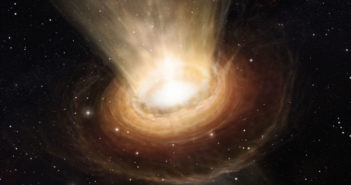
New infrared observations show us the innermost region at the heart of a distant, active galaxy.
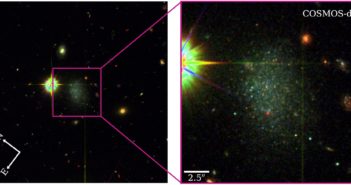
What process could be responsible for shutting down star formation in a young, lonely dwarf galaxy? Astrobites reports.
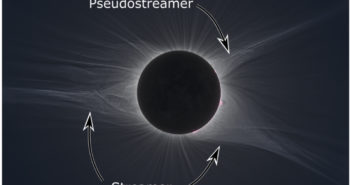
This stunning image of the Sun during a total solar eclipse illustrates important structures in the solar corona.
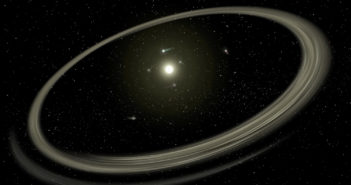
This week we’re at the virtual summer AAS meeting. Here are the highlights from Day 3!
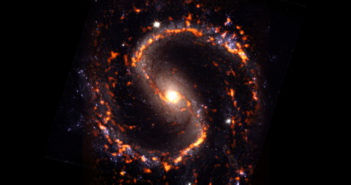
This week we’re at the virtual summer AAS meeting. Here are the highlights from Day 2!
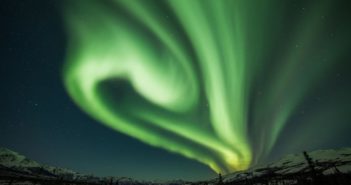
This week we’re at the virtual summer AAS meeting. Here are the highlights from Day 1!
This week we’ll be bringing you updates from the virtual 238th AAS meeting.

Will you be at the 238th American Astronomical Society meeting? We look forward to seeing you there!
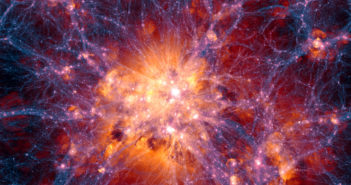
When studying the universe becomes too complicated for human brains, we turn to artificial intelligence! Astrobites reports on how a neural network can predict cosmic motions.
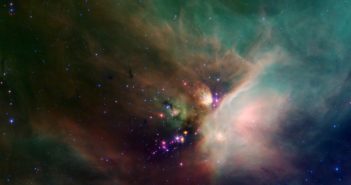
Stellar ages are notoriously difficult to determine. Astrobites reports on a promising new method of estimating stellar age using chemical clocks.