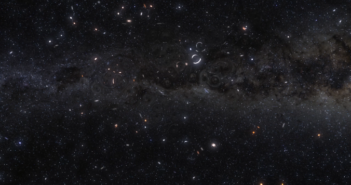
New Insights from LIGO/Virgo’s Merging Black Holes
What’s the big picture behind the nearly 50 detected mergers of compact objects? The second gravitational-wave catalog is officially out — and the population statistics are in!

What’s the big picture behind the nearly 50 detected mergers of compact objects? The second gravitational-wave catalog is officially out — and the population statistics are in!
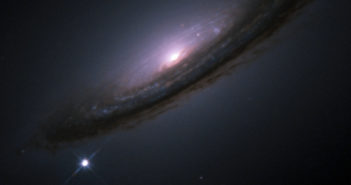
Type Ia supernovae show enormous variety, but they may all form in the same way. If so, what mechanism produces them?
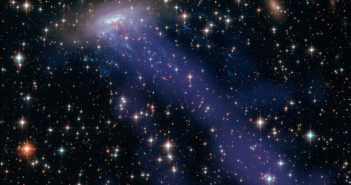
How does the structure of the smallest galaxies vary with different environments? Astrobites reports on investigations via the ELVES survey.
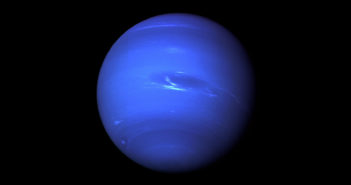
Astrobites reports on new constraints on the migration of Neptune in the early solar system.
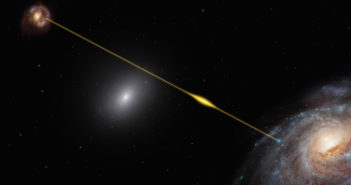
Scientists are leveraging enigmatic bursts of radiation to learn about the hot, ionized gas around the Milky Way and other galaxies.
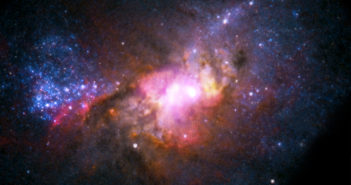
Could the recent discovery of a supermassive black hole in a low-mass galaxy be just the tip of the iceberg?
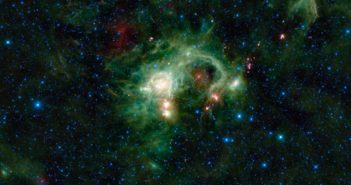
Astrobites explores what happens as balloons of ionized hydrogen inflate in space.
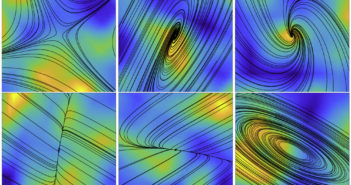
How can we identify the locations where magnetic fields break and reconnect in turbulent 3D plasmas?
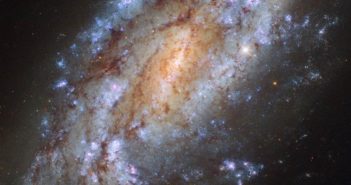
A recent study examines gas flows around galaxies during the most intense time of star formation in the universe.
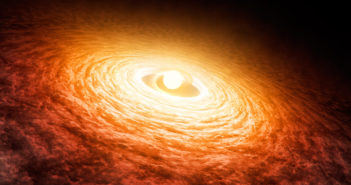
How does material move through an accretion disk to the young star at its center? Surprising detections from a fortuitously angled disk provide clues.
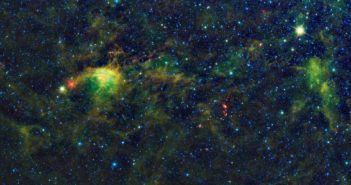
Astrobites discusses whether a well-known correlation in star formation holds on the scale of a single molecular cloud.
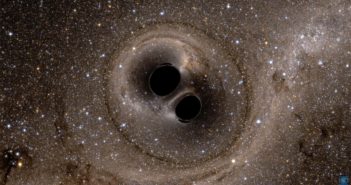
Gravitational-wave detectors may soon find a new population of huge black holes. What can we hope to learn from them?