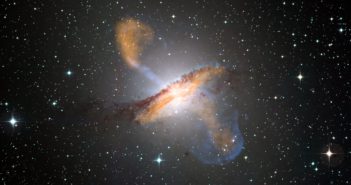
Probing a Bright Radio Galaxy with X-Rays
What can the polarization of light around the core of Centaurus A tell us about the physics at play in such a high-energy environment?

What can the polarization of light around the core of Centaurus A tell us about the physics at play in such a high-energy environment?
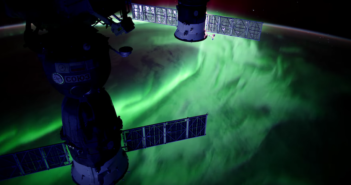
In the Sun’s atmosphere, a massive eruption of plasma is brewing — how can we predict if a coronal mass ejection will cause a damaging geomagnetic storm?
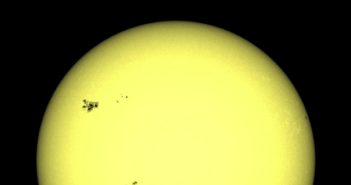
Astrobites reports on a search for polka dots of concentrated magnetic flux on the surface of a subgiant star.
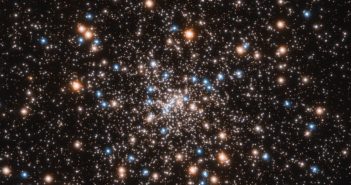
Astronomers have tracked down a second millisecond pulsar in a nearby globular cluster. Can this discovery help us understand why these systems are so hard to find?

Researchers survey galaxies billions of years ago to understand how the Milky Way grew into the galaxy it is today.

Astronomers present evidence for a fourth circumplanetary disk candidate and, for the first time, an estimate of the mass of such a disk.
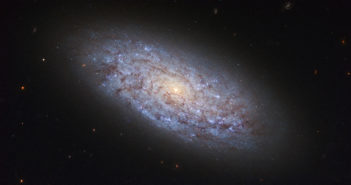
Astrobites reports on a search for meandering modern-day analogues of the ancient building blocks of supermassive black holes.
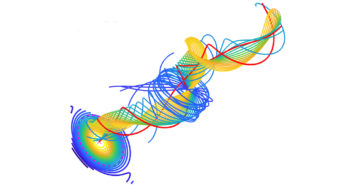
Three-dimensional modeling of a passing solar storm reveals a new twist to the event’s magnetic field.
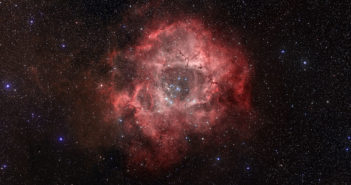
Researchers use fractal geometry for the first time to simulate realistic emission nebulae around hot young stars.

Spacecraft at Earth and on the way to Mars witnessed the same solar storm. What can this event tell us about how high-energy particles navigate the solar system?
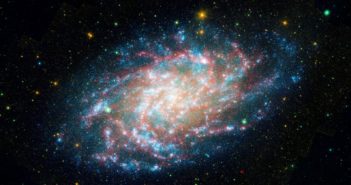
Astrobites reports on efforts to map the in-depth star formation history of one of our galactic neighbors.
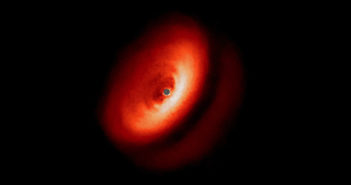
Could a giant planet cause the kinks and spirals seen in the disk around a young star?