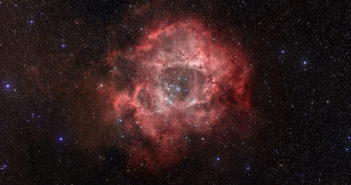
Making Realistic Nebulae from Fractal Gas
Researchers use fractal geometry for the first time to simulate realistic emission nebulae around hot young stars.

Researchers use fractal geometry for the first time to simulate realistic emission nebulae around hot young stars.

Spacecraft at Earth and on the way to Mars witnessed the same solar storm. What can this event tell us about how high-energy particles navigate the solar system?
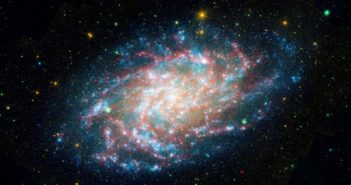
Astrobites reports on efforts to map the in-depth star formation history of one of our galactic neighbors.
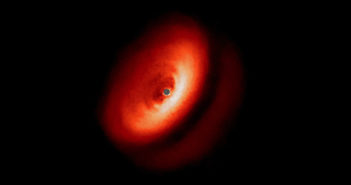
Could a giant planet cause the kinks and spirals seen in the disk around a young star?
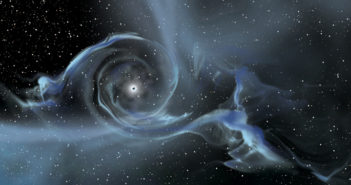
What happens when stars and stellar-mass black holes meet in the disks surrounding supermassive black holes?
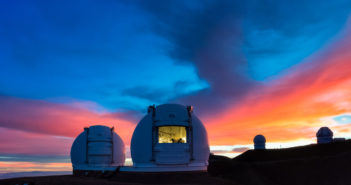
Astrobites reports on how dark gaps in quasar spectra can help fill in gaps in our knowledge of reionization.
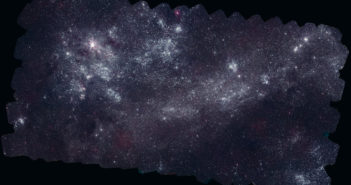
A new special issue of the Astrophysical Journal Supplement Series introduces the second data release of an expansive spectroscopic survey.
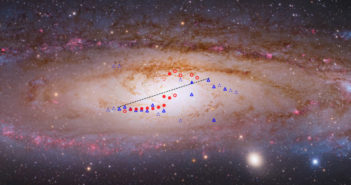
Researchers present new evidence that our galactic neighbor, Andromeda, hosts a central bar of stars.

Researchers study some of the smallest solar active regions to understand what makes them release microflares.

Exoplanets might ensnare comets that pass too close. Which planets are the likeliest comet catchers, and what would this mean for our interpretations of exoplanet composition?
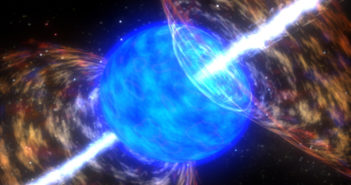
Astrobites reports on a radio-wavelength search for heavy metals from special supernovae called collapsars.
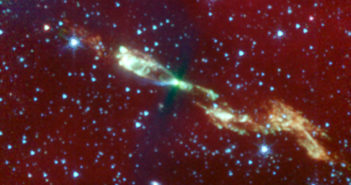
An outflowing jet from a young protostellar system at the heart of a dark, dusty cloud is one of the best places to study interstellar chemistry.