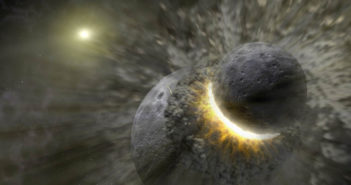
How a Moon-Sized Deep Impact Affected Early Life on Earth
Astrobites reports on Earth’s early days, when massive asteroid impacts may have rendered our home planet somewhat less than hospitable.

Astrobites reports on Earth’s early days, when massive asteroid impacts may have rendered our home planet somewhat less than hospitable.
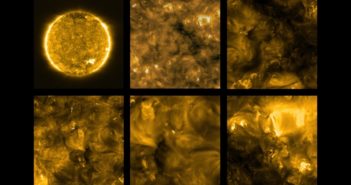
The Solar Orbiter spacecraft has snapped photos of tiny, bright dots on the Sun. What’s the deal with these dots?
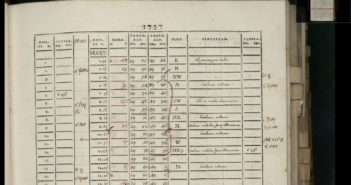
A new special collection of the Bulletin of the American Astronomical Society encapsulates the work presented at LISA IX, a conference dedicated to stewardship of historical and modern astronomical data.
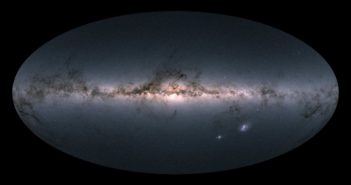
What do binary stars have to do with dark matter? More than you might expect!
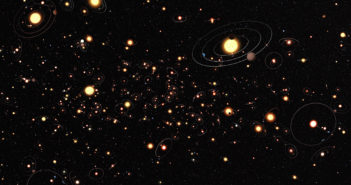
Astrobites reports on the “continuous habitable zone” — an important criterion for selecting exoplanets for future atmospheric characterization.
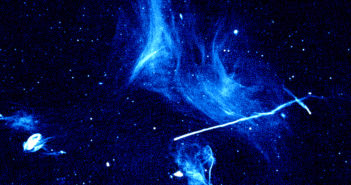
Nearby galaxy cluster Abell 2256 is home to some amazing radio structures, which new observations have revealed in greater detail than ever before.
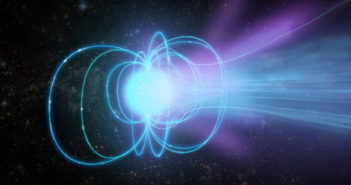
What could the discovery of an optical transient counterpart to FRB 180916B tell us about the origin of fast radio busts?
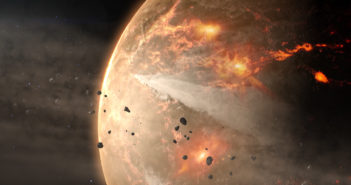
Earth’s crust contains heavy metals that are more commonly found in its core. Can models help us understand how these elements ended up there?
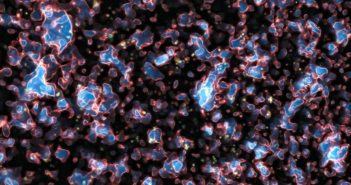
Astrobites reports on whether it really matters how stars and galaxies caused cosmic reionization or if it all comes out in the (simulated) wash.
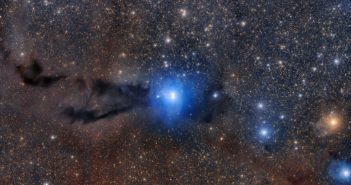
Can new models finally resolve a long-lasting disagreement between the observed and predicted Milky Way star-formation rates?
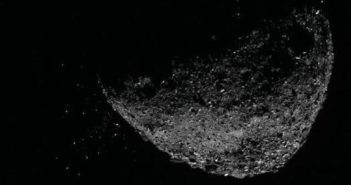
Spacecraft observations revealed sprays of particles escaping from the surface of the asteroid Bennu. What force set these particles in motion?
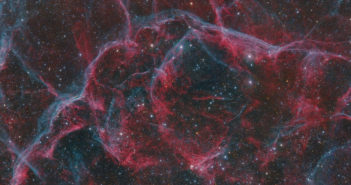
A new theory shows how echoes of past perturbations can explain why some supernovae brighten long after exploding.