AAS Media Fellowship Now Open for Applications
Are you an astronomy graduate student who’s interested in science communication? Apply for the AAS Media Fellowship by July 6!

Are you an astronomy graduate student who’s interested in science communication? Apply for the AAS Media Fellowship by July 6!
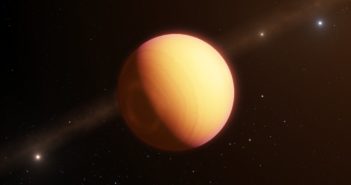
Astrobites reports on a new framework developed to use models and observations to pinpoint the likely location of an exoplanet’s formation.

Researchers search for an explanation for the bright X-ray emission seen high in the Sun’s atmosphere before a solar flare.
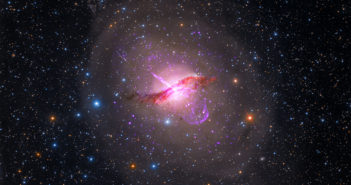
Stars embedded in the disks surrounding active galactic nuclei might have discovered the fountain of youth. What are the consequences of stellar immortality?
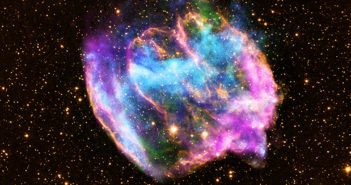
Astrobites reports on the odd bumps and wiggles that can appear late in the evolution of superluminous supernovae.
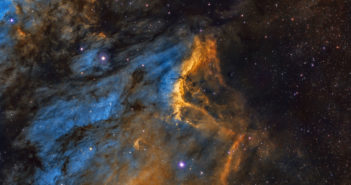
Astronomers scour Zwicky Transient Facility data to search for stellar variability in a famous Milky Way nebular complex.
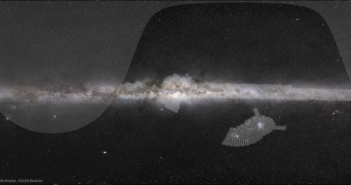
Researchers have created the largest public catalog of fitted gravitational microlensing light curves, giving a boost to searches for exoplanets, isolated black holes, and more.
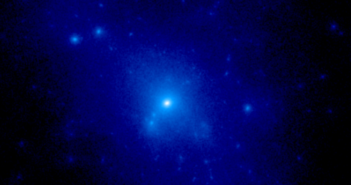
Have astronomers uncovered a new, powerful tool to probe the nature of dark matter at small scales?
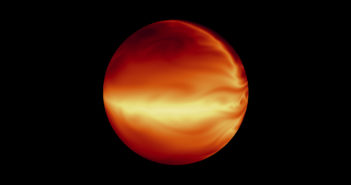
Astrobites reports on an article that casts doubt on one of the first detections of variability in an exoplanet’s atmosphere.
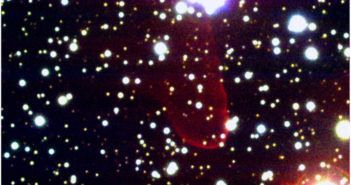
New images of a rare phenomenon may help astronomers understand pulsars that consume their stellar companions.
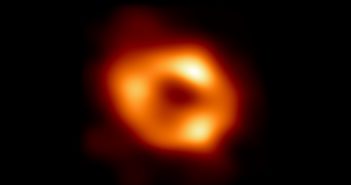
The planet-spanning Event Horizon Telescope has captured the first image of Sagittarius A*, the supermassive black hole at the center of the Milky Way.
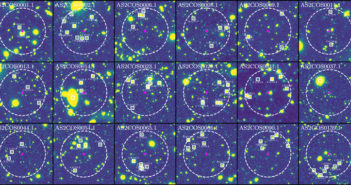
A close look at bright galaxies in the first few billion years of the universe may help us understand why these early galaxies formed stars so vigorously.