
Celebrating 175 Years of The Astronomical Journal
The Astronomical Journal turns 175 this month — join us in celebrating the journal’s impact and looking back on its history.

The Astronomical Journal turns 175 this month — join us in celebrating the journal’s impact and looking back on its history.
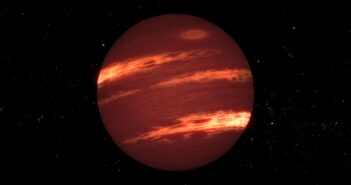
Often characterized as “failed stars,” brown dwarfs are cool, cloudy objects that are not fully understood. Could their poles be home to swirling winds that drive intriguing observational trends?
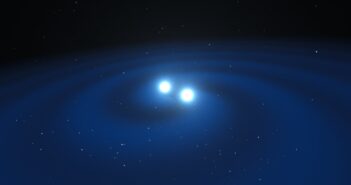
How can we track down colliding neutron stars as quickly as possible? New research shows that the nearly 20-year-old Swift Observatory might be our best bet.

Astrobites reports on JWST observations that get up close and personal with the famous supernova remnant Cassiopeia A.

New simulations show how odd radio circles could form when supermassive black hole jets blow bubbles in intergalactic gas.
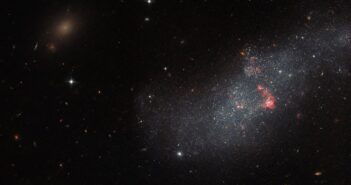
The Hedgehog galaxy is one of the most isolated dwarf galaxies known — but despite its serene location, it might not have formed any new stars in the past 100 million years.
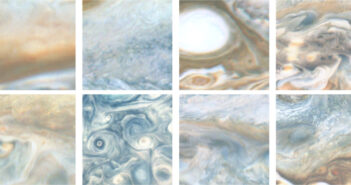
Citizen scientists have identified 7,000 swirling vortices on Jupiter, leading to some surprising findings.
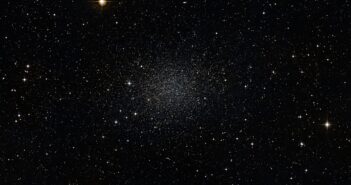
Does the standard cold dark matter model of the universe work on small scales? The dark matter distributions of ultra-faint dwarf galaxies seem to deviate from what is expected, implying a need to rethink how dark matter behaves.
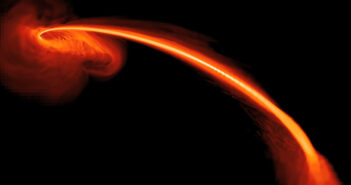
Researchers have identified dozens of stars tidally disrupted by black holes, and upcoming surveys may discover 1,000 of these rare events each year. Today’s Monthly Roundup introduces three studies that have advanced our understanding of shredded stars.

Astrobites reports on tests of cosmological models using measurements of nearly 2,000 supernovae from the Dark Energy Survey and other sources.
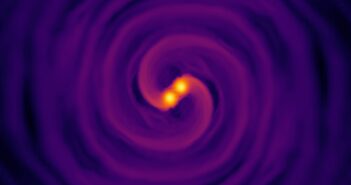
The collapse of a magnetar into a black hole may power the strongest shocks in the universe and produce brief, bright flashes of gamma rays.
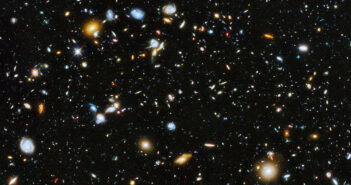
Space is filled with structures that we can’t see directly. How do astronomers trace the underlying dark-matter distribution of the universe?