Welcome to AAS Media Fellow Lexi Gault and Farewell to Ben Cassese
Please join us in saying farewell to our 2022–2024 AAS Media Fellow and welcoming our new Fellow to the team!

Please join us in saying farewell to our 2022–2024 AAS Media Fellow and welcoming our new Fellow to the team!

Astrobites reports on a hunt for intermediate-mass black holes and what this search tells us about how black holes formed in the early universe.
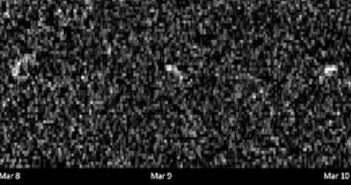
An asteroid named Apophis is almost definitely going to miss Earth during a close flyby in 2029. But could it be diverted onto a more dangerous path through a collision with a smaller asteroid before then?
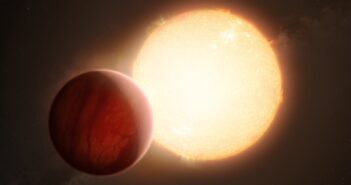
Hot Jupiter TOI-1480 b just got a new companion. What does this mean for how hot Jupiters form?

Astrobites reports on the radio signals from stars being ripped apart by supermassive black holes.

Recent upgrades to a powerful neutrino detector may help us spot future nearby supernovae before they burst onto the scene in visible light.
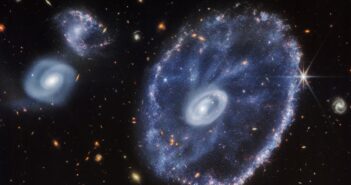
From planetary systems to colliding galaxies, the universe is full of intricate structures. This month’s roundup examines where three vastly different types of structures come from.
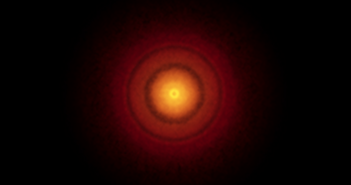
Researchers find even more evidence for planets forming in the disk around TW Hydrae, the nearest protoplanetary disk to Earth.

Astrobites reports on research that brings together data from multiple wavelengths to make a detection of distant 21-cm radiation.
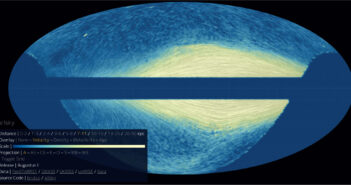
Data made mesmerizing: check out this swirling visualization of 170 million stars in the Milky Way.
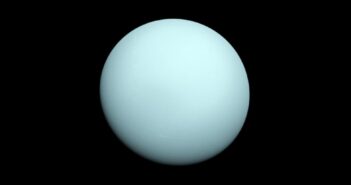
NASA is going to send a robot to Uranus someday. When it gets there, how close should it fly to the surface?
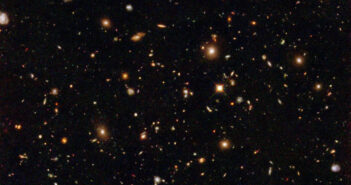
The venerable Hubble Space Telescope recently revisited the famous Ultra-Deep Field. How has this patch of sky changed since it was first photographed?