
Baby Galaxies Love to Take 100-Million-Year Naps
Astrobites reports on the star-forming histories of early galaxies and galaxies that form their stars in bursts interspersed with lulls.

Astrobites reports on the star-forming histories of early galaxies and galaxies that form their stars in bursts interspersed with lulls.
Are you considering submitting a paper to an AAS journal? There’s a new tool available now to help you prepare your manuscript.
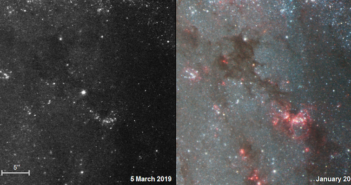
What caused this strange red transient that’s too bright to be a nova and too faint to be a typical supernova?
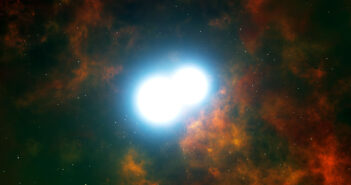
A newly investigated ultra-massive white dwarf may provide the best opportunity to study the interior of a white dwarf through its pulsations.
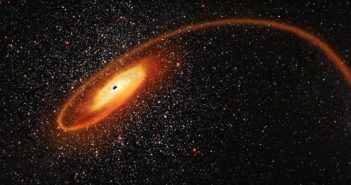
New research investigates the infrared echo from a star being ripped apart in a dusty accretion disk around a supermassive black hole.
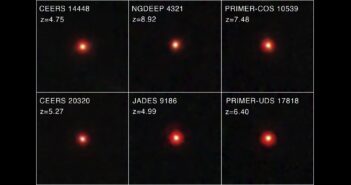
Astrobites reports on whether green pea galaxies are the local counterparts of the famous little red dots that are found in the early universe.

Researchers explore the use of machine-learning techniques for classifying maria, cryptomaria, and plains regions on the surface of the Moon.

Clues within Earth’s crust have led astronomers to discover how the solar system’s path through the Local Bubble may have impacted the evolution of our planet’s life.
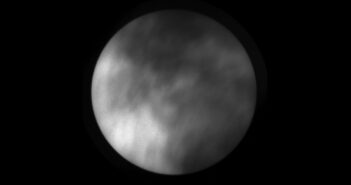
Clouds getting in the way of ground-based solar images? A new machine learning method can identify and remove clouds, revealing the hidden solar features underneath.

Astrobites reports on the complicated effects of black hole and stellar feedback in cosmological simulations.
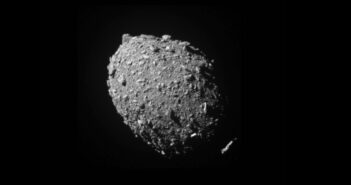
Will the asteroid 2024 YR4 crash into Earth in 2032? Maybe, but probably not. Today’s Monthly Roundup looks at three studies that advance our understanding of asteroid redirection — just in case.
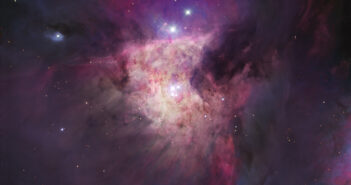
The heart of the Orion Nebula, near the massive young stars of the Trapezium Cluster, is a dramatic place for a star to grow up. New research examines JWST images of an unusual protoplanetary disk in this exceptional setting.