
XRISM Spies the Remains of a Galactic Donut
Recent observations of a well-studied but confounding galaxy provide new insights into the structure of low-luminosity active galactic nuclei.

Recent observations of a well-studied but confounding galaxy provide new insights into the structure of low-luminosity active galactic nuclei.
Astrobites reports on research that explores the possibility of impacts delivering organics to the ocean worlds in our solar system.
A new fast and flexible ray-tracing algorithm aims to make the complex world of general relativistic magnetohydrodynamics simulations more approachable.
The final day of AAS 246 included discussions about solar cycle research and the current landscape for science policy and advocacy.
The bunny ears of a jellyfish galaxy, the journey of a 14th-century monk, and 35 years of the Hubble Space Telescope: all this and more on Day 3 of AAS 246.
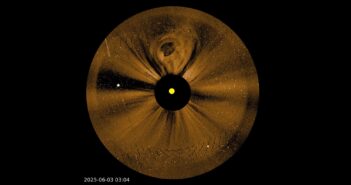
On Day 2 of AAS 246, we heard about active galactic nucleus feedback, learned how planets fare in systems with multiple stars, and saw fantastic new images of the Sun.
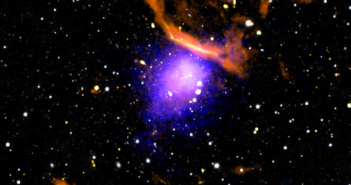
Day 1 of AAS 246 in Anchorage, AK, brought us jets, winds, super-heated stellar coronae, and stunning images of supernovae.
This week we’ll be bringing you updates from the 246th AAS meeting happening in Anchorage, AK.
The AAS Publishing team looks forward to engaging with attendees at the upcoming summer meeting of the AAS. Here’s what they’ll be up to at the meeting.
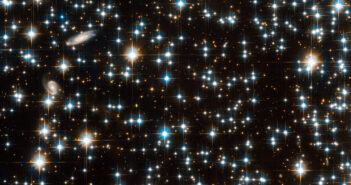
If you measure the age of a star using two different methods, do those ages agree? New research shows where our age estimates might be mismatched and what this disagreement could mean.
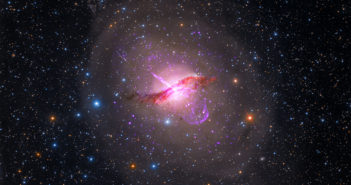
Astrobites reports on a new method being used to explore the relationship between the mass of a supermassive black hole and the properties of the galaxy it inhabits.
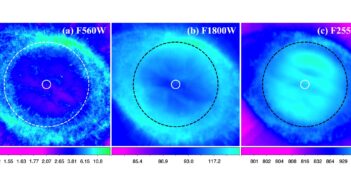
New JWST images of the Ring Nebula reveal a dusty disk around the nebula’s central star — just the second resolved disk known around a planetary nebula’s central star.