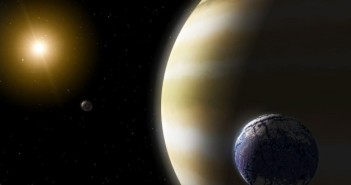
Worlds Without Moons
The potential for liquid water is not the only factor when determining a planet’s habitability. One important consideration: whether the planet has a moon.

The potential for liquid water is not the only factor when determining a planet’s habitability. One important consideration: whether the planet has a moon.
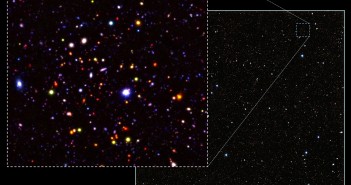
New measurements of a sample of dusty, star-forming galaxies have allowed us to learn more about the universe in its early years.
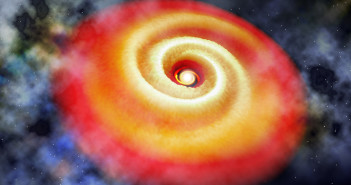
The young star Elias 2-27 is surrounded by a massive disk with spectacular spiral arms. A new study examines what caused its appearance.
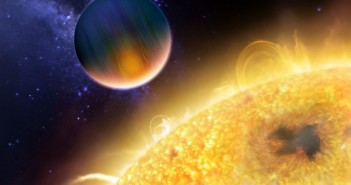
Astrobites reports on how statistics can be used to distinguish between populations of hot Jupiters in a large sample.
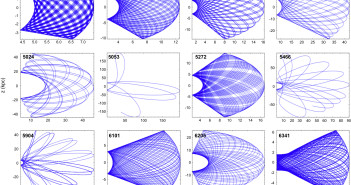
The release of data from Gaia has allowed us to improve our understanding of the globular clusters that orbit the Milky Way.
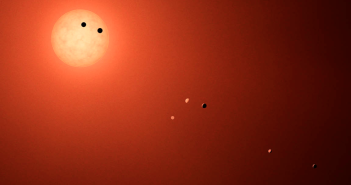
A new study challenges the habitability of the seven Earth-sized, terrestrial planets discovered around the M-dwarf star TRAPPIST-1.
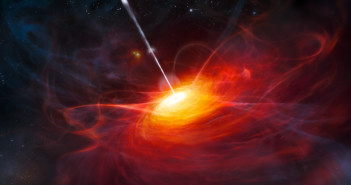
Quasars are cleverly camouflaged at some high redshifts, making them tough to spot. Now there’s a way to detect these distant monsters in spite of their disguise.
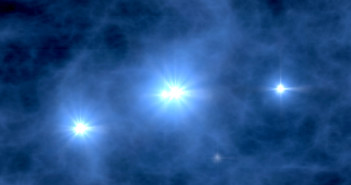
Astrobites reports on the galaxies that blew the first ionized bubbles in the early universe, ending the Dark Ages.
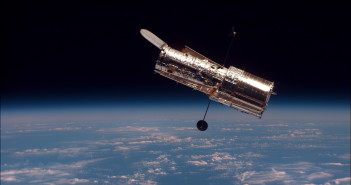
Every year, astronomers submit over a thousand proposals requesting time on the Hubble Space Telescope. A computer program may help sort these proposals in the future.
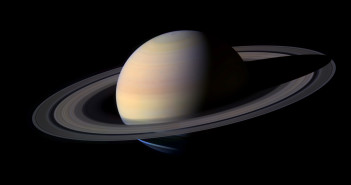
Are planetary rings as common in our galaxy as they are in our solar system? A new study shows how to hunt for them — and then does!
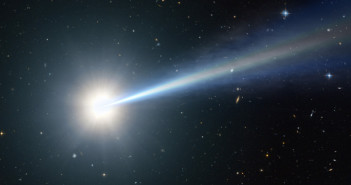
A team of scientists has used ALMA to learn more about the host galaxy of the most distant quasar known.
Sometimes, computers are too slow to get the job done. Astrobites reports on a faster way to predict whether planetary systems are stable.