
AAS 230: Welcome!
This week we’ll be bringing you updates from the 230th AAS meeting in Austin, TX.

This week we’ll be bringing you updates from the 230th AAS meeting in Austin, TX.

How do magnetic fields form and evolve in early galaxies? New observations have provided us with clues.
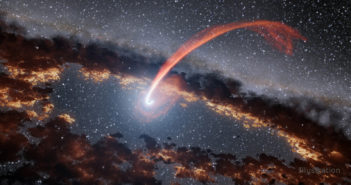
What can we learn from the infrared echo of a supermassive black hole tearing apart a passing star?
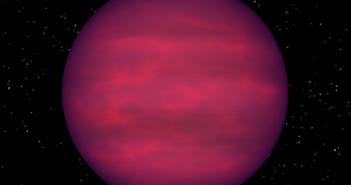
Astrobites reports on the discovery of a nearby brown dwarf by the citizen scientists of the “Backyard Worlds: Planet 9” project.
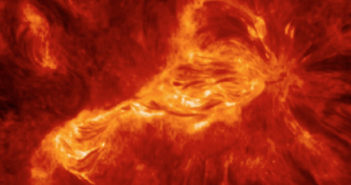
This dynamic image of active region NOAA 12241 reveals the formation of a solar filament.
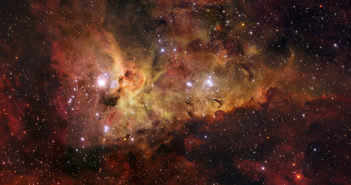
The incredibly luminous massive star Eta Carinae has long posed a challenge for astronomers to model — but now new observations are in.
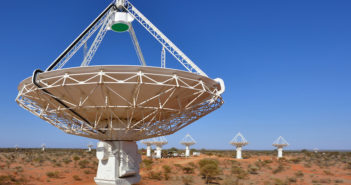
A new telescope has successfully joined the search for fast radio bursts!

Are you an impatient exoplaneteer? Astrobites reports on a method named “Orbits for the Impatient” that can be used to find orbits of directly imaged long-period objects.
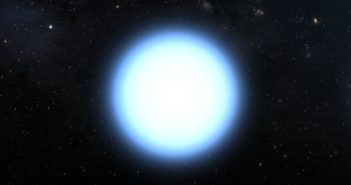
New Kepler observations of a pulsating white dwarf have revealed clues about the rotation of intermediate-mass stars.
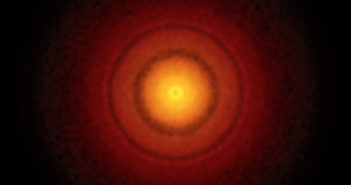
A novel approach has been proposed for measuring properties of protoplanetary disks, the birthplaces of young exoplanets.
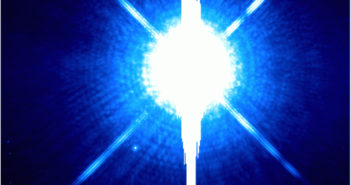
Patience is finally paying off for a team of scientists who have been observing the Sirius star system for nearly 20 years.
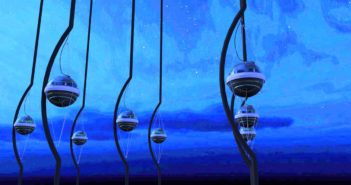
Astrobites reports on whether star-forming galaxies could be the dominant source of neutrinos measured by IceCube.