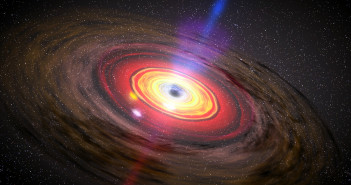
X-Ray Beasts and Magnetic Fields
Astrobites explores the role of magnetic fields in X-ray emission from the centers of active galaxies.

Astrobites explores the role of magnetic fields in X-ray emission from the centers of active galaxies.
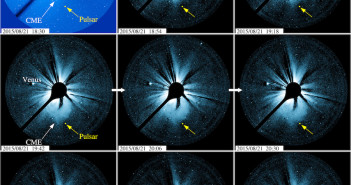
What can we learn about a coronal mass ejection as it passes between us and a distant pulsar?
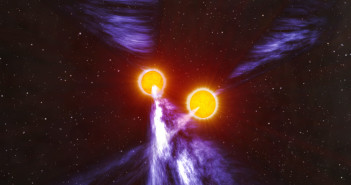
Have you been contributing your computer idle time to the Einstein@Home project? If so, you’re partly responsible for the program’s recent discovery of a new double-neutron-star system!
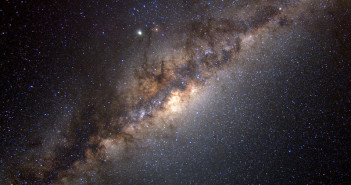
The Milky Way’s dense central bulge is a very different environment than the galactic disk. Do the differences affect the ability of planets to form there?
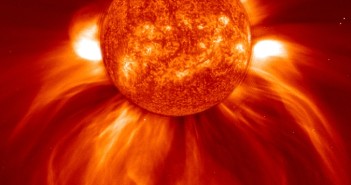
Astrobites reports on a closer look at the Sun’s past activity levels.
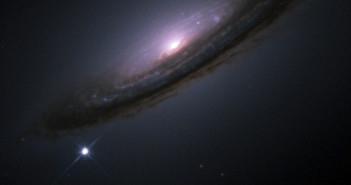
A major challenge for modern supernova surveys is identifying the galaxy that hosted each explosion. Is there an accurate and efficient way to do this that avoids investing significant human resources?
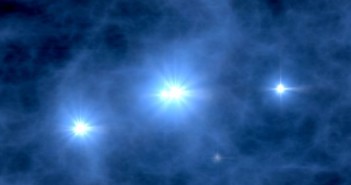
What impact did X-rays from the first binary star systems have on the universe around them? A new study suggests this radiation may have played an important role during the reionization of our universe.
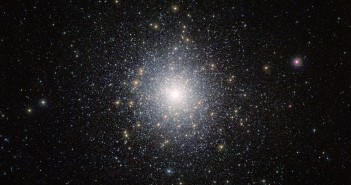
Astrobites tackles the question of where blue straggler stars come from — as well as where they’re going.
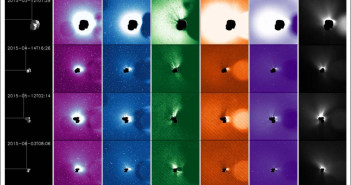
These images of comet 67P mark the first time we’ve been able to study the inner coma of a comet at this level of detail.

Are you an astronomer considering submitting a paper to an AAS journal? If so, this post is for you! Read on to find out what’s new in the latest update to AAS’s LaTeX class file, available for download now.
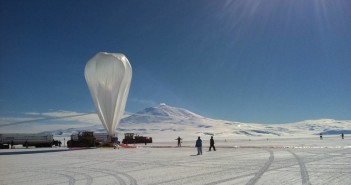
The SuperTIGER experiment flew over Antarctica for 55 days, collecting millions of galactic cosmic rays. What can it tell us about the origins of these high-energy particles?
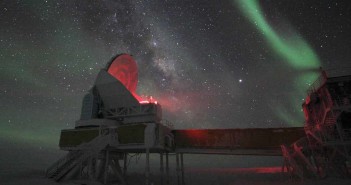
Astrobites reports on an extreme distant galaxy that has one of the highest star formation densities of any known galaxy in the universe.