
2025 has been a year of discovery and challenge for astronomers worldwide. In the US, even as researchers celebrated big scientific and operational wins — reveling in long-awaited first-light images from Vera C. Rubin Observatory, examining the third interstellar object to enter our solar system, and diving into a treasure trove of new gravitational wave detections, to name just a few — scientists faced existential threats to funding, and our community mobilized to advocate for our field. Here at AAS Nova, this was a big year for us, as we celebrated our 10th anniversary. Now, we’ll bring the year to a close by taking a look back at the top posts of 2025:
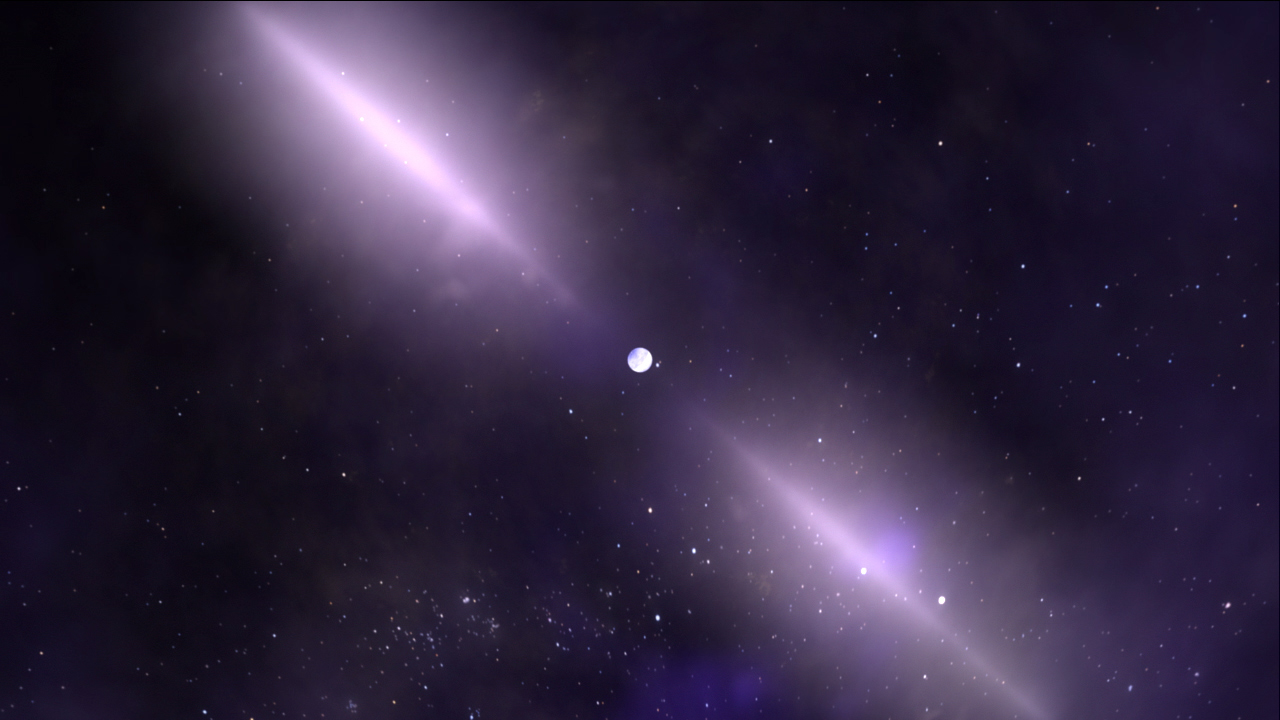
An artist’s impression of a pulsar — a rapidly spinning neutron star. [NASA’s Goddard Space Flight Center]
10. A Slowly Spinning Pulsar Below the Death Line
When Yuanming Wang and collaborators serendipitously discovered radio pulses from PSR J0311+1402, the object’s identity was a mystery. Its pulses were too widely spaced to come from a pulsar — an extremely dense remnant of a dead massive star — but they were also too frequent to come from a long-period radio transient. Though the object remains somewhat mysterious, several of its properties indicate that it’s an unusually sluggish pulsar.
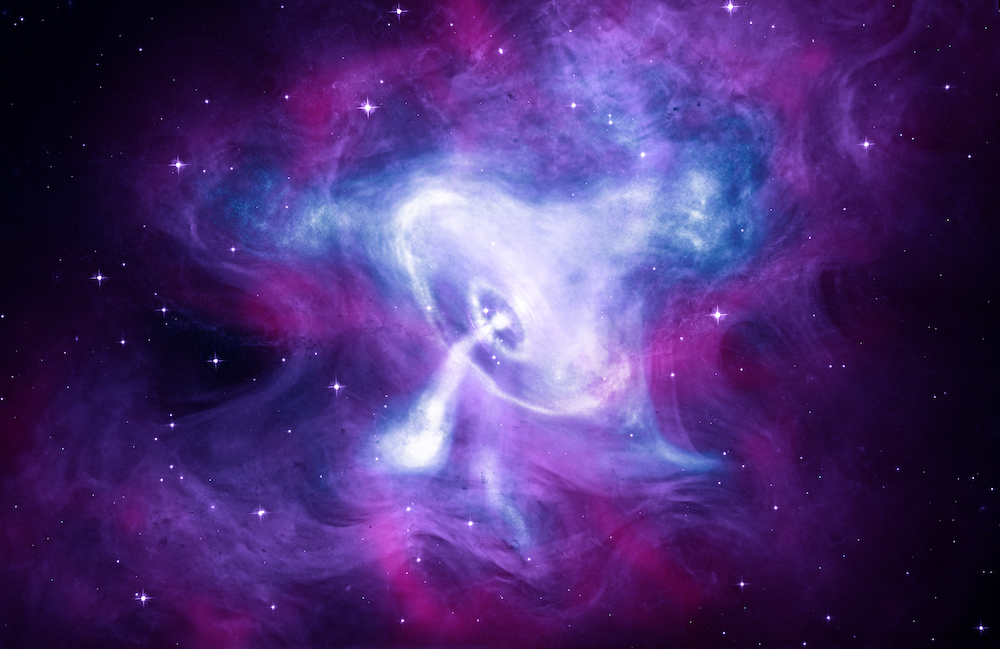
Composite X-ray, optical, and infrared image of the Crab Nebula, which houses a pulsar at its center. [X-ray: NASA/CXC/SAO; Optical: NASA/STScI; Infrared: NASA-JPL-Caltech]
9. Cracking Crusts Might Set a Neutron Star Speed Limit
Neutron stars spin incredibly fast, often hundreds of times per second — but they only spin about half as fast as they could before being ripped apart by their rotation. Why don’t they spin faster? That’s the question investigated by Jorge Morales and Charles Horowitz. Morales and Horowitz hypothesized that neutron star crust (the strongest material in the universe) cracks when these stars spin at about half of their breakup rate, and once the crust splits, the star begins to emit gravitational waves and can spin no faster.
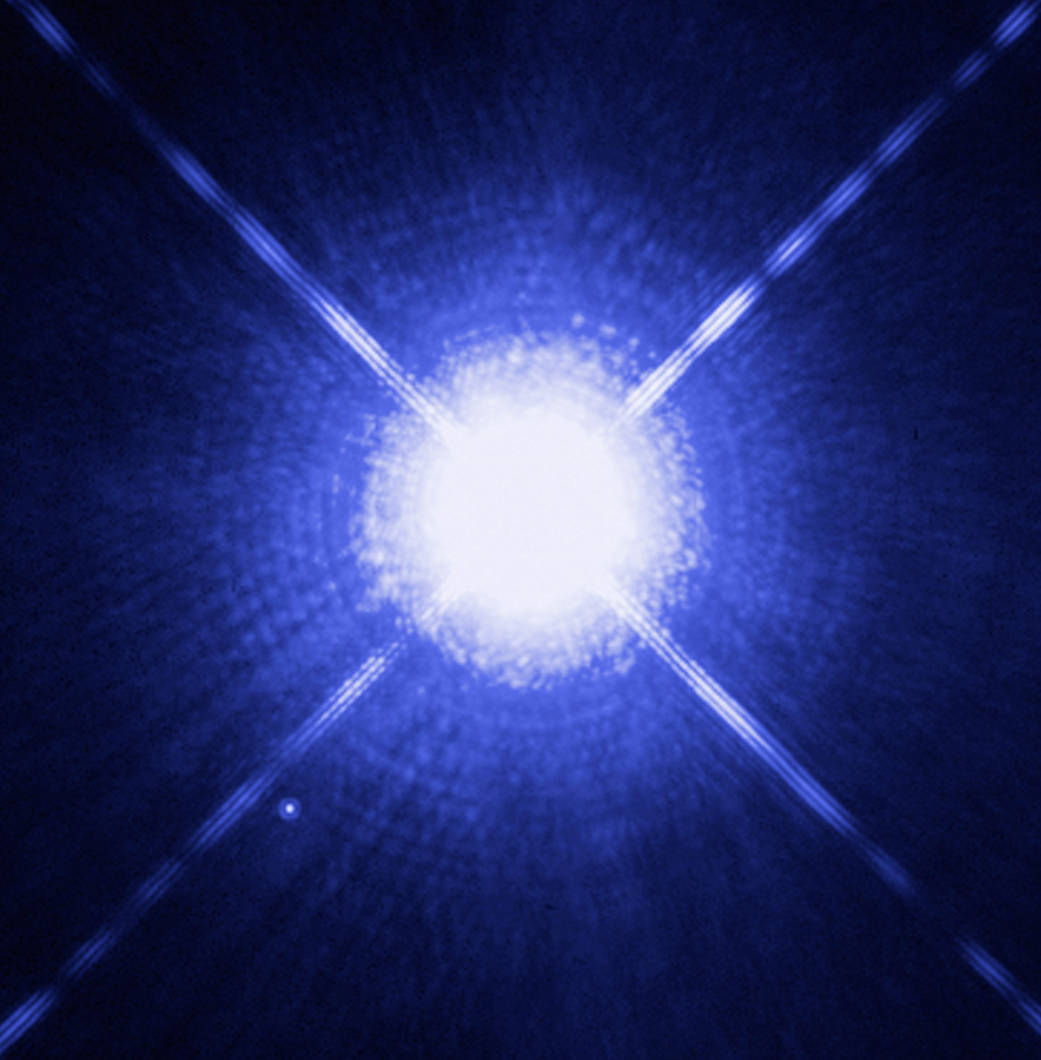
The tiny white dwarf Sirius B hides in the glare of its larger and brighter companion, Sirius A. [NASA, ESA, H. Bond (STScI) and M. Barstow (University of Leicester)]
8. Record-Breaking Pulsating White Dwarf Discovered
The evolution of a low- or intermediate-mass star eventually leaves behind a crystallized, compressed stellar core called a white dwarf. As white dwarfs slowly cool from initial temperatures of more than a million degrees, they pass through the instability strip and begin to pulsate. These pulsations allow astronomers to peer into white dwarfs’ crystalline interiors, potentially illuminating the origins of ultra-massive white dwarfs. A team led by Francisco De Gerónimo searched for pulsating white dwarfs and discovered a record-breaking 19 pulsation modes in one ultra-massive specimen called WD J0135+5722.
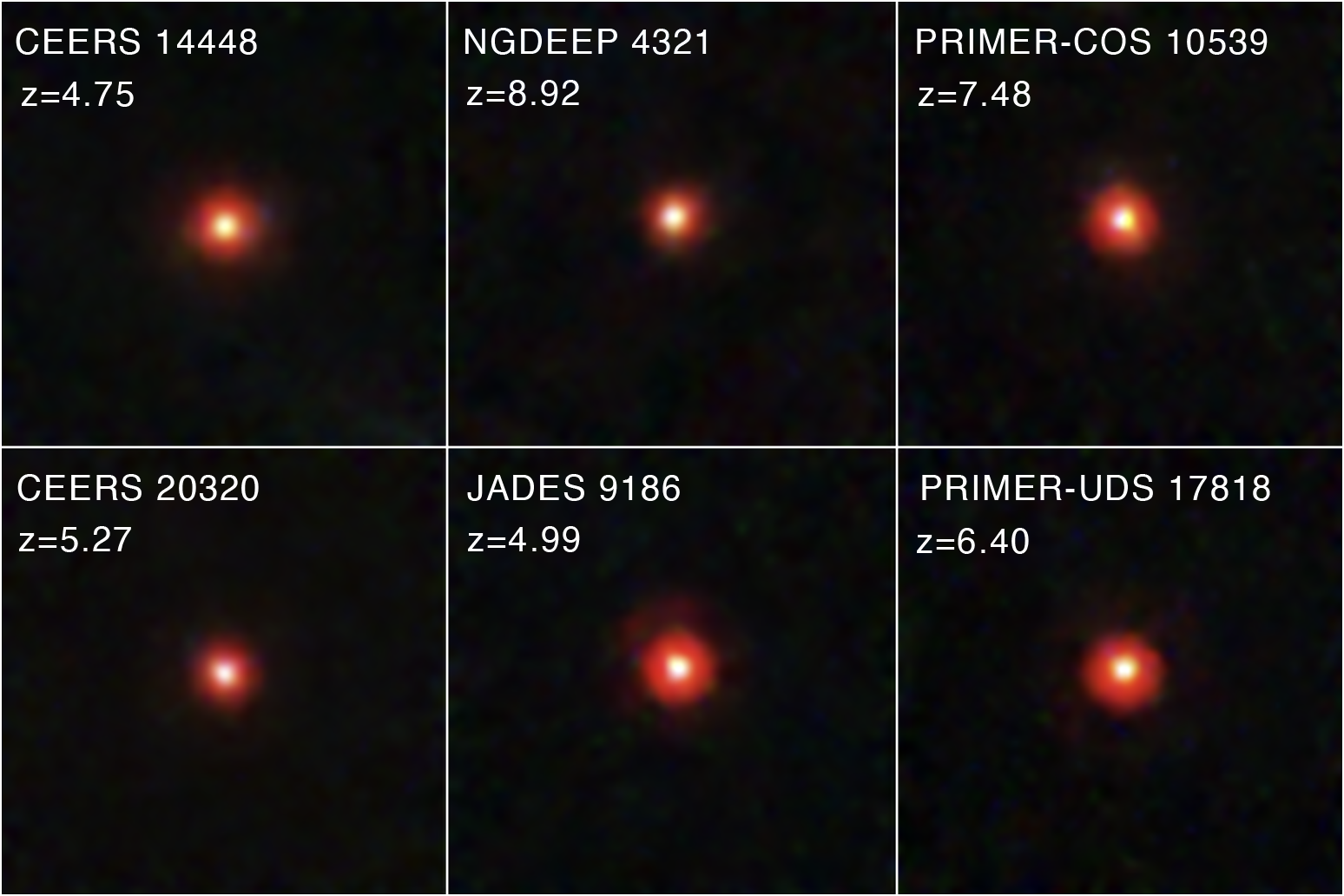
JWST images of six very distant galaxies dubbed “little red dots.” [NASA, ESA, CSA, STScI, Dale Kocevski (Colby College)]
7. Distant Little Red Dot Hosts a Huge (and Growing) Black Hole
Anthony Taylor and collaborators reported their findings on CAPERS-LRD-z9, a little red dot seen by JWST as it was when the universe was just a billion years old. Using JWST, the team spotted a broad emission line characteristic of hydrogen gas moving at thousands of kilometers per second. This is a tell-tale sign of an accreting supermassive black hole, making CAPERS-LRD-z9 the earliest galaxy to show this signature.
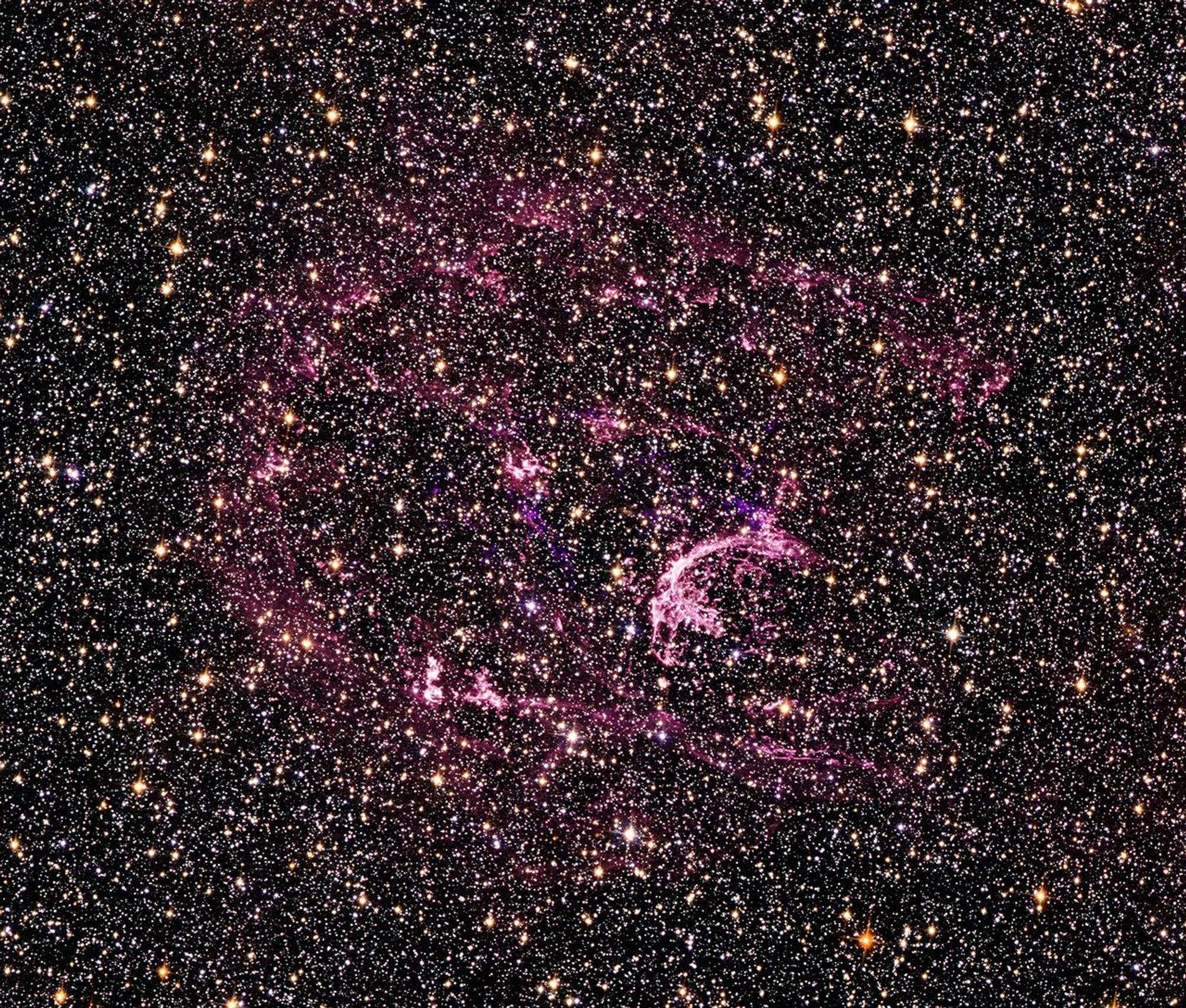
Optical image of supernova remnant N132D in the nearby Large Magellanic Cloud. [NASA, ESA, and the Hubble SM4 ERO Team]
6. Chandra Spies a Supernova Shock Front Speeding Along
N132D is a 2,500-year-old supernova remnant that holds the distinction of being the most X-ray luminous supernova remnant in the Local Group. Xi Long and collaborators turned the sensitive instruments of the Chandra X-ray Observatory toward N132D to measure the velocity of its expanding shock. Using two sets of measurements separated by 14.5 years, the team directly measured the remnant’s expansion, obtaining a much more precise measurement than previous efforts have achieved with other methods like X-ray spectroscopy and revealing differences in the expansion velocity around the remnant.
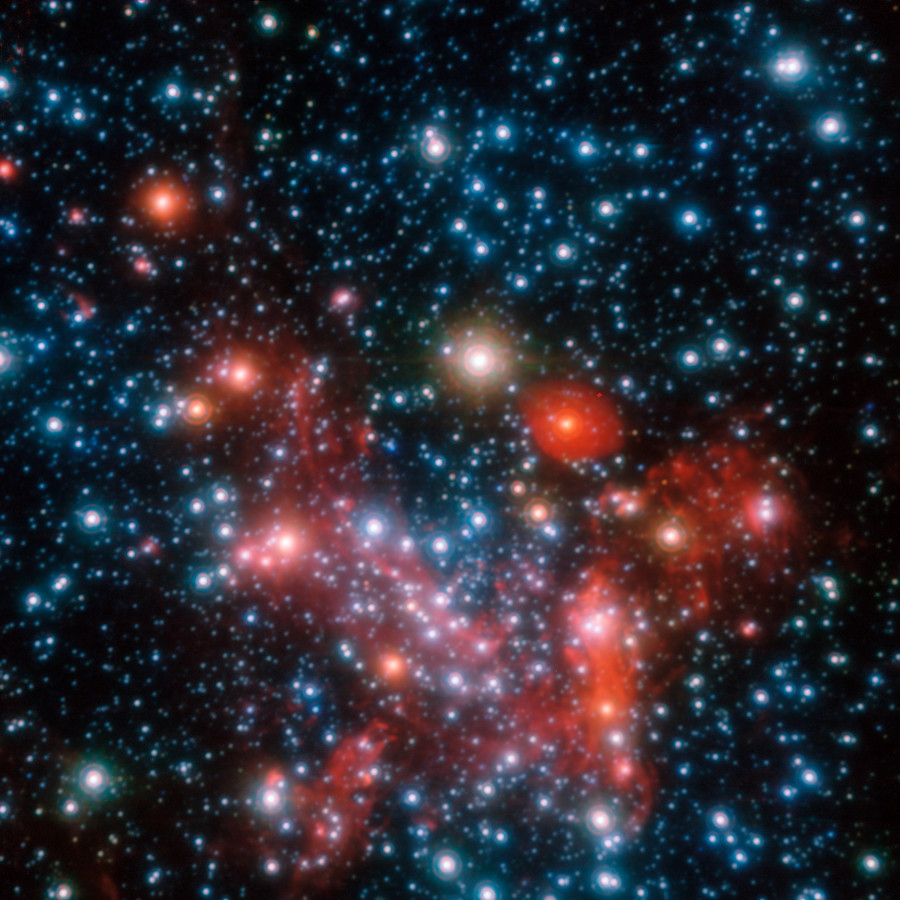
Stars at the center of the Milky Way, as seen by the Very Large Telescope. [ESO/S. Gillessen et al.; CC BY 4.0]
5. Our Galaxy’s Supermassive Black Hole May Have Had a Companion in the Past
At the center of our galaxy, a supermassive black hole 4 million times the mass of the Sun holds court. Though today Sagittarius A* is a solo act, Chunyang Cao and collaborators explored the possibility that our galaxy’s supermassive black hole had a companion millions to billions of years ago. If an intermediate-black hole entered our galaxy when the Milky Way absorbed a neighboring dwarf galaxy, the presence of the smaller black hole could explain the present-day properties of the hypervelocity stars that inhabit the center of our galaxy. The two black holes likely merged 10 million years ago.
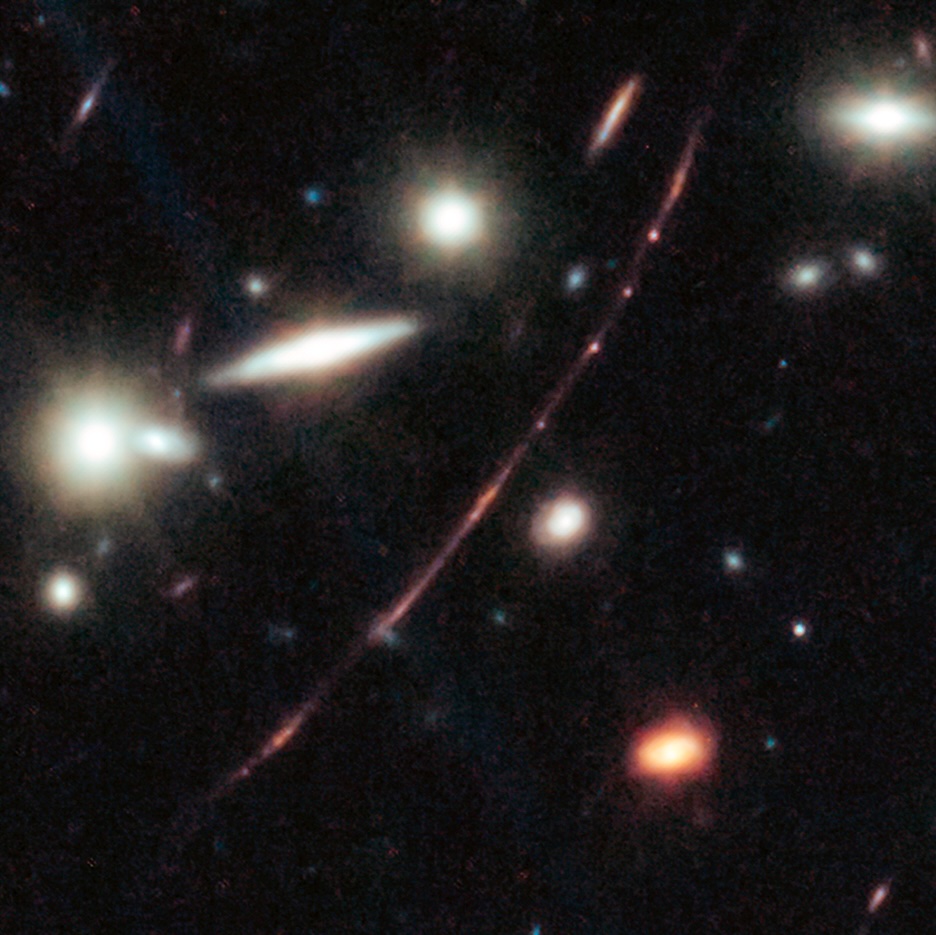
JWST image of the Sunrise Arc containing Earendel. [NASA, ESA, CSA; Science: Dan Coe (STScI/AURA for ESA, JHU), Brian Welch (NASA-GSFC, UMD); Image Processing: Zoltan Levay]
4. Examining Earendel: Is the Most Distant Lensed Star Actually a Cluster?
In 2022, researchers using the Hubble Space Telescope discovered a gravitationally lensed single-star candidate at a redshift of z = 5.926, corresponding to less than a billion years after the Big Bang. However, distinguishing between one gravitationally lensed star and many is challenging. A team led by Massimo Pascale used simple stellar population models to investigate Earendel’s identity, finding that the object’s spectrum is fit well by a variety of star cluster models. Based on this analysis, Earendel certainly could be many stars rather than one, but a single star cannot be ruled out. Variability due to stellar winds would be a smoking gun for the single-star hypothesis, but no such variability has been discovered to date.
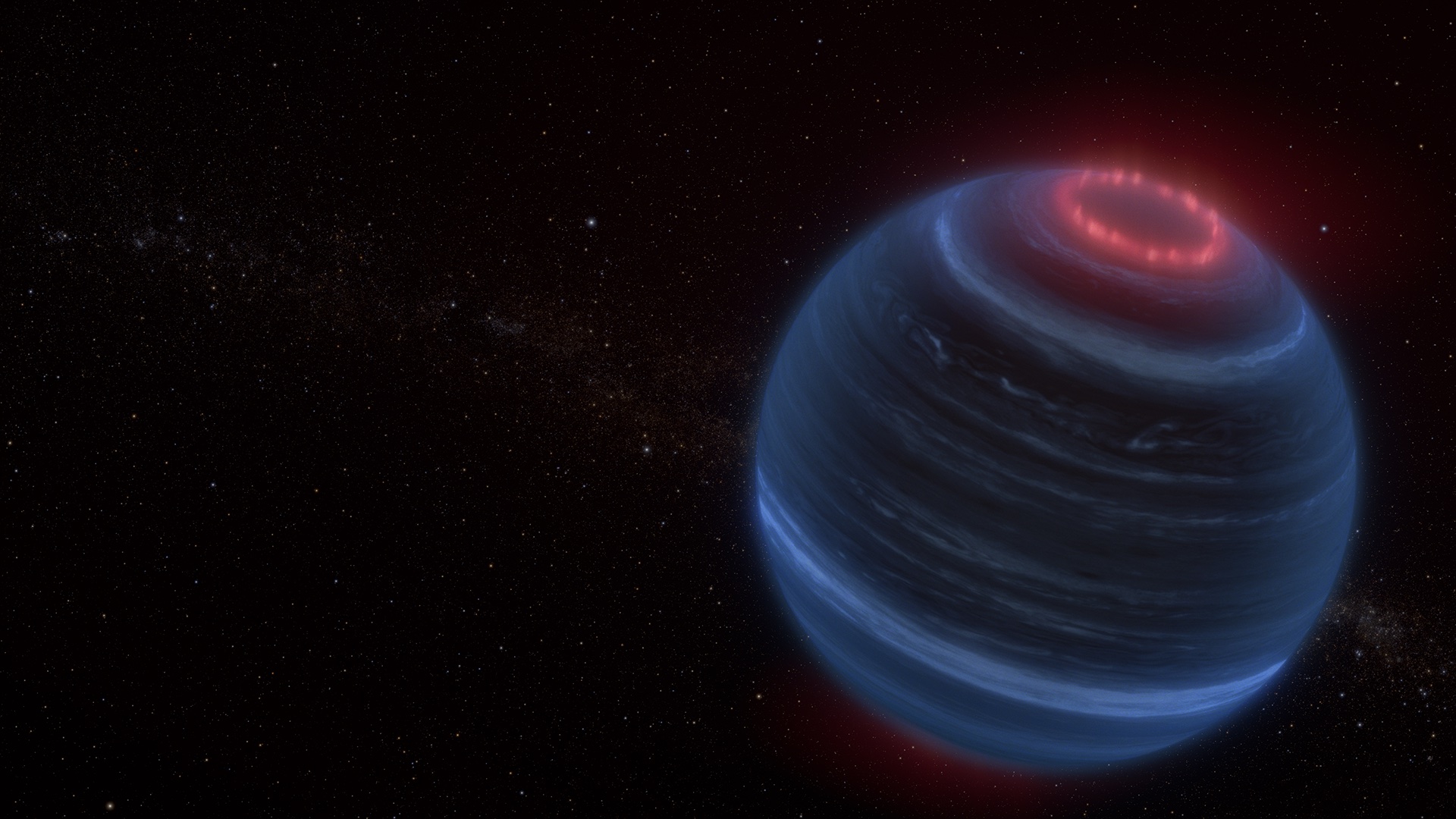
Artist’s impression of auroral emission on the brown dwarf W1935. [NASA, ESA, CSA, Leah Hustak (STScI)]
3. A Strange Brown Dwarf Gets Stranger
The brown dwarf W1935 made headlines in 2024 when researchers discovered methane emission from its atmosphere, a potential sign of auroral emission. In 2025, W1935 was back in the news after Matthew de Furio and collaborators reported that the brown dwarf was actually two brown dwarfs that were closely locked into 16–28 year orbits. What delightful weirdness will we discover about W1935 next?
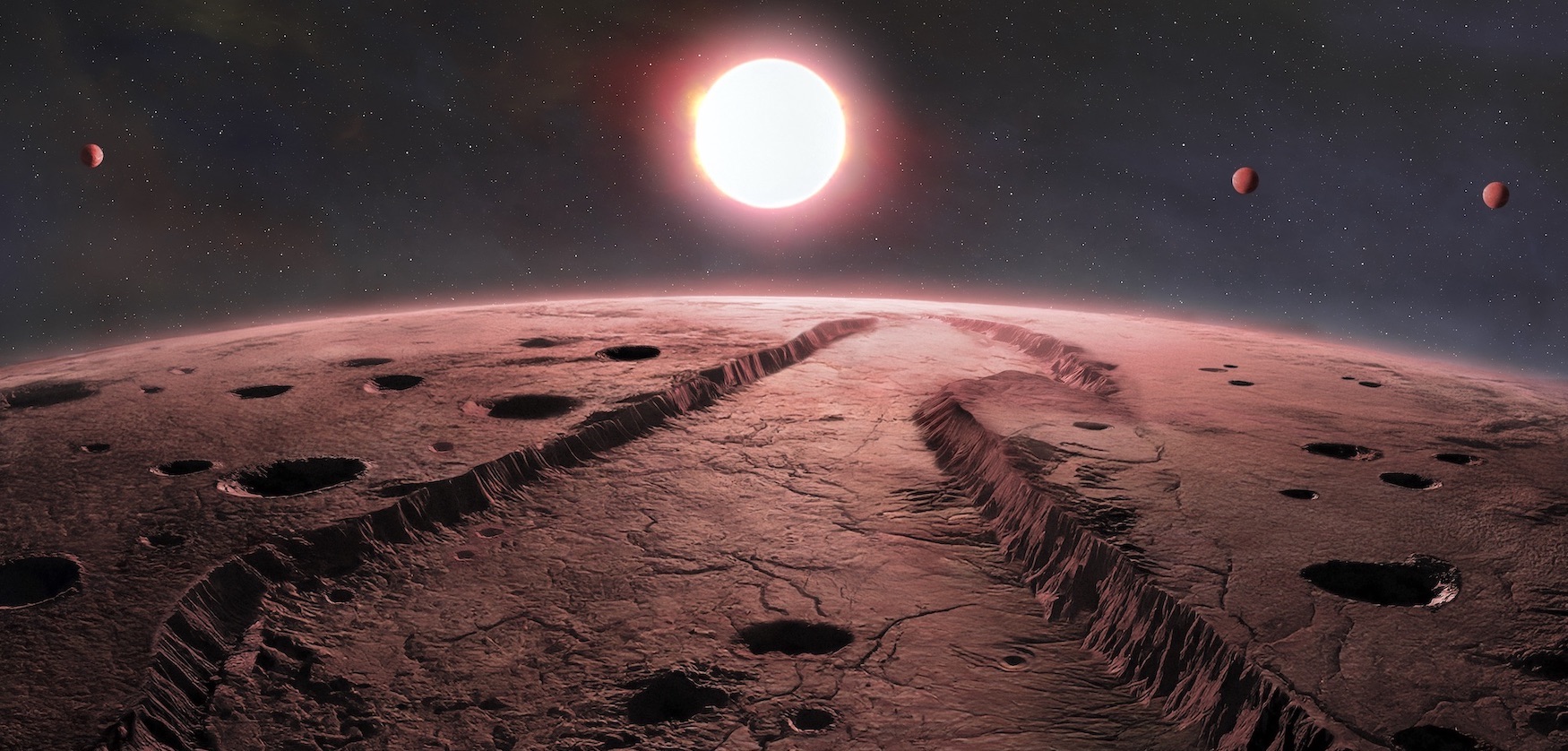
Artist’s impression of the view from one of the planets orbiting Barnard’s Star. [International Gemini Observatory/NOIRLab/NSF/AURA/R. Proctor/J. Pollard; CC BY 4.0]
2. Confirmed at Last: Barnard’s Star Hosts Four Tiny Planets
Claims of planets orbiting Barnard’s Star have been made and disproven since the 1960s — but now, the claim has finally stuck. In 2024, researchers reported the discovery of one planet and three planet candidates around Barnard’s Star. In 2025, Ritvik Basant and collaborators confirmed the presence of all four of these planets, which appear to have minimum masses between 19% and 34% of Earth’s mass.

Illustration of stellar-mass black holes embedded within the accretion disk of a supermassive black hole. [Caltech/R. Hurt (IPAC)]
1. Gravitationally Lensed Gravitational Waves from Black Holes Around Black Holes
Discoveries featuring black holes and gravitational waves often occupy the top spots on AAS Nova’s year-end list. This year, the most-read article features both of those topics! Samson Leong’s team explored the gravitational waves that would be produced by merging stellar-mass black holes orbiting within the disk surrounding supermassive black holes.
We wish you a safe, warm, and happy New Year, and we hope to see you in 2026 for more news from our universe!