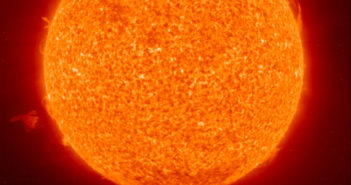
Heating the Chromosphere in the Quiet Sun
Could constant, tiny magnetic-field hiccups be responsible for heating the upper atmosphere of the Sun?

Could constant, tiny magnetic-field hiccups be responsible for heating the upper atmosphere of the Sun?
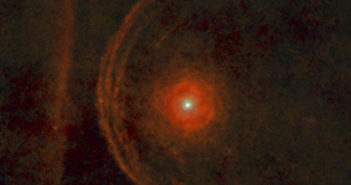
What happens in the late stages of stellar evolution? Neutrinos — the elusive messengers of nuclear fusion in stellar interiors — might hold the answer.
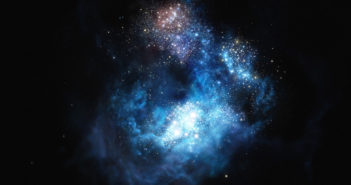
ALMA has provided a detailed look into the interior of CR7, one of the most distant, early galaxies known.
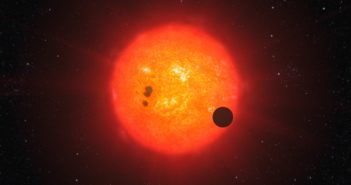
Astrobites reports on the challenge of starspots: if we don’t understand them, we won’t understand exoplanet atmospheres.
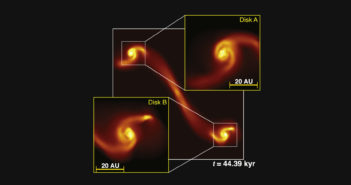
This still from a simulation captures the formation of a multiple-star system in action.
A recent study explores the source of the early blue emission we observed when two neutron stars merged in August 2017.
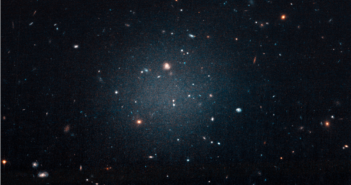
Missing dark matter is not the only oddity of NGC 1052–DF2. New observations of this unusual galaxy are forcing us to rethink what we know about galaxies and the star clusters they host.
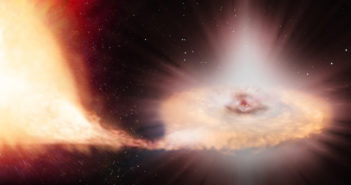
Astrobites reports on the first known white dwarf to have survived the partial explosion of a (failed) Type Ia supernova.
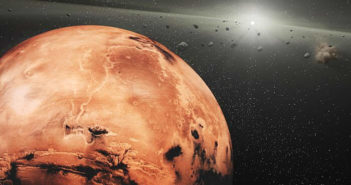
Could a long-ago giant impact have flung pieces of Mars throughout our inner solar system? Numerical simulations and clues from the mineral olivine point us toward an answer.
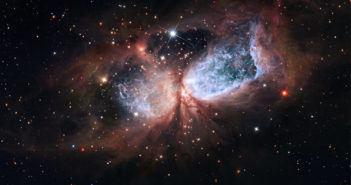
What can dust polarization measurements tell us about the magnetic fields in the star-forming region W51?
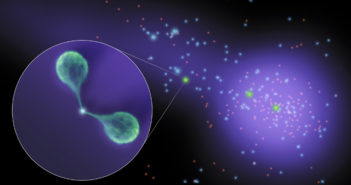
A new study explores how observations of enormous radio jets can reveal information about the environments that surround them.
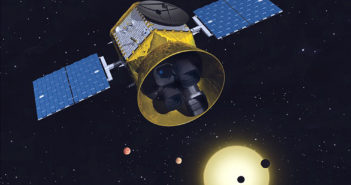
Astrobites reports on how the Transiting Exoplanet Survey Satellite (TESS) will hunt for variable objects in its crowded fields.