AAS 232: Welcome!
This week we’ll be bringing you updates from the 232nd AAS meeting in Denver, CO.

This week we’ll be bringing you updates from the 232nd AAS meeting in Denver, CO.
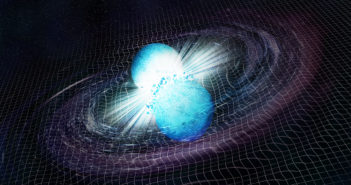
What object was formed in the collision of two neutron stars in August 2017? New X-ray observations may have the answer.
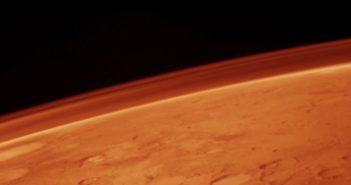
A new study explores Mars’s evolution from a potentially habitable world to an inhospitable environment.
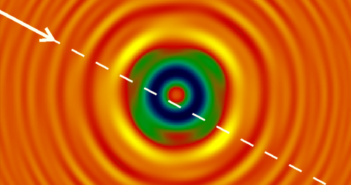
Astrobites reports on what we learned from the occultation of an active galactic nucleus by an asteroid.
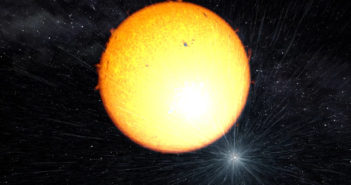
In a recent study, scientists may have identified the most massive neutron star yet — by leveraging observations of its highly irradiated companion.
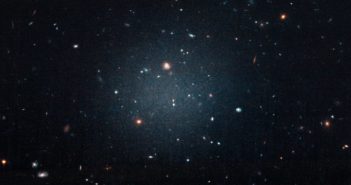
Does the galaxy NGC 1052-DF2 really lack dark matter, or is this ultra-faint dwarf just misunderstood?
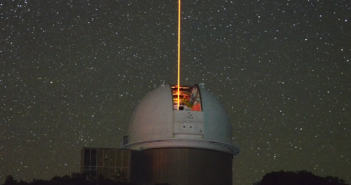
Astronomers are using a once-secret technology to scrutinize Kepler stars. Astrobites reports on the implication this has for our observations of exoplanets.
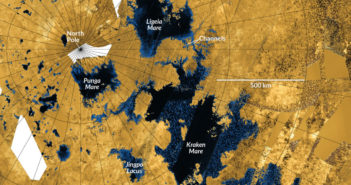
The frigid seas of Titan, Saturn’s largest moon, host a secret: something is causing features to appear and disappear within them. Could these seas be bubbling?
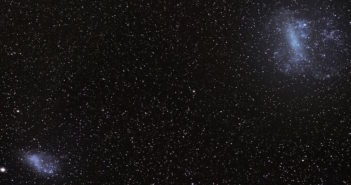
New images of the faint outskirts of the Milky Way’s largest satellite galaxies reveal the extent of their complex interactions.
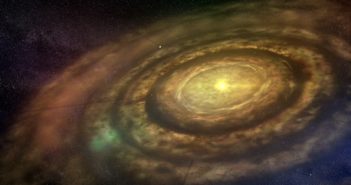
Dust grains in fluids can be found in protoplanetary disks, stellar interiors, and even near black holes — and we may be missing important behavior of these systems.
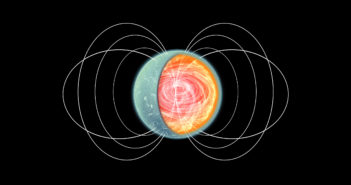
Earth life has a definite preference for particular kinds of molecules. Astrobites reports on where life got its taste for left-handed amino acids.
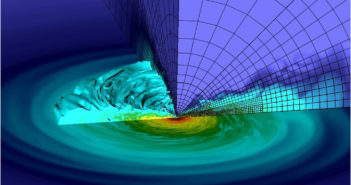
Accretion disks — which include everything from protoplanetary disks to disks around supermassive black holes — are notoriously challenging to model.