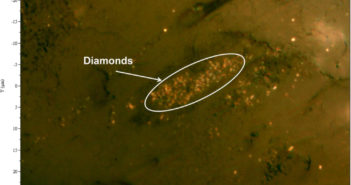
Featured Image: Diamonds in a Meteorite
The sparkle in this image? A cluster of nanodiamonds, embedded in a stony meteorite that fell to Earth in 1942.

The sparkle in this image? A cluster of nanodiamonds, embedded in a stony meteorite that fell to Earth in 1942.
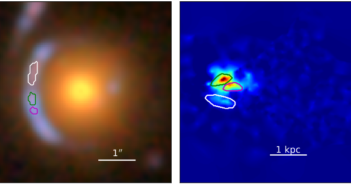
Astrobites reports on observations of a gravitationally lensed galaxy, providing a window onto early star formation in our universe.
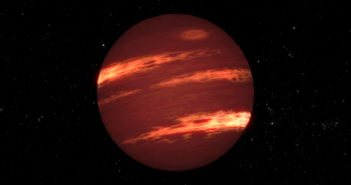
Does a newly explored, unusual planetary-mass object belong to the AB Doradus moving group? And what does it means if it does?
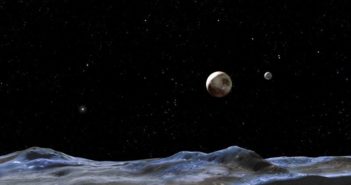
Astrobites reports on just one of Pluto’s many mysteries: the formation of its complex five-moon system.
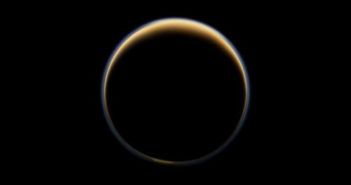
Cool, hazy exoplanets might look a lot like Saturn’s moon Titan. A new study explores the possible atmospheres of exo-Titans around a variety of host stars.
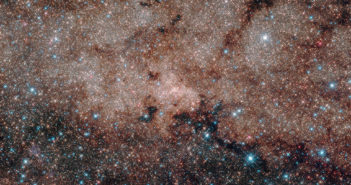
The Milky Way’s nuclear star cluster is full of surprises!
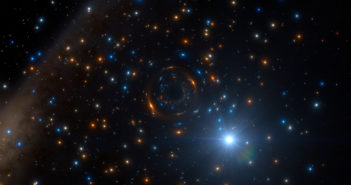
How many black holes lurk within the dense environments of globular clusters, and how do these powerful objects shape the properties of the cluster around them?
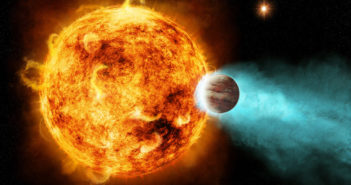
Astrobites reports on how cues from stellar atmospheric chemistry can help explain observations of the atmospheres of very hot gas giants.
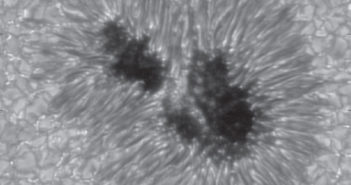
The centers of sunspots aren’t all dark! This image of a sunspot reveals umbral dots — transient, bright features that lie in dark sunspot umbrae.
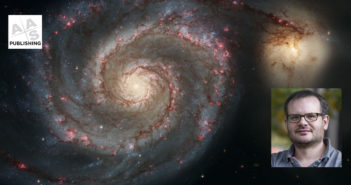
Meet your new AAS Lead Editor for the Galaxies and Cosmology corridor! Here’s how he got started, and what he thinks about his field and the publishing process.
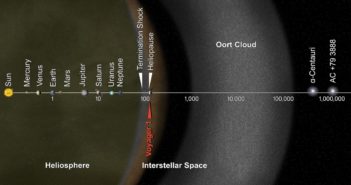
Five and a half years after Voyager 1 zipped across the heliopause, Voyager 2 still hasn’t followed its twin into interstellar space. Can models of the heliopause location help determine why?
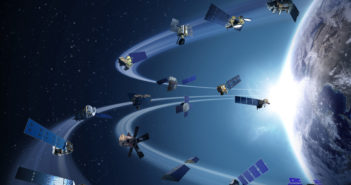
Astrobites explores a possible new detection strategy in the search for extraterrestrial intelligence.