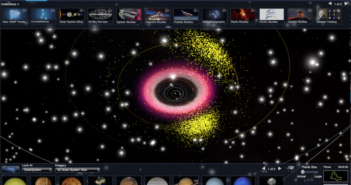
Data: Insights and Challenges in a Time of Abundance
One of the most rapidly evolving elements of astronomy research is how we handle data. A new Special Issue of ApJ Supplements looks at related challenges and resources.

One of the most rapidly evolving elements of astronomy research is how we handle data. A new Special Issue of ApJ Supplements looks at related challenges and resources.
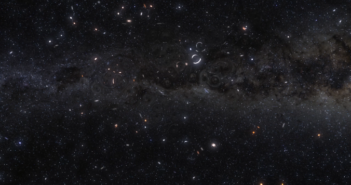
Can black holes of any mass exist, or are there gaps in their possible sizes? Mergers may play a large role in the answer to this question.
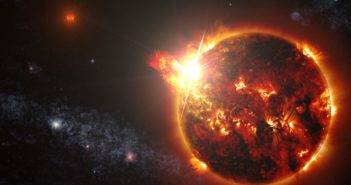
Astrobites reports on the largest flare ever detected from the Sun’s closest neighbor, Proxima Centauri.
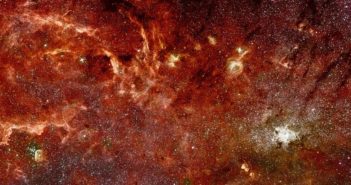
Finding planets in the dusty and crowded galactic center is a difficult task! A new study demonstrates the use of infrared microlensing surveys for discovering exoplanets.
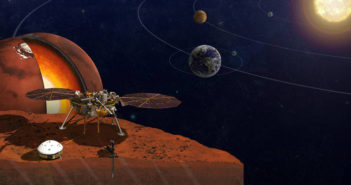
Get ready for future science! Fog is no match for the Mars lander InSight, whose journey to the red planet is officially underway.
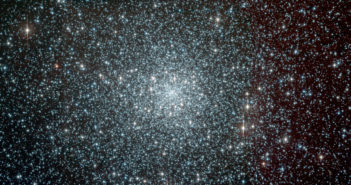
For the first time, the distance to a metal-poor globular cluster is determined using high-precision parallax measurements.
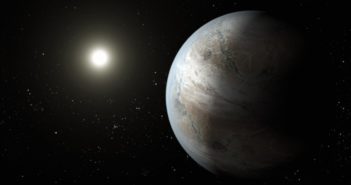
NASA’s TESS spacecraft has launched! Astrobites reports on how many exoplanets it is predicted to find.
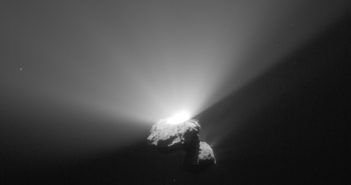
Rosetta’s recent visit of the comet 67P/Churyumov-Gerasimenko yielded a number of discoveries. Astrobites here reports on one of the comet’s intriguing features: the molecular oxygen seen in its coma.
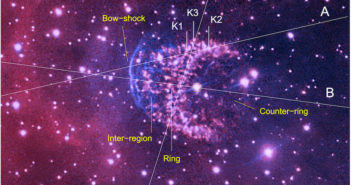
New nebulae are being discovered and classified every day — and this false-color image reveals one of the more recent objects of interest.
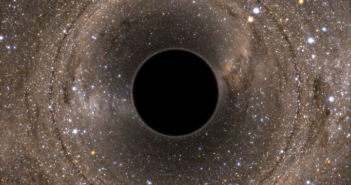
Are supermassive black holes found only at the centers of galaxies? A new study suggests not — and there may be a number of them wandering through our galaxy unseen.
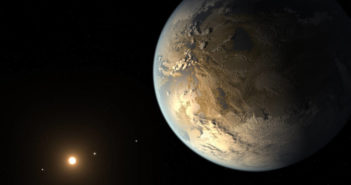
A recent study explores whether Sun-like stars or low-mass M dwarfs are the best target as we search for exoplanets with detectable signatures of life.
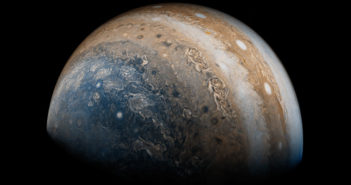
Astrobites reports on a theory that could explain why Jupiter spins at the rate that it does.