Features RSS

LIGO detection

Could dark matter be made of intermediate-mass black holes formed in the beginning of the universe? A recent study takes a renewed look at this question.

Galactic Lurkers

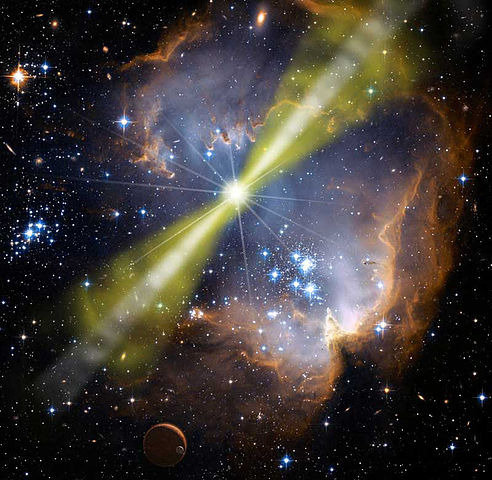
The nature of dark matter has long been questioned, but the recent discovery of gravitational waves by the Laser Interferometer Gravitational-Wave Observatory (LIGO) has renewed interest in the possibility that dark matter could consist of primordial black holes in the mass range of 10–1000 solar masses.

dark matter

The relative amounts of the different constituents of the universe. Dark matter makes up roughly 27%. [ESA/Planck]

According to this model, the extreme density of matter present during the universe’s early expansion led to the formation of a large number of intermediate-mass black holes. These black holes now hide in the halos of galaxies, constituting the mass that we’ve measured dynamically but remains unseen.

LIGO’s first gravitational-wave detection revealed the merger of two black holes that were both tens of solar masses in size. If primordial black holes are indeed a major constituent of dark matter, then LIGO’s detection is consistent with what we would expect to find: occasional mergers of the intermediate-mass black holes that formed in the early universe and now lurk in galactic halos.

Quasar Microlensing

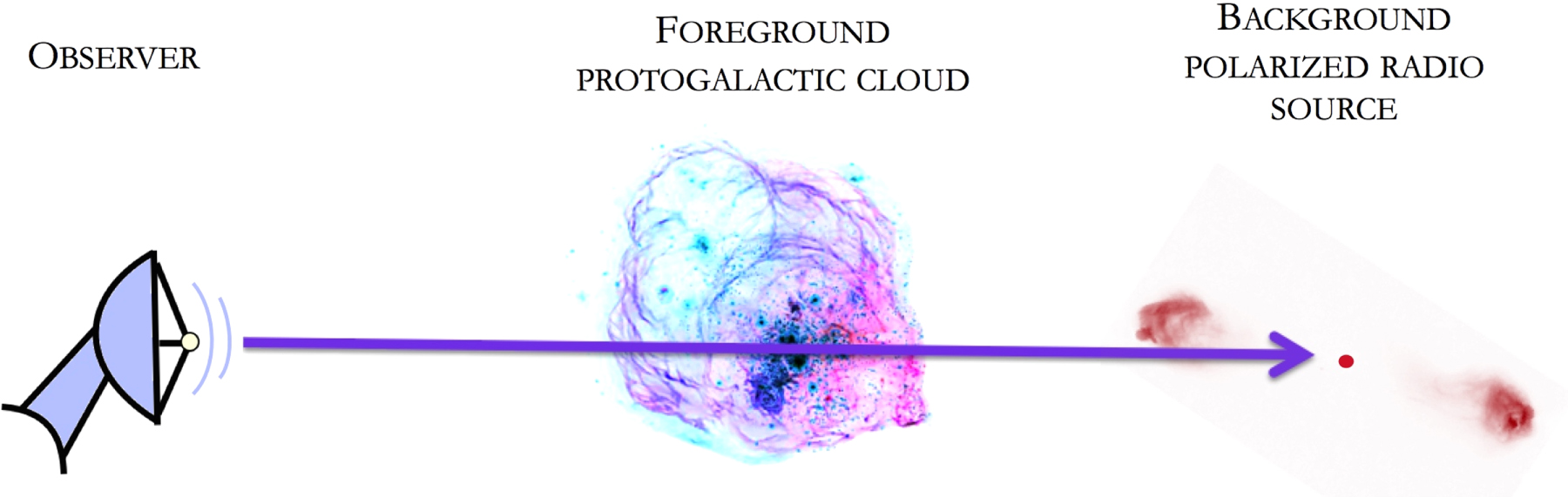
There’s a catch, however. If there truly were a large number of intermediate-mass primordial black holes hiding in galactic halos, they wouldn’t go completely unnoticed: we would see signs of their presence in the gravitational microlensing of background quasars. Unseen primordial black holes in a foreground galaxy could cause an image of a background quasar to briefly brighten — which would provide us with clear evidence of such black holes despite our not being able to detect them directly.

quasar microlensing

A depiction of quasar microlensing (click for a closer look!). The microlensing object in the foreground galaxy could be a star (as depicted), a primordial black hole, or any other compact object. [NASA/Jason Cowan (Astronomy Technology Center)]

A team of scientists led by Evencio Mediavilla (Institute of Astrophysics of the Canaries, University of La Laguna) has now used our observations of quasar microlensing to place constraints on the amount of dark matter that could be made up of intermediate-mass primordial black holes.

Poor Outlook for Primordial Black Holes

Mediavilla and collaborators used simulations to estimate the effects of a distribution of masses on light from distant quasars, and they then compared their results to microlensing magnification measurements from 24 gravitationally lensed quasars. In this way, they were able to determine both the abundance and masses of possible objects causing the quasar microlensing effects we see.

The authors find that the observations constrain the mass of the possible microlensing objects to be between 0.05 and 0.45 solar masses — not at all the intermediate-mass black holes postulated. What’s more, they find that the lensing objects make up ~20% of the total matter, which is barely more than expected for normal stellar matter. This suggests that normal stars are doing the majority of the quasar microlensing, not a large population of intermediate-mass black holes.

What does this mean for primordial black holes as dark matter? Black holes in the range of 10–200 stellar masses are unlikely to account for much (if any) dark matter, Mediavilla and collaborators conclude — which means that LIGO’s detection of gravitational waves likely came from two black holes collapsed from stars, not primordial black holes.

Citation

E. Mediavilla et al 2017 ApJL 836 L18. doi:10.3847/2041-8213/aa5dab

Big Bang

How did our universe come into being? The Big Bang theory is a widely accepted and highly successful cosmological model of the universe, but it does introduce one puzzle: the “cosmological lithium problem.” Have scientists now found a solution?

Too Much Lithium

In the Big Bang theory, the universe expanded rapidly from a very high-density and high-temperature state dominated by radiation. This theory has been validated again and again: the discovery of the cosmic microwave background radiation and observations of the large-scale structure of the universe both beautifully support the Big Bang theory, for instance. But one pesky trouble-spot remains: the abundance of lithium.

primary reactions

The arrows show the primary reactions involved in Big Bang nucleosynthesis, and their flux ratios, as predicted by the authors’ model, are given on the right. Synthesizing primordial elements is complicated! [Hou et al. 2017]

According to Big Bang nucleosynthesis theory, primordial nucleosynthesis ran wild during the first half hour of the universe’s existence. This produced most of the universe’s helium and small amounts of other light nuclides, including deuterium and lithium.

But while predictions match the observed primordial deuterium and helium abundances, Big Bang nucleosynthesis theory overpredicts the abundance of primordial lithium by about a factor of three. This inconsistency is known as the “cosmological lithium problem” — and attempts to resolve it using conventional astrophysics and nuclear physics over the past few decades have not been successful.

In a recent publication led by Suqing Hou (Institute of Modern Physics, Chinese Academy of Sciences) and advisor Jianjun He (Institute of Modern Physics & National Astronomical Observatories, Chinese Academy of Sciences), however, a team of scientists has proposed an elegant solution to this problem.

primordial abundance evolution

Time and temperature evolution of the abundances of primordial light elements during the beginning of the universe. The authors’ model (dotted lines) successfully predicts a lower abundance of the beryllium isotope — which eventually decays into lithium — relative to the classical Maxwell-Boltzmann distribution (solid lines), without changing the predicted abundances of deuterium or helium. [Hou et al. 2017]

Questioning Statistics

Hou and collaborators questioned a key assumption in Big Bang nucleosynthesis theory: that the nuclei involved in the process are all in thermodynamic equilibrium, and their velocities — which determine the thermonuclear reaction rates — are described by the classical Maxwell-Boltzmann distribution.

But do nuclei still obey this classical distribution in the extremely complex, fast-expanding Big Bang hot plasma? Hou and collaborators propose that the lithium nuclei don’t, and that they must instead be described by a slightly modified version of the classical distribution, accounted for using what’s known as “non-extensive statistics”.

The authors show that using the modified velocity distributions described by these statistics, they can successfully predict the observed primordial abundances of deuterium, helium, and lithium simultaneously. If this solution to the cosmological lithium problem is correct, the Big Bang theory is now one step closer to fully describing the formation of our universe.

Citation

S. Q. Hou et al 2017 ApJ 834 165. doi:10.3847/1538-4357/834/2/165

M32

How do ultra-compact dwarf galaxies (UCDs) — galaxies that are especially small and dense — form and evolve? Scientists have recently examined distant galaxy clusters, searching for more UCDs to help us answer this question.

Origins of Dwarfs

In recent years we have discovered a growing sample of small, very dense galaxies. Galaxies that are tens to hundreds of light-years across, with masses between a million and a billion solar masses, fall into category of “ultra-compact dwarfs”.

UCD candidate

An example of an unresolved compact object from the authors’ survey that is likely an ultra-compact dwarf galaxy. [Adapted from Zhang & Bell 2017]

How do these dense and compact galaxies form? Two possibilities are commonly suggested:

  1. An initially larger galaxy was tidally stripped during interactions with other galaxies in a cluster, leaving behind only its small, dense core as a UCD.
  2. UCDs formed as compact galaxies at very early cosmic times. The ones living in a massive dark matter halo may have been able to remain compact over time, evolving into the objects we see today.

To better understand which of these formation scenarios applies to which galaxies, we need a larger sample size! Our census of UCDs is fairly limited — and because they are small and dim, most of the ones we’ve discovered are in the nearby universe. To build a good sample, we need to find UCDs at higher redshifts as well.

A New Sample

In a recent study, two scientists from University of Michigan have demonstrated how we might find more UCDs. Yuanyuan Zhang (also affiliated with Fermilab) and Eric Bell used the Cluster Lensing and Supernova Survey with Hubble (CLASH) to search 17 galaxy clusters at intermediate redshifts of 0.2 < z < 0.6, looking for unresolved objects that might be UCDs.

UCD distribution

The mass and size distributions of the UCD candidates reported in this study, in the context of previously known nuclear star clusters, globular clusters (GCs), UCDs, compact elliptical galaxies (cEs), and dwarf galaxies. [Zhang & Bell 2017]

Zhang and Bell discovered a sample of compact objects — grouped around the central galaxies of the clusters — that are consistent with ultra-compact galaxies. The inferred sizes (many around 600 light-years in radius) and masses (roughly one billion solar masses) of these objects suggest that this sample may contain some of the densest UCDs discovered to date.

The properties of this new set of UCD candidates aren’t enough to distinguish between formation scenarios yet, but the authors argue that if we find more such galaxies, we will be able to use the statistics of their spatial and color distributions to determine how they were formed.

Zhang and Bell estimate that the 17 CLASH clusters studied in this work each contain an average of 2.7 of these objects in the central million light-years of the cluster. The authors’ work here suggests that searching wide-field survey data for similar discoveries is a plausible way to increase our sample of UCDs. This will allow us to statistically characterize these dense, compact galaxies and better understand their origins.

Citation

Yuanyuan Zhang and Eric F. Bell 2017 ApJL 835 L2. doi:10.3847/2041-8213/835/1/L2

Coronal jet simulation

jet formation

Formation of a coronal jet from twisted field lines that have reconnected with the ambient field. The colors show the radial velocity of the plasma. [Adapted from Szente et al. 2017]

How do jets emitted from the Sun’s surface contribute to its corona and to the solar wind? In a recent study, a team of scientists performed complex three-dimensional simulations of coronal jets to answer these questions.

Small Explosions

Coronal jets are relatively small eruptions from the Sun’s surface, with heights of roughly 100 to 10,000 km, speeds of 10 to 1,000 km/s, and lifetimes of a few minutes to around ten hours. These jets are constantly present — they’re emitted even from the quiet Sun, when activity is otherwise low — and we’ve observed them with a fleet of Sun-watching space telescopes spanning the visible, extreme ultraviolet (EUV), and X-ray wavelength bands.

comparison 1

A comparison of simulated observations based on the authors’ model (left panels) to actual EUV and X-ray observations of jets (right panels). [Szente et al. 2017]

Due to their ubiquity, we speculate that these jets might contribute to heating the global solar corona (which is significantly hotter than the surface below it, a curiosity known as the “coronal heating problem”). We can also wonder what role these jets might play in driving the overall solar wind.

Launching a Jet

Led by Judit Szente (University of Michigan), a team of scientists has explored the impact of coronal jets on the global corona and solar wind with a series of numerical simulations. Szente and collaborators used three-dimensional, magnetohydrodynamic simulations that provide realistic treatment of the solar atmosphere, the solar wind acceleration, and the complexities of heat transfer throughout the corona.

In the authors’ simulations, a jet is initiated as a magnetic dipole rotates at the solar surface, winding up field lines. Magnetic reconnection between the twisted lines and the background field then launches the jet from the dense and hot solar chromosphere, and erupting plasma is released outward into the solar corona.

comparison 2

A second comparison of simulated observations based on the authors’ model (left panels) to actual EUV observations of jets (right panels). [Szente et al. 2017]

Global Influences

After demonstrating that their models could successfully lead to jet production and propagation, Szente and collaborators compared their results to actual observations of solar jets. The authors constructed simulated EUV and X-ray observations of their modeled events, and they verified that the behavior and structures in these simulated observations were very similar to real observations of coronal jet events from telescopes like SDO/AIA and Hinode.

With this confirmed, the authors then used their models to determine how the jets influence the global solar corona and the solar wind. They found that the large-scale corona is significantly affected by the plasma waves from the jet, which travel across 40° in latitude and out to 24 solar radii. In spite of this, the simulated jets contributed only a few percent to the steady-state solar-wind energy outflow.

These simulations represent an important step in realistic modeling of the quiet Sun. Because the models make specific predictions about temperature and density gradients within the corona, we can look forward to testing them with upcoming missions like Solar Probe Plus, which should be able to explore the Sun all the way down to nine solar radii.

Citation

J. Szente et al 2017 ApJ 834 123. doi:10.3847/1538-4357/834/2/123

climate model

Having a giant planet like Jupiter next door can really wreak havoc on your orbit! A new study examines what such a bad neighbor might mean for the long-term climate of an Earth-like planet.

Influence of a Bad Neighbor

The presence of a Jupiter-like giant planet in a nearby orbit can significantly affect how terrestrial planets evolve dynamically, causing elements like the planets’ orbital eccentricities and axial tilts to change over time. Earth is saved this inconvenience — Jupiter isn’t close enough to significantly influence us, and our large moon stabilizes our orbit against Jupiter’s tugs.

outcomes

Top panels: Authors’ simulation outcomes for Case 1, in which the planet’s eccentricity varies from 0 to 0.283 over 6500 years. Bottom panels: Outcomes for Case 2, in which the planet’s eccentricity varies from 0 to 0.066 over 4500 years. The higher eccentricities reached in Case 1 causes the climate parameters to vary more widely. Click for a better look! [Way & Georgakarakos 2017]

Mars, on the other hand, isn’t as lucky: it’s possible that Jupiter’s gravitational pull causes Mars’s axial tilt, for instance, to evolve through a range as large as 0 to 60 degrees on timescales of millions of years! Mars’s orbital eccentricity is similarly thought to vary due to Jupiter’s influence, and both of these factors play a major role in determining Mars’s climate.

As exoplanet missions discover more planets — many of which are Earth-like — we must carefully consider which among these are most likely to be capable of sustaining life. If having a nearby neighbor like a Jupiter can tug an Earth-like world into an orbit with varying eccentricity, how does this affect the planet’s climate? Will the planet remain temperate? Or will it develop a runaway heating or cooling effect as it orbits, rendering it uninhabitable?

Oceans and Orbits

To examine these questions, two scientists have built the first ever 3D global climate model simulations of an Earth-like world using a fully coupled ocean (necessary for understanding the transport of heat across the planet) with a planetary orbit that evolves over time.

surface air temperature

The surface air temperature variation of a planet with orbital eccentricity of 0.283. The top panel shows the surface temperature when the planet is closest to the star in its orbit (periastron); the bottom when the planet is furthest from the star in its orbit (apoastron). [Way & Georgakarakos 2017]

The scientists, Michael Way (NASA Goddard and Uppsala University, Sweden) and Nikolaos Georgakarakos (New York University Abu Dhabi), focus in this study on the specific effects of a varying orbital eccentricity on an Earth-like planet’s climate, holding the planet’s axial tilt steady at Earth’s 23.5°. They explore two scenarios: one in which the planet’s eccentricity evolves from 0 to 0.283 over 6500 years, and the other in which it evolves from 0 to 0.066 over 4500 years.

Temperate Outcomes

Way and Georgakarakos find that the planet with the more widely varying eccentricity has a greater increase rainfall and humidity as the planet approaches its host star in its orbit. Nonetheless, this effect is not enough to cause a runaway greenhouse scenario in which the planet becomes too warm for habitability. Similarly, the ocean ice fraction remains low enough even at apoastron in high-eccentricity scenarios for the planet to remain temperate.

What does these results imply? Having a changing eccentricity — caused by the gravitational pull of a nearby Jupiter-like neighbor — may make a planet’s climate more variable, but not to the extent where the planet is no longer able to support life. Therefore, as we discover more such planets with current and upcoming exoplanet missions, we know that we needn’t necessarily assume that they aren’t interest for habitability.

Citation

M. J. Way and Nikolaos Georgakarakos 2017 ApJL 835 L1. doi:10.3847/2041-8213/835/1/L1

Circumstellar disk

New observations may help us to learn more about the birth of high-mass star systems. For the first time, scientists have imaged a very young, high-mass binary system and resolved the individual disks that surround each star and the binary.

Massive Multiples

It’s unusually common for high-mass stars to be discovered in multiple-star systems. More than 80% of all O-type stars — which have masses greater than 16 times that of the Sun — are in close multiple systems, compared with a multiplicity fraction of only ~20% for stars of ~3 solar masses, for instance.

IRAS17216-3801

Reconstructed VLTI observations of the two components of the high-mass binary IRAS17216-3801. [Adapted from Kraus et al. 2017]

Why do more massive stars preferentially form in multiple-star systems? Many different models of high-mass star formation have been invoked to explain this observation, but before we can better understand the process, we need better observations. In particular, past observations have placed few constraints on the architecture and disk structure of early high-mass stars.

Conveniently, a team of scientists led by Stefan Kraus (University of Exeter) may have found exactly what we need: a high-mass “protobinary” that is still in the process of forming. Using ESO’s Very Large Telescope Interferometer (VLTI), Kraus and collaborators have captured the first observations of a very young, high-mass binary system in which the circumbinary disk and the two circumstellar dust disks could all be spatially resolved.

Clues from Resolved Disks

The VLTI near-infrared observations reveal that IRAS17216-3801, originally thought to be a single high-mass star, is instead a close binary separated by only ~170 AU. Its two components are both surrounded by disks from which the protostars are actively accreting mass, and both of these circumstellar disks are strongly misaligned with respect to the separation vector of the binary. This confirms that the system is very young, as tidal forces haven’t yet had time to align the disks.

binary model

The authors’ model of the geometry of the binary system, including the orientations of the two circumstellar disks (sketch not to scale). [Adapted from Kraus et al. 2017]

Fitting models to the observations, Kraus and collaborators find the best-fitting description of the system’s geometry and the masses of the components — roughly 18 and 20 solar masses, they estimate.

By tracing the hot gas in their observations of the system, the authors also determine that the secondary, smaller component is accreting at a higher rate than the larger star. This suggests that the secondary disrupts the accretion stream onto the primary star, channeling the infalling material onto its own disk instead — an observation that confirms the prediction of hydrodynamic simulations.

IRAS17216-3801 is roughly three times more massive and five times more compact than other high-mass multiple star systems imaged in infrared, and it is the first system in which resolution of its component disks has been possible. These images present an exciting laboratory for studying star–disk interactions and the formation of high-mass multiple systems.

Citation

S. Kraus et al 2017 ApJL 835 L5. doi:10.3847/2041-8213/835/1/L5

quasar

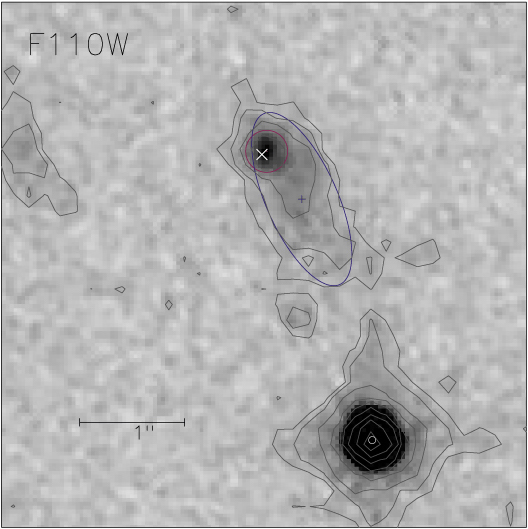
The intermediate Palomar Transient Factory (iPTF) has discovered a quasar — the brightly-shining, active nucleus of a galaxy — abruptly turning on in what appears to be the fastest such transition ever seen in such an object.

A Rapid Transition

Quasars are expected to show variations in brightness on timescales of hours to millions of years, but it’s not often that we get to study their major variability in real time! So far, we’ve discovered only a dozen “changing-look” quasars — active galactic nuclei that exhibit major changes in their spectral class and brightness between observations. Roughly half of these were quasars that turned on and half were quasars that turned off, generally on timescales of maybe 5 or 10 years.

spectral change

The dramatic change in spectrum of iPTF 16bco between the archival SDSS data from 2004 (bottom) and the follow-up spectroscopy from Keck 2+DEIMOS in 2016 (top). [Adapted from Gezari et al. 2017]

In June 2016, however, a team of scientists led by Suvi Gezari (University of Maryland) discovered iPTF 16bco, a nuclear transient that wasn’t there the last time Palomar checked in 2012. A search through archival Sloan Digital Sky Survey and GALEX data — in addition to some follow-up X-ray imaging and spectroscopic observations — told the team what they needed to know: iPTF 16bco is a quasar that only just turned on within the 500 days preceding the iPTF observations.

This source, in fact, is a 100-million-solar-mass black hole located at the center of a galaxy at a redshift of= 0.237. In just over a year, the source changed classification from a galaxy with weak narrow-line emission to a quasar with characteristic strong, broad emission lines and a ten-fold increase in continuum brightness! What caused this sudden transition?

Instabilities at Fault?

changing look quasars

iPTF 16bco and the other known changing-look quasars with disappearing (red circles) and appearing (blue circles) broad-line emission. [Adapted from Gezari et al. 2017]

Gezari and collaborators used the large number of recent and archival observations of the galaxy to explore several scenarios that might be responsible for the rapid change in its brightness and spectral appearance. They found that the data disfavor variable obscuration by an absorber between us and the galaxy, microlensing of a background object, and tidal disruption of a star.

Instead, the authors conclude that the best-fitting explanation is one in which the galaxy’s nucleus already had a preexisting accretion disk, but the disk recently developed an instability. That instability caused more gas to rapidly feed onto the black hole, bumping the accretion rate up a notch and resulting in the quasar suddenly brightening.

Continued observations of iPTF 16bco will certainly help us to better understand what’s happening in this unusual source. In the meantime, its rapid change of state pushes the limits of accretion disk theory and presents us with an intriguing challenge to our understanding of quasars.

Citation

S. Gezari et al 2017 ApJ 835 144. doi:10.3847/1538-4357/835/2/144

Habitable zone

Where should we search for life in the universe? Habitable zones are traditionally determined based on the possibility of liquid water existing on a planet — but ultraviolet (UV) radiation also plays a key role.

The UV Habitable Zone

Habitable zones

Schematic showing how the traditional habitable zone’s location and width changes around different types of stars. The UV habitable zone also has different locations and widths depending on the mass and metallicity of the star. [NASA/Kepler Mission/Dana Berry]

Besides the presence of liquid water, there are other things life may need to persist. For life as we know it, one important element is moderate UV radiation: if a planet receives too little UV flux, many biological compounds can’t be synthesized. If it receives too much, however, then terrestrial biological systems (e.g. DNA) can be damaged.

To determine the most likely place to find persistent life, we should therefore look for the region where a star’s traditional habitable zone, within which liquid water is possible, overlaps with its UV habitable zone, within which the UV flux is at the right level to support life.

UV habitable zone Z=0.02

Relationship between the stellar mass and location of the boundaries of the traditional and UV habitable zones for a solar-metallicity star. din and dout denote inner and outer boundaries, respectively. ZAMS and TMS denote when the star joins and leaves the main sequence, respectively. The traditional and UV habitable zones overlap only for stars of 1–1.5 solar masses. [Adapted from Oishi and Kamaya 2016]

Looking for Overlap

In a recent study, two scientists from the National Defense Academy of Japan, Midori Oishi and Hideyuki Kamaya, explored how the location of this UV habitable zone — and that of its overlap with the traditional habitable zone — might be affected by a star’s mass and metallicity.

Oishi and Kamaya developed a simple evolutional model of the UV habitable zone in stars in the mass range of 0.08–4 solar masses with metallicities of roughly solar metallicity (Z=0.02), a tenth of solar metallicity, and a hundredth of solar metallicity.

They calculate the location of the inner and outer UV habitable zone boundaries for each star at the beginning and end of its main-sequence life. They then determine the region for which the UV habitable zone and the traditional habitable zone overlap — which maximizes the potential to support persistent life.

The Field Narrows

UV habitable zone Z=0.0002

Relationship between the stellar mass and location of the boundaries of the traditional and UV habitable zones for a star of one hundredth solar metallicity. The traditional and UV habitable zones do not overlap for stars of any mass. [Adapted from Oishi and Kamaya 2016]

Oishi and Kamaya find that taking the UV habitable zone into account unsurprisingly decreases the places where persistent life might be found. For solar-metallicity stars, for instance, only those stars between 1.0–1.5 solar masses even have overlapping traditional and UV habitable zones.

As metallicity of the host star decreases, the overlapping regions decrease as well: at a metallicity of one hundredth that of the Sun (Z=0.0002), the UV and traditional habitable zones do not overlap for any mass star.

The authors point out that this does not necessarily mean that such stars can’t support life. Stellar activity such as flares and coronal mass ejections can temporarily increase UV flux, possibly providing enough to make up for low steady-state flux. And oceans on planetary surfaces could shield potential life from UV flux that is too high.

Nonetheless, the estimates of the UV habitable zone in this study help us to narrow down the most probable places for finding life in the universe.

Citation

Midori Oishi and Hideyuki Kamaya 2016 ApJ 833 293. doi:10.3847/1538-4357/833/2/293

Haumea and satellites

Haumea

An image from the Keck telescope of the dwarf planet Haumea (center) and its two moons, Hi’iaka (above) and Namaka (below). [Caltech/Keck/Mike Brown]

Recent observations of Hi’iaka, the largest satellite of the dwarf planet Haumea, reveal that the moon is spinning much more rapidly than expected. What could this tell us about how Haumea and its moons formed?

A Distant Dwarf

The dwarf planet Haumea orbits beyond Neptune and has a mass of roughly 1/3 that of Pluto. Like Pluto, Haumea also has companions: two satellites of roughly 0.5% and 0.05% of Haumea’s mass, orbiting at rather large distances of 36 and 70 Haumea radii (roughly 26,000 and 50,000 km).

In a recently published study, a team led by Danielle Hastings (UC Los Angeles and Florida Institute of Technology) explored Hubble and Magellan observations of Hi’iaka — Haumea’s larger, outer satellite — to determine the rate at which it rotates on its axis.

Hi'iaka light curve

Hi’iaka’s light curve, phase-folded at its most likely rotation period of 9.8 hours. The double peak is due to the fact that Hi’iaka is likely not a spherical body, so it shows two maxima in brightness in each full rotation. [Hastings et al. 2016]

Rapid Rotation

Nominally, we’d expect Hi’iaka to be rotating synchronously — its rotation period should be the same as its orbital period of 49.5 days. We expect this because the amount of time needed for tidal forces to despin Hi’iaka to synchronous rotation should be much shorter than the time needed for these forces to produce Hi’iaka’s observed low eccentricity and large semimajor axis.

Therefore it was quite the surprise when Hastings and collaborators analyzed Hi’iaka’s light curve and found that the moon revolves on its axis once every 9.8 hours! That’s roughly 120 times faster than the expected synchronous rate.

Formation Theories

What does this discovery reveal about Hi’iaka’s formation? Hastings and collaborators propose three possible scenarios. They then use analytic calculations and numerical simulations to try to constrain them based on Hi’iaka’s orbital and spin properties.

  1. Hi’iaka formed close in and then migrated outwards
    The authors show that the time needed to despin a satellite depends strongly on its initial spin rate and semimajor axis. If Hi’iaka formed with the right initial conditions and moved outward from Haumea very quickly, it would have been possible for it to maintain the high spin rate we observe.
  2. Hi’iaka formed in place
    Hi’iaka’s spin rate is also shown to be consistent with a model in which the satellite formed at its current location from an especially large proto-satellite disk around Haumea.
  3. Hi’iaka was spun up by a recent impact
    What if Hi’iaka was rotating synchronously, but a recent impact spun it back up again? The authors show that a glancing impact/merger with a hypothetical third satellite of Haumea could have spun up Hi’iaka to its current rate without affecting its circular, low-obliquity orbit.

The upshot of the authors’ analysis is that Hi’iaka’s rotation rate is faster than we expected, but this discovery is not enough to discriminate between the different hypotheses for how the moon formed. Future observations of other parameters of Haumea and its satellites are our best bet for understanding the origin of this system.

Citation

Danielle M. Hastings et al 2016 AJ 152 195. doi:10.3847/0004-6256/152/6/195

TDE

What happens when a magnetized star is torn apart by the tidal forces of a supermassive black hole, in a violent process known as a tidal disruption event? Two scientists have broken new ground by simulating the disruption of stars with magnetic fields for the first time.

partial disruption simulation

The magnetic field configuration during a simulation of the partial disruption of a star. Top left: pre-disruption star. Bottom left: matter begins to re-accrete onto the surviving core after the partial disruption. Right: vortices form in the core as high-angular-momentum debris continues to accrete, winding up and amplifying the field. [Adapted from Guillochon & McCourt 2017]

What About Magnetic Fields?

Magnetic fields are expected to exist in the majority of stars. Though these fields don’t dominate the energy budget of a star — the magnetic pressure is a million times weaker than the gas pressure in the Sun’s interior, for example — they are the drivers of interesting activity, like the prominences and flares of our Sun.

Given this, we can wonder what role stars’ magnetic fields might play when the stars are torn apart in tidal disruption events. Do the fields change what we observe? Are they dispersed during the disruption, or can they be amplified? Might they even be responsible for launching jets of matter from the black hole after the disruption?

Star vs. Black Hole

In a recent study, James Guillochon (Harvard-Smithsonian Center for Astrophysics) and Michael McCourt (Hubble Fellow at UC Santa Barbara) have tackled these questions by performing the first simulations of tidal disruptions of stars that include magnetic fields.

In their simulations, Guillochon and McCourt evolve a solar-mass star that passes close to a million-solar-mass black hole. Their simulations explore different magnetic field configurations for the star, and they consider both what happens when the star barely grazes the black hole and is only partially disrupted, as well as what happens when the black hole tears the star apart completely.

Amplifying Encounters

For stars that survive their encounter with the black hole, Guillochon and McCourt find that the process of partial disruption and re-accretion can amplify the magnetic field of the star by up to a factor of 20. Repeated encounters of the star with the black hole could amplify the field even more.

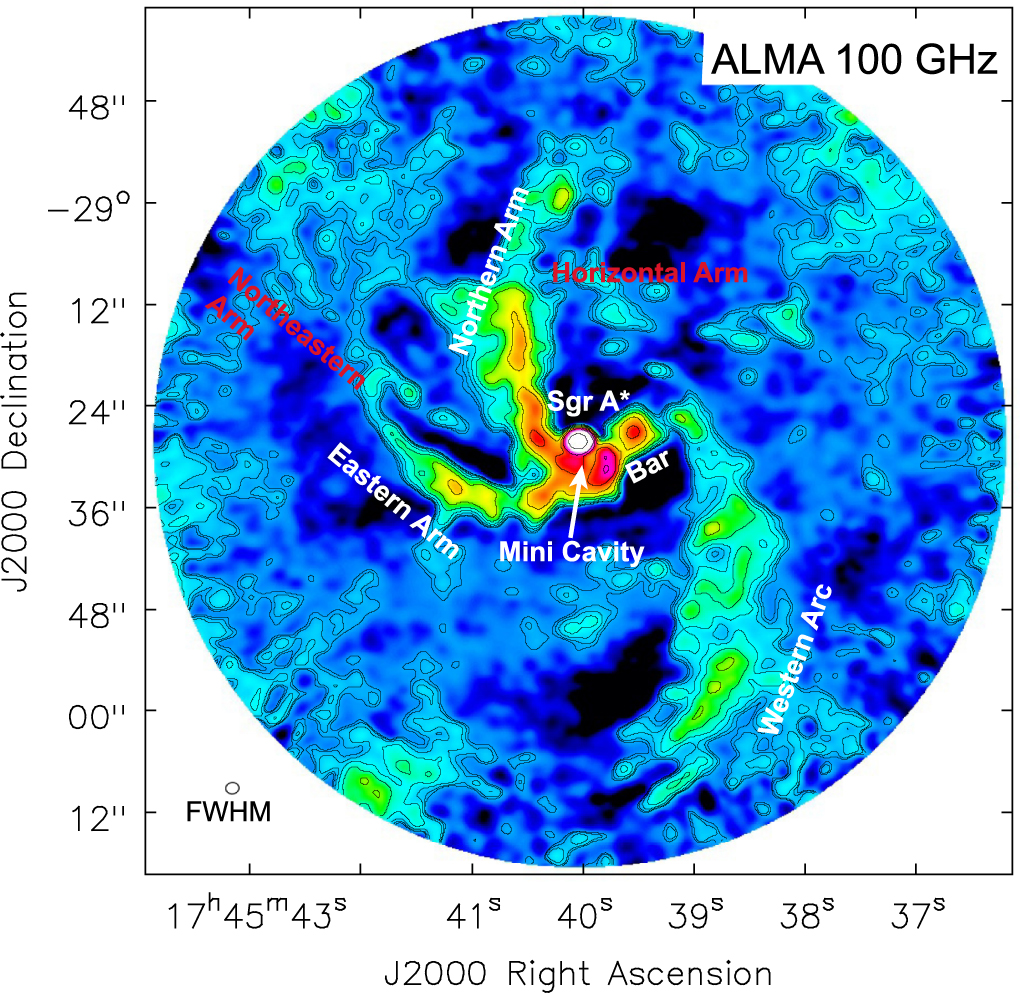
The authors suggest an interesting implication of this idea: a population of highly magnetized stars may have formed in our own galactic center, resulting from their encounters with the supermassive black hole Sgr A*.

turbulent magnetic field

A turbulent magnetic field forms after a partial stellar disruption and re-accretion of the tidal tails. [Adapted from Guillochon & McCourt 2017]

Effects in Destruction

For stars that are completely shredded and form a tidal stream after their encounter with the black hole, the authors find that the magnetic field geometry straightens within the stream of debris. There, the pressure of the magnetic field eventually dominates over the gas pressure and self-gravity.

Guillochon and McCourt find that the field’s new configuration isn’t ideal for powering jets from the black hole — but it is strong enough to influence how the stream interacts with itself and its surrounding environment, likely affecting what we can expect to see from these short-lived events.

These simulations have clearly demonstrated the need to further explore the role of magnetic fields in the disruptions of stars by black holes.

Bonus

Check out the full (brief) video from one of the simulations by Guillochon and McCourt (be sure to watch it in high-res!). It reveals the evolution of a star’s magnetic field configuration as the star is partially disrupted by the forces of a supermassive black hole and then re-accretes.

Citation

James Guillochon and Michael McCourt 2017 ApJL 834 L19. doi:10.3847/2041-8213/834/2/L19

1 92 93 94 95 96 113