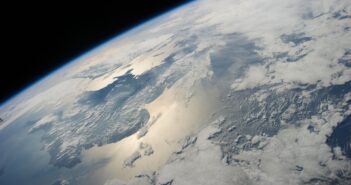
Passing Stars Shake Up Simulations of Earth’s Past Orbit and Climate
Stars passing within a few light-years of our solar system add an element of chaos to planetary orbits, limiting how far back we can study Earth’s past orbit.

Stars passing within a few light-years of our solar system add an element of chaos to planetary orbits, limiting how far back we can study Earth’s past orbit.
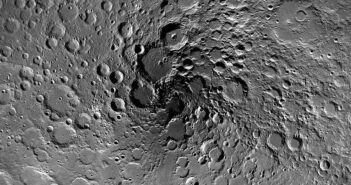
New research investigates how ice might alter lunar soil and create fine particles in permanently shadowed lunar craters.
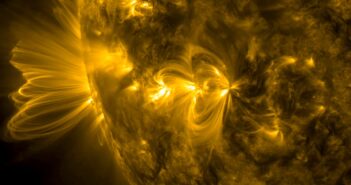
Researchers explore whether the choice of initial magnetic field impacts the outcome for models of the solar corona.
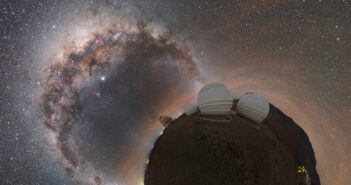
Researchers quantified the impact of artificial lighting on sites across Chile for the first time, showing that we must actively preserve dark skies in remote areas and urban corridors alike.
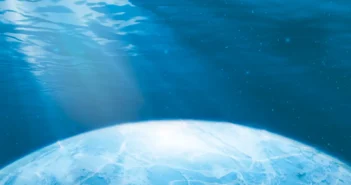
One of the most popular planets is also maddeningly ambiguous: is LHS 1140b rocky, watery, or gaseous?
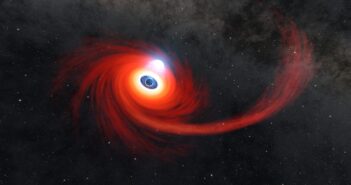
You can take a star apart layer by layer — all you’ll need is a black hole and a set of precisely tuned orbital parameters.
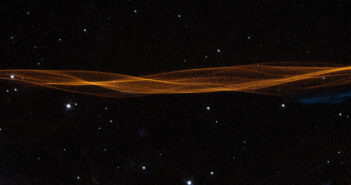
Today’s post introduces four research articles that examine various aspects of supernova science, from attempts to determine how lightweight a supernova progenitor star can be to exploring why some massive stars don’t produce supernovae at all.
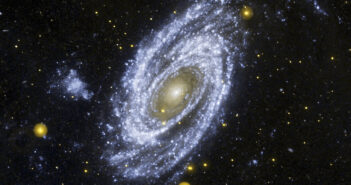
Could measuring ultraviolet light from small galaxies in the early universe help researchers test the leading theory of cosmology?
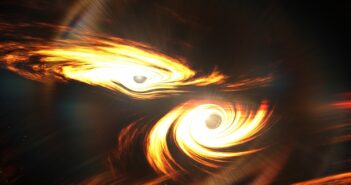
Researchers have used new models to explore whether reported correlations in the properties of black hole binary systems are real or just a consequence of previous statistical methods.
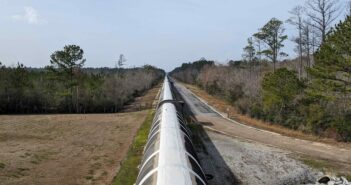
Following the recent AAS meeting, the AAS Press team led a group of reporters to LIGO Livingston to learn about the history and future of gravitational wave detections.