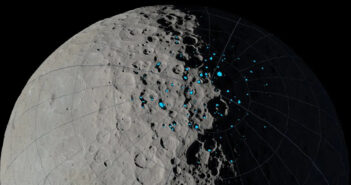
Ice Trapped in Craters on Ceres Is Surprisingly Young
The dwarf planet Ceres hosts water ice in cold, shadowed craters. New research suggests that these ice deposits are remarkably young.

The dwarf planet Ceres hosts water ice in cold, shadowed craters. New research suggests that these ice deposits are remarkably young.
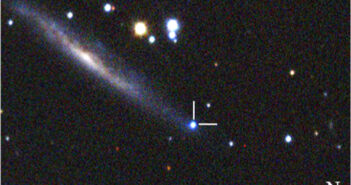
If caught just a few days later, SN 2022jox would’ve looked like just another ordinary core-collapse supernova, but early observations set it apart, revealing the gas expelled in the star’s final years.
New research explores a way to probe for cracks in special relativity with a subtle measurement of gamma-ray photons.
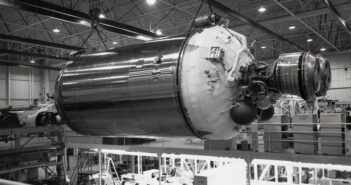
One person’s space junk is another’s research opportunity: scientists study an artificial object mistaken for an asteroid to understand how to identify these objects in future surveys.
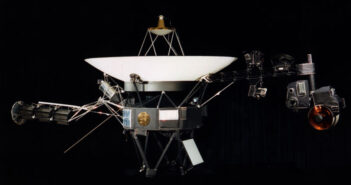
How do cosmic rays move through the galaxy? Thanks to data collected by the aging Voyager 1 spacecraft, astronomers are closer to finding out.
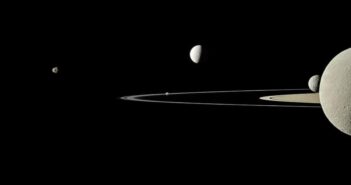
The cratered surfaces of our solar system’s moons record impacts reaching back billions of years. How do researchers measure the ages of these surfaces, and what can these ages tell us about how the moons formed?
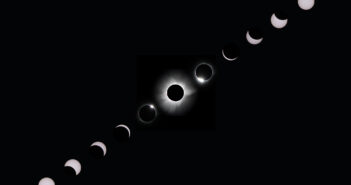
Take a moment to delve into three solar physics research articles with us today to learn how researchers are studying our home star.
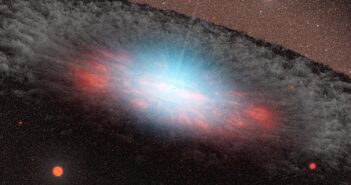
If simulations “remember” the conditions they started with, that could complicate the modeling of magnetized accretion disks around supermassive black holes.
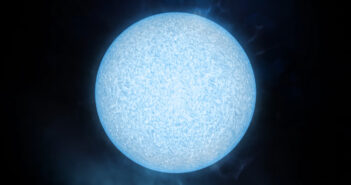
The merger of two stars can make a blue supergiant, suggesting that many of the galaxy’s brightest stars are not born, but made.
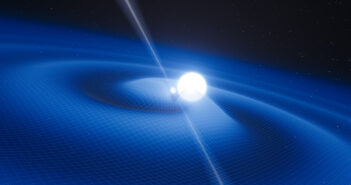
Fitting models to pulsar arrival times is typically a tricky business. A new algorithm might let computers take on some of the decision-making burdens.