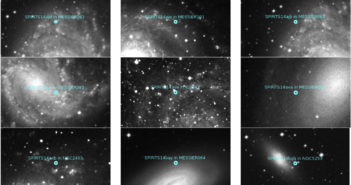
Hunting Elusive SPRITEs with Spitzer
Spitzer has discovered several unusual flare-ups in nearby galaxies. What caused these mysterious events?

Spitzer has discovered several unusual flare-ups in nearby galaxies. What caused these mysterious events?
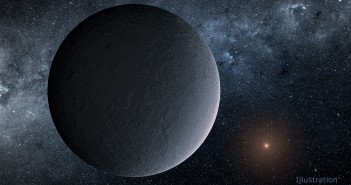
An Earth-mass planet has recently been discovered around a star so small it may not even be a star!
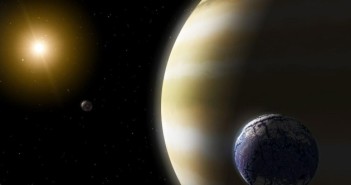
The potential for liquid water is not the only factor when determining a planet’s habitability. One important consideration: whether the planet has a moon.
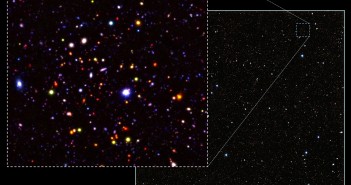
New measurements of a sample of dusty, star-forming galaxies have allowed us to learn more about the universe in its early years.
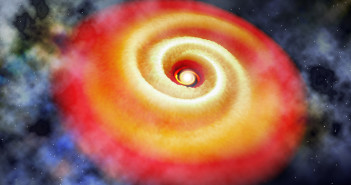
The young star Elias 2-27 is surrounded by a massive disk with spectacular spiral arms. A new study examines what caused its appearance.
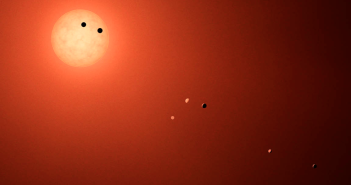
A new study challenges the habitability of the seven Earth-sized, terrestrial planets discovered around the M-dwarf star TRAPPIST-1.
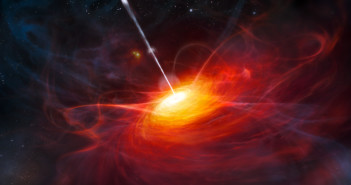
Quasars are cleverly camouflaged at some high redshifts, making them tough to spot. Now there’s a way to detect these distant monsters in spite of their disguise.
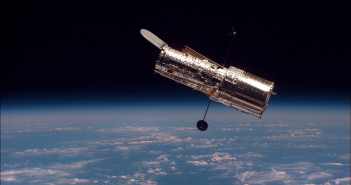
Every year, astronomers submit over a thousand proposals requesting time on the Hubble Space Telescope. A computer program may help sort these proposals in the future.
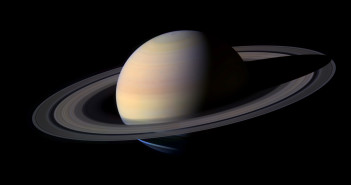
Are planetary rings as common in our galaxy as they are in our solar system? A new study shows how to hunt for them — and then does!
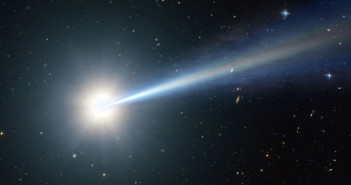
A team of scientists has used ALMA to learn more about the host galaxy of the most distant quasar known.