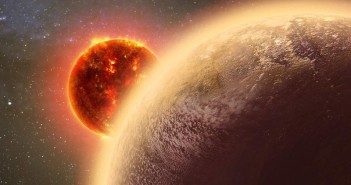
An Exo-Venus in the Solar Neighborhood
Why is Earth hospitable to life and Venus not? Kepler-1649b, a newly discovered exo-Venus, may help us figure this out!

Why is Earth hospitable to life and Venus not? Kepler-1649b, a newly discovered exo-Venus, may help us figure this out!
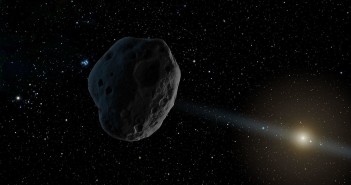
How many comets, asteroids, and planetary bodies are floating through interstellar space, not gravitationally bound to any solar system?
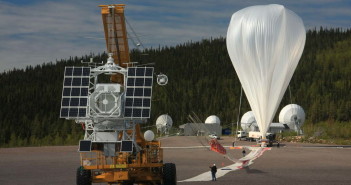
In 2013, a team of scientists gathered in Sweden to launch a balloon carrying the largest solar telescope to leave Earth. Now they’re sharing what they learned from the flight!
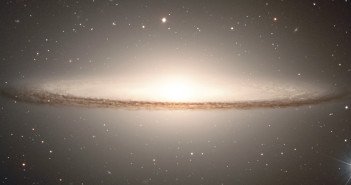
What determines how much mass will end up in the bulge and the black hole at the center of a Milky-Way-like galaxy?
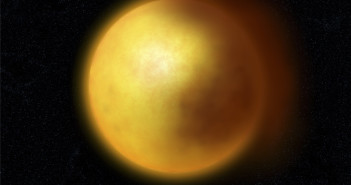
Twenty-three new objects have been added to the growing collection of stars that have unusual dips in their light curves.
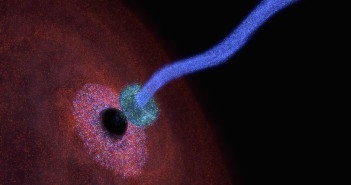
A new study provides us with clues to the relationship between accretion and outflows near the supermassive black holes at the centers of active galaxies.

The Breakthrough Starshot Initiative will send tiny spacecraft to our nearest stellar neighbors. A new study examines how we can successfully propel these spacecraft on their way.

Some white dwarfs have magnetic fields with strengths of thousands to billions of times that of Earth. A new study examines how these fields might form.

Many planetary nebulae are too “messy” in morphology to be explained by the standard model of how they form.

How do the dusty disks around young stars first form and evolve around their newly born stars?