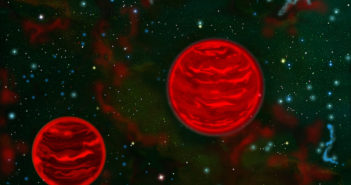
Discovery of a Free-Floating Double Planet?
An object previously identified as a free-floating, large Jupiter analog turns out to be two objects — each with the mass of a few Jupiters.

An object previously identified as a free-floating, large Jupiter analog turns out to be two objects — each with the mass of a few Jupiters.
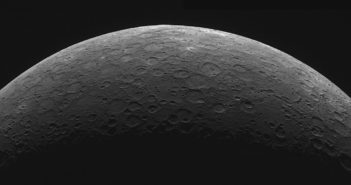
Mercury’s surface is riddled with craters — but this inner planet is also subtly shaped by much smaller impacts.
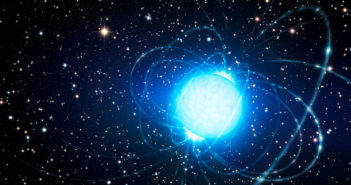
A particularly cooperative fast radio burst may be helping scientists to home in on the cause of these elusive events.
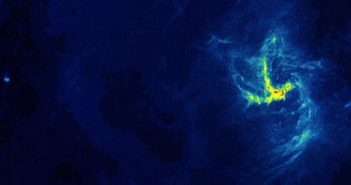
The region surrounding the black hole at the center of our galaxy is a complex and dynamic place. New observations reveal more about this unique environment.
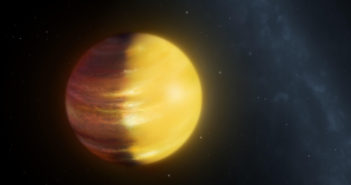
New direct-imaging observations provide insight into the atmosphere of 51 Eri b, a nearby Jupiter-like exoplanet.
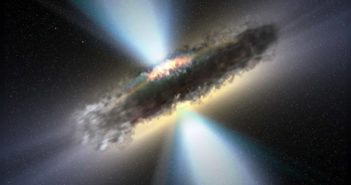
New research suggests that the dusty environments surrounding supermassive black holes may be hiding many of the brightest from our view.
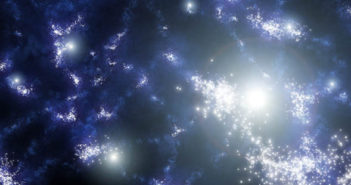
How large could some of the earliest stars have grown before collapsing into supermassive black holes?
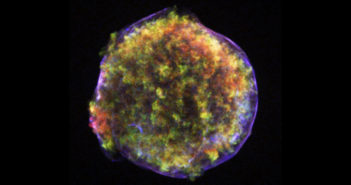
Astronomers have built the first-ever 3D map of a Type Ia supernova remnant using observations of Tycho, a supernova first observed nearly 450 years ago.
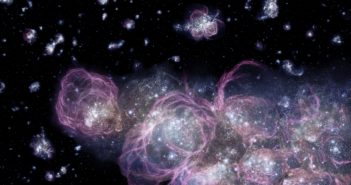
How do magnetic fields form and evolve in early galaxies? New observations have provided us with clues.
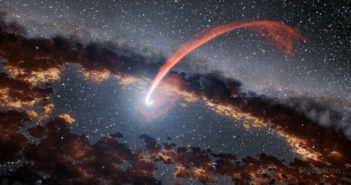
What can we learn from the infrared echo of a supermassive black hole tearing apart a passing star?