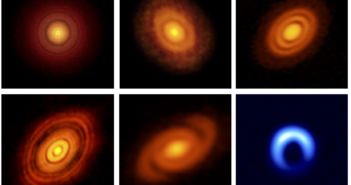
Filling (Dust) Gaps in our Knowledge of Planet Formation
With the awesome power of ALMA, scientists have observed a variety of dust gaps in protoplanetary disks. Astrobites reports on a study of how these gaps might relate to planet formation.

With the awesome power of ALMA, scientists have observed a variety of dust gaps in protoplanetary disks. Astrobites reports on a study of how these gaps might relate to planet formation.
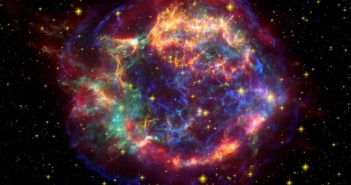
A guest author for Astrobites reports on how the ratio of various elements can inform our view of what happens during a supernova.
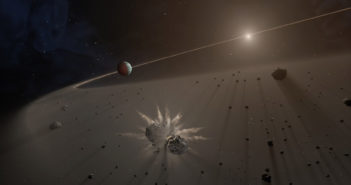
Pebbles may play a crucial role in the formation of gas-giant planets. Astrobites reports on how strong magnetic winds impact this process.
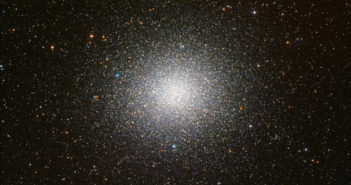
Globular clusters in the Milky Way are shedding their stars. How can we tell when this process began?
Astrobites reports on a very high-redshift, bright galactic nucleus that’s revealing information about our early universe.
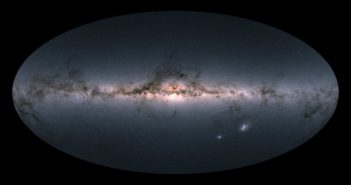
Could Gaia’s immense catalog of stellar positions help us find extraterrestrial intelligence?
Comet D/Lexell has been lost to memory since its discovery in 1770. Can modern astronomical methods track it down?
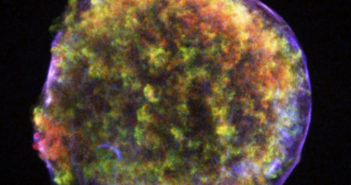
Astrobites reports on how a supernova that Tycho Brahe studied in 1572 may yet have something to tell us about what causes these dramatic explosions.
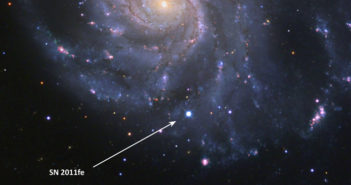
Astrobites reports on the discovery that Type Ia supernovae may fall into two distinct sub-populations.
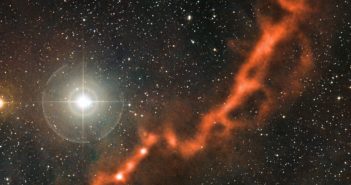
Astrobites reports on the stellar membership roster for Taurus-Auriga, the nearest large star-forming region.