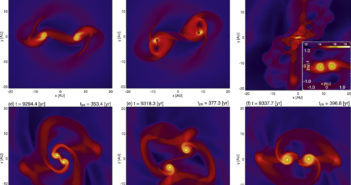
Featured Image: Simulating the Birth of a Close Binary
Ever wondered how stellar binaries form? Check out this numerical simulation, which tracks the process over 400 years.

Ever wondered how stellar binaries form? Check out this numerical simulation, which tracks the process over 400 years.
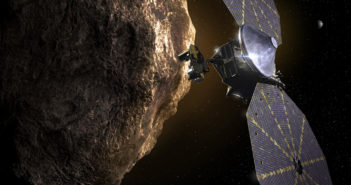
It turns out that this asteroid — a target for the upcoming Lucy mission, which will visit Jupiter trojans — isn’t alone.
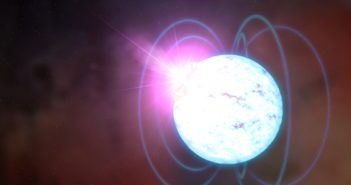
Have we recently spotted the first equivalent of a fast radio burst located within our own galaxy?
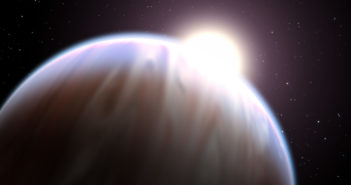
Astrobites reports on how we can find non-uniform cloud cover on exoplanets using the James Webb Space Telescope.
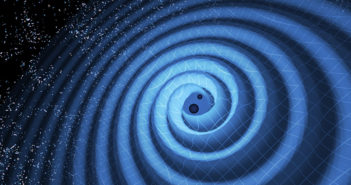
How does the rate of binary black hole mergers change with time? The gravitational waves produced by undistinguished individual mergers might be able to help.
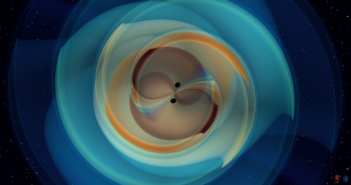
The two black holes that merged in GW190521 are the most massive we’ve observed yet, and this has major astrophysical implications.
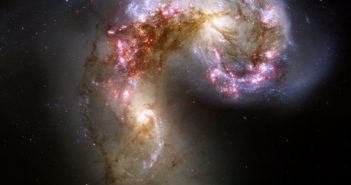
How do galaxies transition from blue and star-forming to red and dead? Astrobites reports on a new clue.
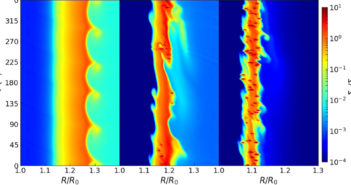
A recent study shows how a ring of dust and gas surrounding a newly born star might behave as it evolves.
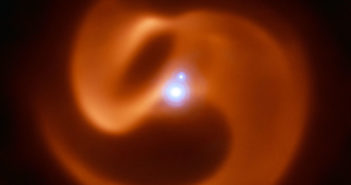
A recent study explores a spiral pattern spotted around an unexpected source.
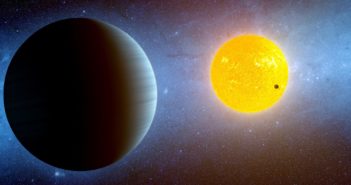
Recently found: two nearby, intriguingly puffy planets that will make ideal targets for future observations.
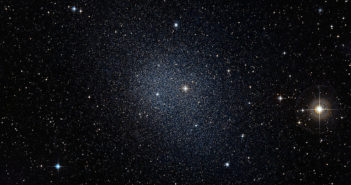
Astrobites reports on recent black hole mass measurements and what they say about how black holes may have formed in the early universe.
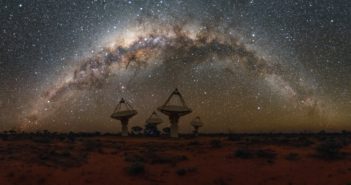
A recent study has used bursts of radio emission to probe whether the outskirts of our galaxy are hiding vast quantities of “missing” baryonic matter.