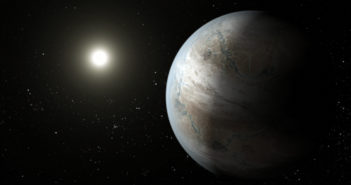
Around Half of Sun-Like Stars Could Host Potentially Habitable Worlds
What’s the occurrence rate of potentially habitable exoplanets around Sun-like stars? Astrobites reports.

What’s the occurrence rate of potentially habitable exoplanets around Sun-like stars? Astrobites reports.
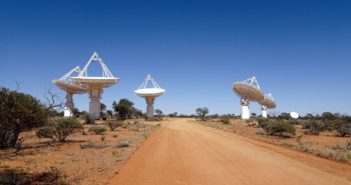
ASKAP is on the hunt for emission before and after a fast radio burst — which may prove key to unraveling the mystery of these explosions’ origins.
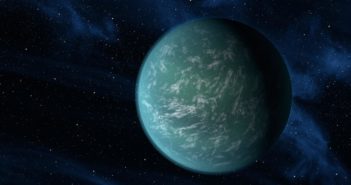
Scientists explore whether a world covered in water can keep its climate as stable long-term as an Earth-like, continental world can.
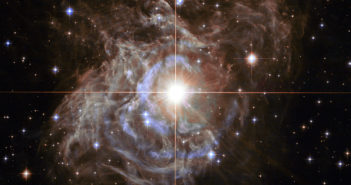
Unexpected X-ray emission has been observed in some variable stars when they’re at their largest size. What could be the cause?
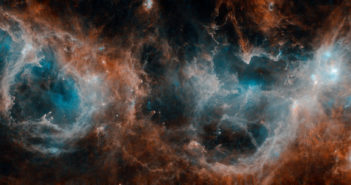
Astrobites reports on the space-based formation of imines, molecules that are precursors to DNA.
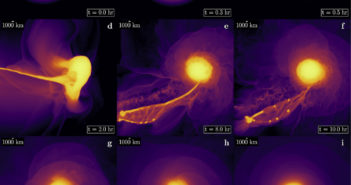
New state-of-the-art simulations reveal what may have happened when a planetary-mass impactor smashed into the early Earth.
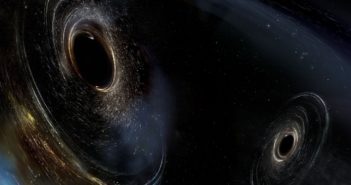
The dramatic collision of two enormous black holes has provided new clues pointing to how this binary originally formed.
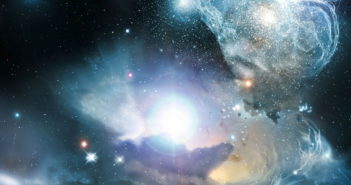
Hungry supermassive black holes in the distant cosmos can help us understand what happened shortly after our universe lit up with its first stars and galaxies.
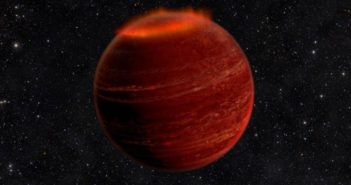
Astrobites reports on the first direct radio discovery of a brown dwarf, an object in the gray area between star and planet.
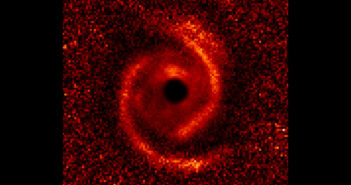
Gravity or a planetary companion? Recent work uses speed measurements to determine what’s driving the spiral arms in one protoplanetary disk.
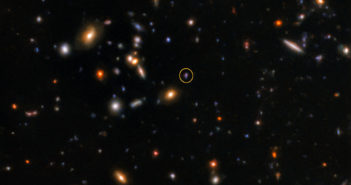
You’ve got to be quick to spot the afterglow from a short gamma-ray burst! A recent success story reveals one of the most distant bursts we’ve discovered.
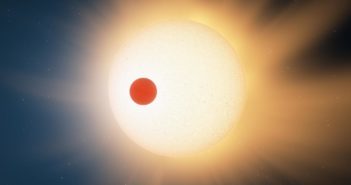
A planet that should be completely irradiated has somehow held on to its atmosphere. New work examines what this planet reveals about rare hot Neptunes.