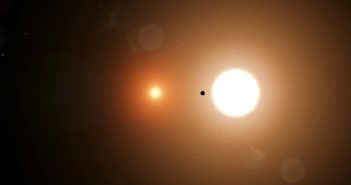
X Marks the Region
Astrobites reports on how statistics can guide the search for previously undetected planets.

Astrobites reports on how statistics can guide the search for previously undetected planets.
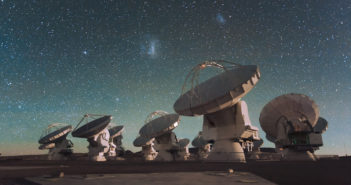
We’ve seen what the powerful ALMA observatory can do within our own galaxy — but what can it tell us about distant galaxies across our universe?
Scientists recently announced the discovery of the nearest black hole to Earth — but there may be a different explanation for this stellar puzzle.
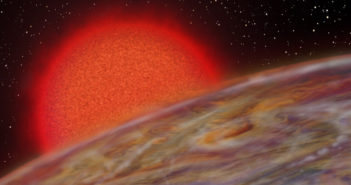
When a star like our Sun evolves into a red giant, what happens to its planets? A new study explores this apocalyptic future.
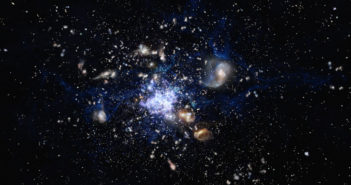
Astrobites sheds some light on the inner workings of an ultra-red, massive cluster core spotted at high redshift.
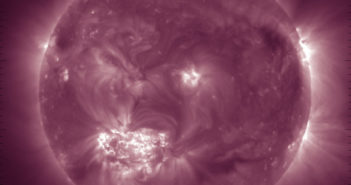
How can we tell how much energy is leaking out of active regions on the Sun?
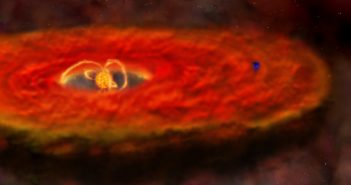
Recent observations from ALMA are providing a new look at the presence — and absence — of turbulence in planet-forming disks.
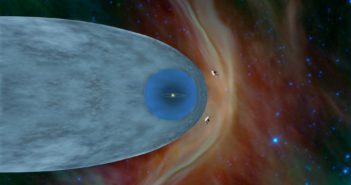
The Voyager probes, launched more than 40 years ago, are still providing new insights.

Astrobites reports on a machine-learning approach to explore light emitted from the gas distributed throughout galaxy clusters.

Could a pair of faint signals correspond to the first collision we’ve detected of a black hole with a neutron star?

Starspots on M dwarfs could be mistaken for planets. How do we distinguish the two?
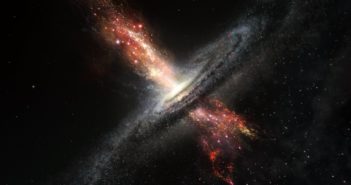
The size of a supermassive black hole seems to track with the size of its host galaxy. But is this a statistical fluke, or is there a physical reason for the connection?