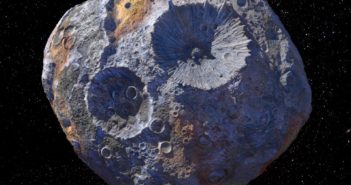
Selections from 2020: Hubble Observations of Psyche
Ultraviolet observations of the asteroid (16) Psyche reveal more about this unusual body’s surface.

Ultraviolet observations of the asteroid (16) Psyche reveal more about this unusual body’s surface.
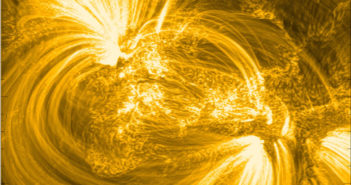
Images from a brief window of observation reveal spectacular strands of plasma in the Sun’s atmosphere.
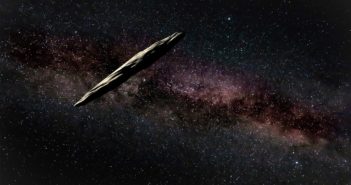
Could interstellar asteroid ‘Oumuamua be a speeding hydrogen iceberg?
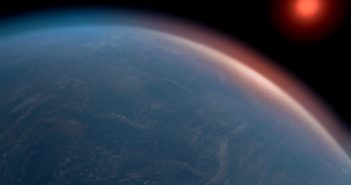
Not all habitable worlds are Earth-like! A recent study explored the potential habitability of a larger super-Earth.
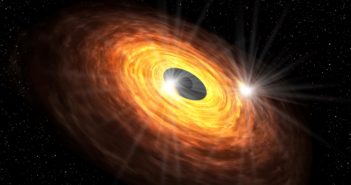
Recent observations show Sgr A*, the supermassive black hole at the heart of the Milky Way, twinkling in radio light.
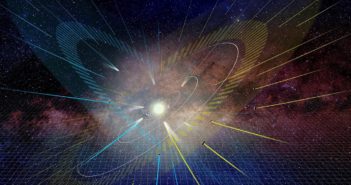
The ecliptic plane may be where all the planets hang out, but there could be a second alignment plane within our solar system.
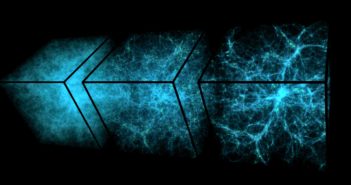
The universe’s accelerating expansion might be driven by a sea of former stars that are now cores of dark energy.
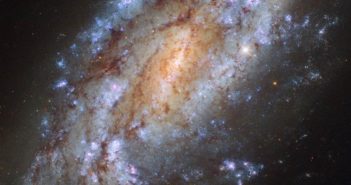
How are a galaxy’s stars related to its overall structure?
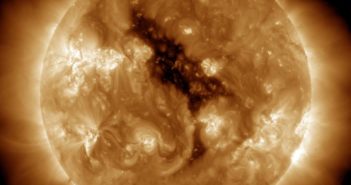
Want to be able to predict the flurries of high-energy particles that slam into Earth from the Sun? Then you’ll need to first track the holes in the Sun’s atmosphere.
Astrobites reports on a unique tool for measuring the curvature of the universe: cosmic clocks.
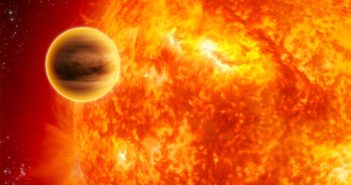
What’s going on around the hot Jupiter exoplanet HAT-P-41b? This planet’s atmosphere is harboring a mystery, recently revealed by observations that span infrared through ultraviolet light.
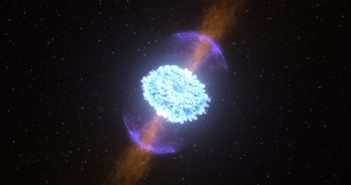
A new study presents signs of what may be a decades-old merger of two neutron stars.