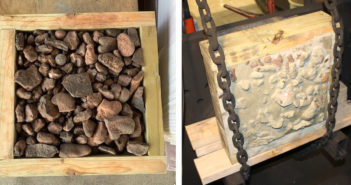
Featured Image: An Asteroid-Impact Test on Earth
NASA’s Double Asteroid Redirection Test (DART) spacecraft will slam into an asteroid today. Back home on Earth, researchers carried out an impact experiment of their own.

NASA’s Double Asteroid Redirection Test (DART) spacecraft will slam into an asteroid today. Back home on Earth, researchers carried out an impact experiment of their own.

Black holes, neutron stars, and white dwarfs sometimes announce their presence when they accrete matter from a stellar companion, but many more may be hiding quietly in binary systems across the Milky Way.
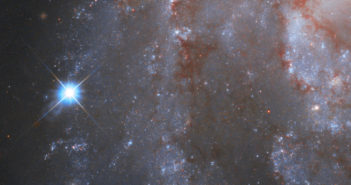
Can models explain why supernova SN 2021yja took a detour as it dimmed, staying the same brightness for weeks before fading again?
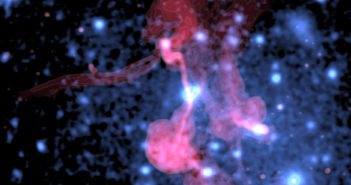
Astrobites reports on a clash between supermassive black hole jets and gaseous filaments laced with magnetic fields.
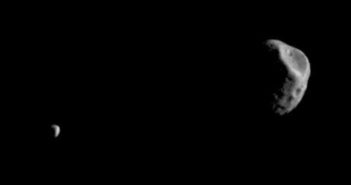
Did Mars’s two small moons form when a larger moon split in two? New simulations put this theory to the test.
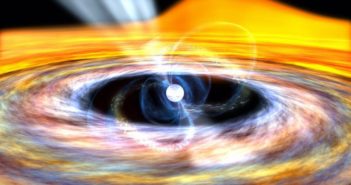
What causes some pulsars to spin much slower than others? Could it have to do with accretion from their birth environment?

The Sagittarius stellar stream is split into two branches: why is that, and where did the stars in each branch come from?
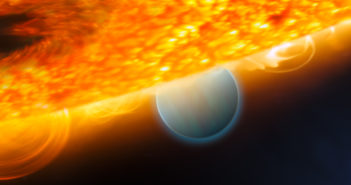
Astrobites reports on a search for planets within the Milky Way that may have originated outside our galaxy.
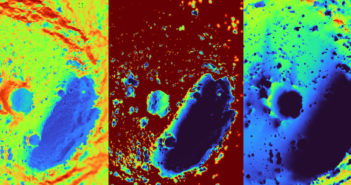
Modeling of spacecraft images suggests that a permanently shadowed crater on Mercury could contain a thick layer of water ice.
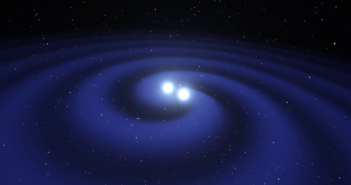
Researchers explore a new way to schedule observations in the hopes that we can make the most of limited telescope time when a new gravitational wave signal is detected.

Were the first stars in the universe all massive, or did low-mass stars form in their midst? New research suggests that magnetic fields might have been the deciding factor.

Please join us in saying farewell to our 2021–2022 AAS Media Fellow and welcoming our new Fellow to the team!