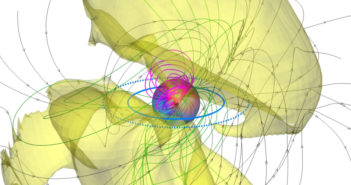
Featured Image: Navigating Turbulence Around an Active Young Star
Modelers explore how explosions of stellar plasma affect the passage of high-energy particles.

Modelers explore how explosions of stellar plasma affect the passage of high-energy particles.
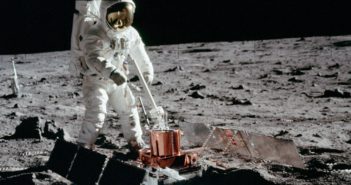
Fifty years ago, planetary scientists curated a trove of seismic data sent back from the Moon. Today, those data are getting another life in a new public archive.

Could tidally disrupted white dwarfs help us find the elusive intermediate-mass black holes?
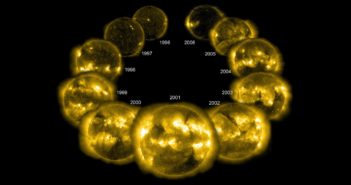
Astrobites reports on the detection of Maunder Minimum–like behavior in the stellar activity curve of HD 166620.

How many black holes formed from collapsing stars and how many formed from other black holes? Gravitational waves give us a way to find out.
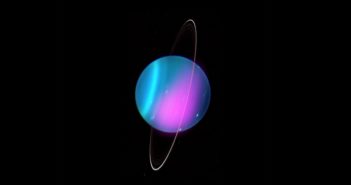
Learn about the hunt for biosignature gases, the state of diversity in STEM, and what we would gain from a visit to the Uranian moons in our summary of DPS days 3, 4, and 5!
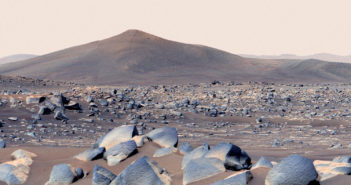
Read about space-weathered asteroids, conditions on ancient Venus, and why photometry is more prescient than you might expect in our summary of DPS days 1 and 2!
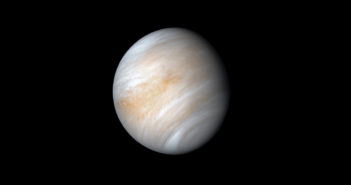
Astrobites reports on which exoplanets are most likely to end up as Venus analogs: hot, dry, and uninhabitable.
This week we’ll be bringing you updates from the 54th DPS meeting, happening in London, Ontario, and virtually anywhere!
Most astronomy research requires writing code. Recently, one of the most popular packages of the most popular programming language got a major update.
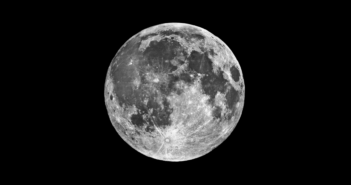
Can radar observations of our lunar neighbor help us uncover hidden regions of ancient lava flows?
Astrobites reports on an investigation of ultraviolet-bright galaxies during the epoch of reionization.