AAS 242: Day 3
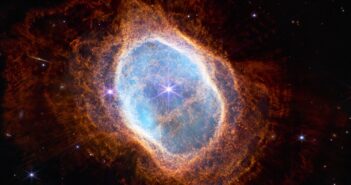
Day 3 of AAS 242 brought perspectives on planetary nebulae, reflections on two-eyed seeing, and everything you need to know to safely view the two solar eclipses that will soon cross North America.

Day 3 of AAS 242 brought perspectives on planetary nebulae, reflections on two-eyed seeing, and everything you need to know to safely view the two solar eclipses that will soon cross North America.
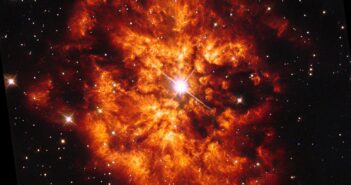
Day 2 at AAS 242! We’ve got info about solar flares, the fastest nova we know of, and a star-birthing nebula named for Scotland’s favorite cryptid.
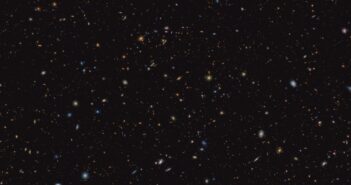
Day 1 of AAS 242 brought us tornadoes on the Sun, a fantastic fish-hook galaxy, and plenty of news from JWST.
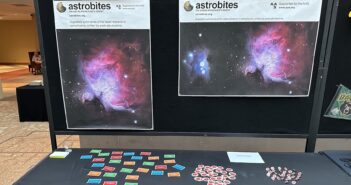
This week we’ll be bringing you updates from the 242nd AAS meeting, happening in Albuquerque, NM, and online.
The AAS publishing team is excited to engage with the community at the upcoming AAS meeting. Check out what they’ll be up to at the meeting!

Stars more than a hundred times more massive than the Sun might be the source of nitrogen in one of the most distant known galaxies.
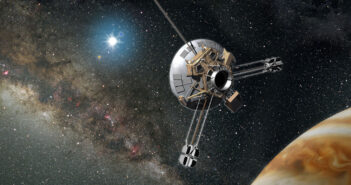
To measure vast distances with tiny uncertainties, astronomers need to think outside the box. A new study proposes an ambitious mission that could revolutionize our understanding of cosmology, dark matter, and more.
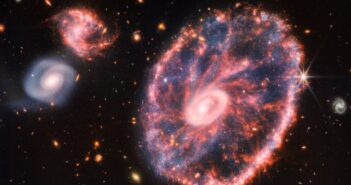
JWST has revealed an intriguing new group of galaxies with flat, extended, red disks that might be the precursors to today’s massive galaxies.
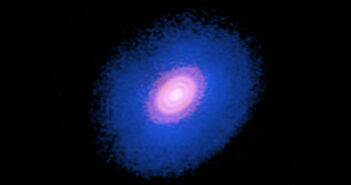
Astrobites reports on an extra protoplanet that might be lurking in the dust around a nearby star.
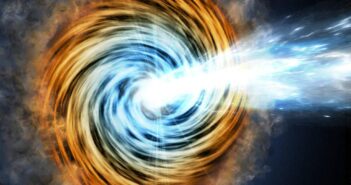
In 2020, astronomers spotted curious color changes and other new behavior from the first known blazar.
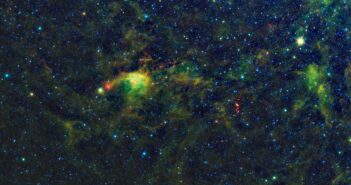
Can a model in which the solar system forms in a dense, filamentary gas cloud explain the radioactive atoms found in meteorites?
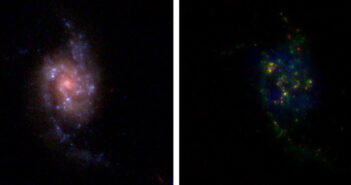
A survey of 45 nearby galaxies may help researchers interpret ultraviolet emission from galaxies in the early universe.