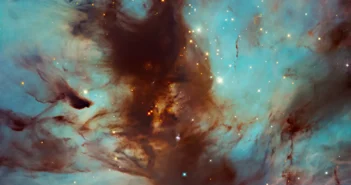
Tailor-Made Turbulence for All Your Modeling Needs
A new method for modeling turbulent magnetic fields — important for everything from accretion disks to the solar wind — yields realistic fields while also keeping computational costs low.

A new method for modeling turbulent magnetic fields — important for everything from accretion disks to the solar wind — yields realistic fields while also keeping computational costs low.
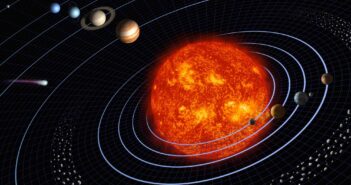
Astrobites reports on the likelihood of exoplanetary systems having both small, close-in planets and large, far-out gas giant planets.
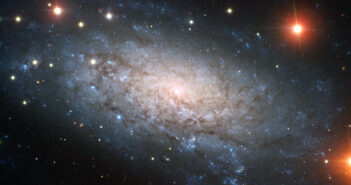
Supernova hunters have been busy: SN 2024ggi is the second nearby supernova in less than a year. What do archival observations tell us about this supernova’s progenitor star?
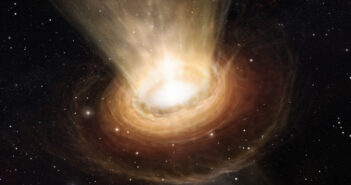
Simulations suggest that black holes could have grown to supermassive size with the help of young star clusters in the early universe.
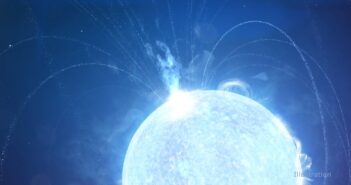
A pair of nearly identical fast radio bursts from different sources gives a hint to the cause of these powerful radio flashes.
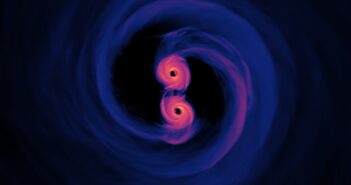
Astrobites reports on new evidence that suggests the density of dark matter spikes near a supermassive black hole.
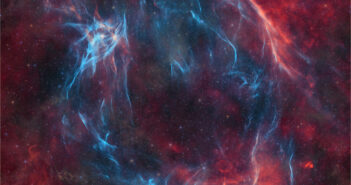
New high-resolution images show that when it comes to supernova remnants, scientific value and beauty go hand in hand.
Most cool stars spin nicely aligned with their planets. So why do their hot counterparts tumble in nearly random directions?
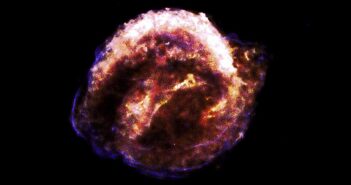
The supernova SN 2019ein may have originated near a globular cluster — an unusual environment that hints to the nature of the supernova progenitor system.
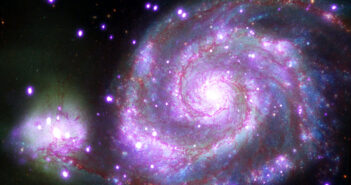
Astrobites reports on “little red dots” in the early universe and how to use X-rays to determine if these galaxies host massive black holes.

Meet RX J2129–z8He II: a remarkable high-redshift galaxy that might be home to some of the first generation of stars.

Billions of years ago, small galaxies may have had cores packed with dark matter. What would these galaxies look like today?