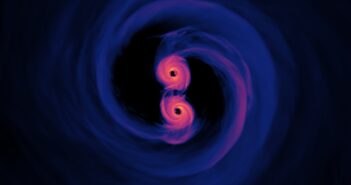
Spiky Dark Matter Around Supermassive Black Holes
Astrobites reports on new evidence that suggests the density of dark matter spikes near a supermassive black hole.

Astrobites reports on new evidence that suggests the density of dark matter spikes near a supermassive black hole.
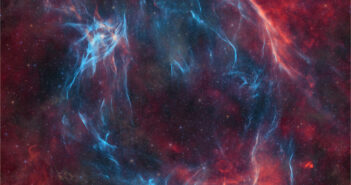
New high-resolution images show that when it comes to supernova remnants, scientific value and beauty go hand in hand.
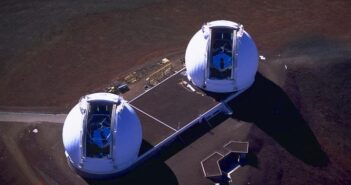
Most cool stars spin nicely aligned with their planets. So why do their hot counterparts tumble in nearly random directions?
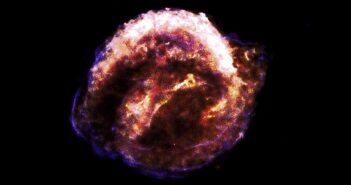
The supernova SN 2019ein may have originated near a globular cluster — an unusual environment that hints to the nature of the supernova progenitor system.
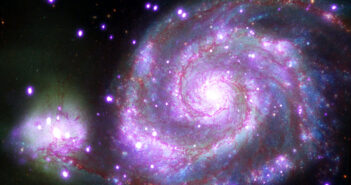
Astrobites reports on “little red dots” in the early universe and how to use X-rays to determine if these galaxies host massive black holes.

Meet RX J2129–z8He II: a remarkable high-redshift galaxy that might be home to some of the first generation of stars.

Billions of years ago, small galaxies may have had cores packed with dark matter. What would these galaxies look like today?
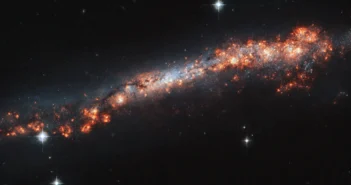
Astrobites reports on simulations of the circumgalactic medium, a reservoir of gas that helps regulate a galaxy’s ability to form stars.

Thanks to JWST, the supernova remnant Cassiopeia A has a beautiful new portrait that has allowed astronomers to study the connection between molecules, dust, and supernovae.
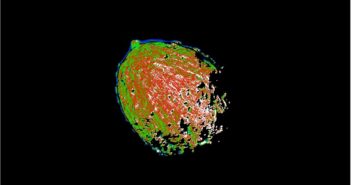
A recent study merges different datasets to build a richer picture of Dimorphos, humanity’s first asteroid redirection target.
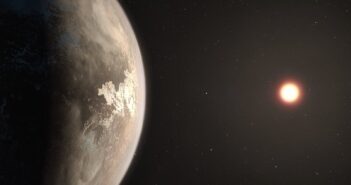
This month, we’re exploring temperate exoplanets: how to find them, how to model them, and how to figure out if they host life.
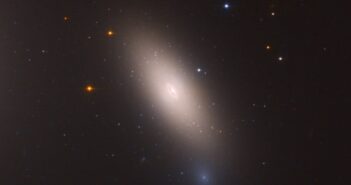
Astrobites reports on galaxies that may be forming a remarkable number of stars in the first few hundred million years of the universe.