
Astronomers Reopen the Mystery of a Planet That Shouldn’t Exist
The exoplanet 8 UMi b should have been swallowed by its host star — and new research may have upended the standing hypothesis for how the planet escaped its fate.

The exoplanet 8 UMi b should have been swallowed by its host star — and new research may have upended the standing hypothesis for how the planet escaped its fate.
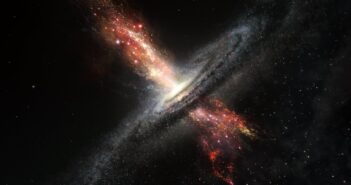
For the first time, researchers have examined a population of black holes that may fill in the gap between over-massive black holes in the early universe and those present today.
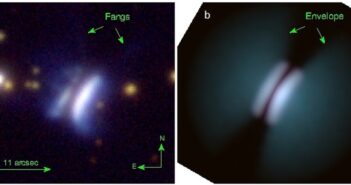
Astrobites reports on the serendipitous discovery of Dracula’s Chivito, possibly the largest known protoplanetary disk.
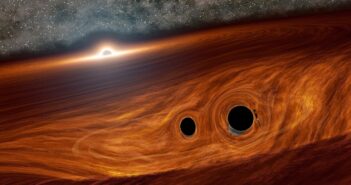
The accretion disks surrounding supermassive black holes could be home to millions of stellar-mass black holes. How can we tell if a disk hosts these black holes?
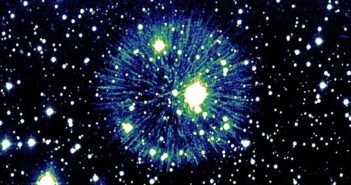
When white dwarfs collide, the merger can create a new white dwarf with a strong magnetic field and powerful winds.
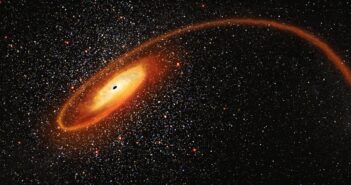
Is GRB 191019A truly a gamma-ray burst, or could it be the first example of an ultra-deep tidal disruption event?
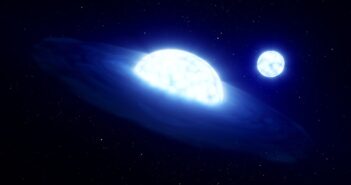
Astrobites reports on a class of accreting stars nicknamed “hamstars” that store overflow matter in stellar “cheeks” to eat later.
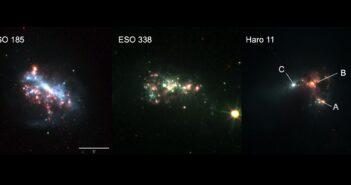
Compact blue dwarf galaxies share many properties with galaxies in the early universe, giving researchers a way to study distant, ancient galaxies up close.
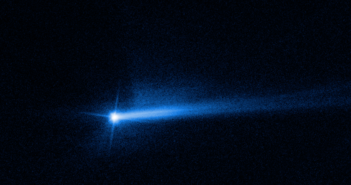
After observing a planned impact between an asteroid and a spacecraft, astronomers wondered: could we detect colliding pairs of natural asteroids?
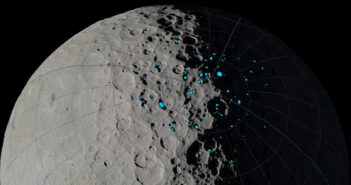
The dwarf planet Ceres hosts water ice in cold, shadowed craters. New research suggests that these ice deposits are remarkably young.
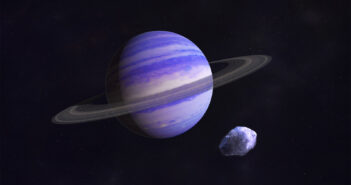
Astrobites reports on whether photoevaporation or core-powered mass loss is more likely to be responsible for the exoplanet radius gap.
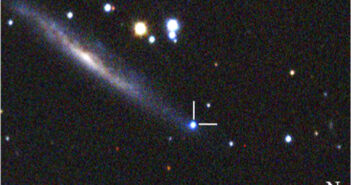
If caught just a few days later, SN 2022jox would’ve looked like just another ordinary core-collapse supernova, but early observations set it apart, revealing the gas expelled in the star’s final years.