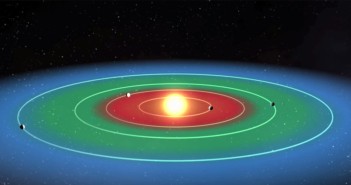
UV Habitable Zones Further Constrain Possible Life
The possibility of liquid water is not the only thing that determines where life is most likely in the universe! UV radiation also plays an important role.

The possibility of liquid water is not the only thing that determines where life is most likely in the universe! UV radiation also plays an important role.
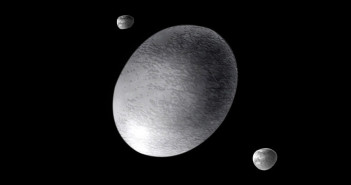
Hi’iaka, the largest satellite of the dwarf planet Haumea, spins much more rapidly than expected. What does this tell us about its formation?
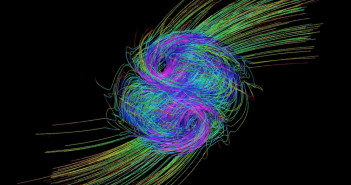
New simulations show what happens when a magnetized star is torn apart by the tidal forces of a supermassive black hole.
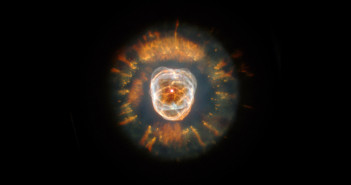
Astrobites reports on several planetary nebulae unexpectedly discovered in globular clusters.
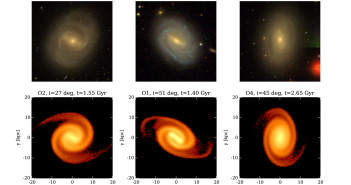
How are the arms of spiral galaxies like the Milky Way created? The gravitational pull of a galaxy cluster might play a role.
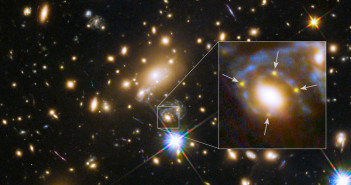
Type Ia supernovae gravitationally lensed into multiple images can provide us with a wealth of information. But how do we find them?
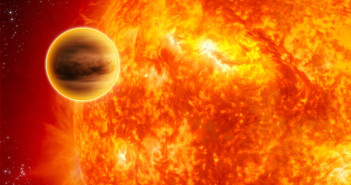
A new study explores what happens to close-in hot Jupiters when their host stars reach the end of their main-sequence lifetimes.
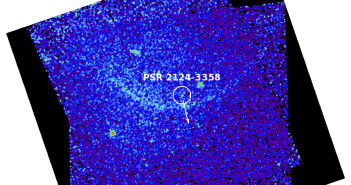
Astrobites reports on a pulsar that’s preceded by a bow shock as it tears through the Milky Way.
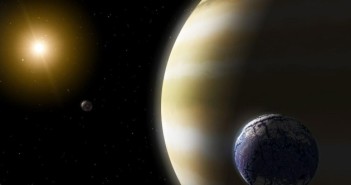
Where are all the exomoons? A new study suggests stellar radiation might cause them to escape their planets’ pulls.
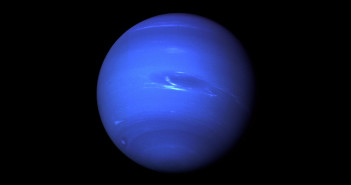
How would the Kepler mission see a star like the Sun? Reflections of the Sun off of Neptune have now answered this question.
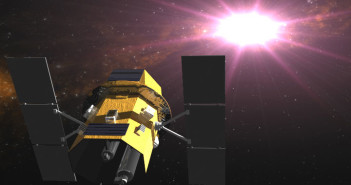
Astrobites reports on the first detection of a possible gamma-ray counterpart to a mysterious fast radio burst.
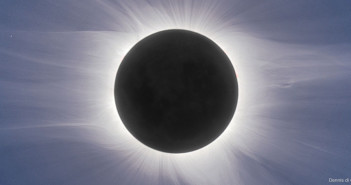
This week we’re at the winter AAS meeting in Grapevine, TX. Here are the highlights from Day 4!