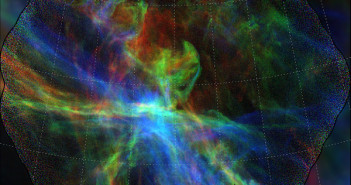
Featured Image: Structures in the Interstellar Medium
A new survey has provided a high-resolution look at some of the structures in the diffuse hydrogen gas of our galaxy.

A new survey has provided a high-resolution look at some of the structures in the diffuse hydrogen gas of our galaxy.
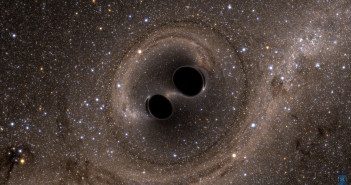
Could dark matter be made of intermediate-mass black holes formed in the beginning of the universe? A recent study takes a renewed look at this question.
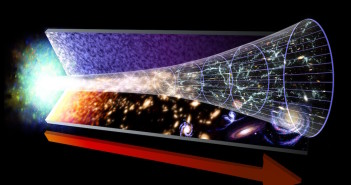
Scientists may have solved a decades-old puzzle about the formation of our universe.
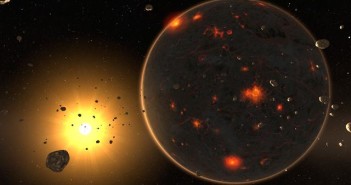
Astrobites reports on the large impactors that pelted the Moon until 3.8 billion years ago, creating huge craters that have survived to this day.
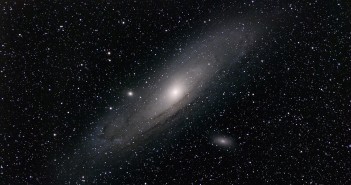
A new study reveals a set of extremely compact and dense galaxies in distant galaxy clusters.
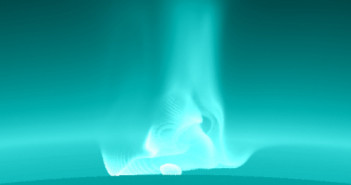
How do jets emitted from the Sun’s surface contribute to its corona and to the solar wind?
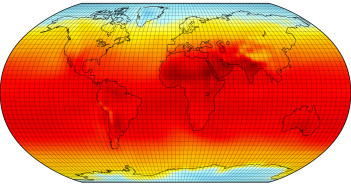
Having a giant planet like Jupiter next door can really wreak havoc on your orbit! What might such a bad neighbor mean for the long-term climate of an Earth-like planet?
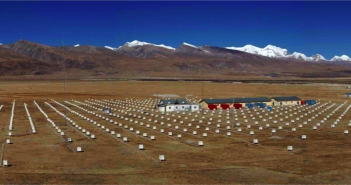
Astrobites reports on cosmic rays observed at Earth with the Tibet Air Shower experiment.
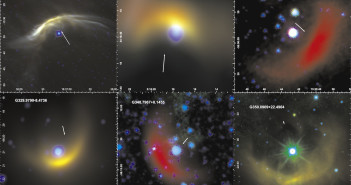
More than 700 candidate stellar bow shock nebulae — signs of runaway stars — have been discovered in the Milky Way.
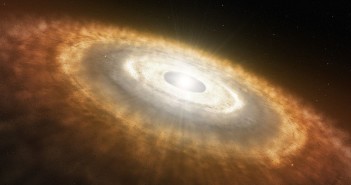
For the first time, scientists have imaged a very young, high-mass binary system and resolved the individual disks that surround each star and the circumbinary disk surrounding the pair.
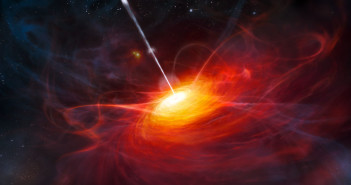
A quasar has been caught in the act of rapidly switching on. What caused the sudden transition?
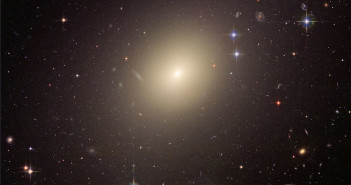
Astrobites reports on the different colors of galaxies, and what they tell us about galaxy evolution.