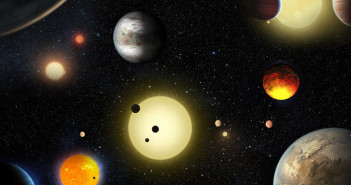
A New Way to Confirm Planet Candidates
What’s the punchline from yesterday’s Kepler press conference? Over a thousand new confirmed planets — and a new way to confirm them!

What’s the punchline from yesterday’s Kepler press conference? Over a thousand new confirmed planets — and a new way to confirm them!

A recent study examines whether our planet’s history of giant impacts is typical for Earth-like worlds.
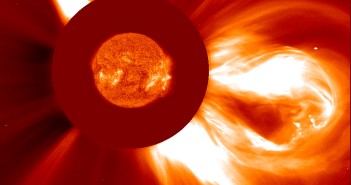
Can we predict which solar flares will be followed by larger-scale coronal mass ejections?
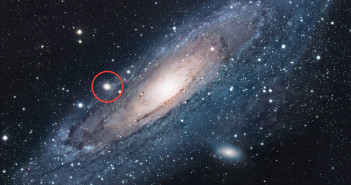
There’s a new addition to the galaxy zoo: a small, compact, and old elliptical galaxy that shows signs of a monster black hole actively accreting material in its center.
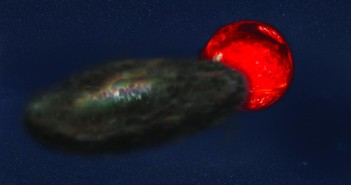
The new record holder for longest-period eclipsing binary is TYC-2505-672-1, an unusual system in which the companion star may be shrouded by a circumstellar disk.
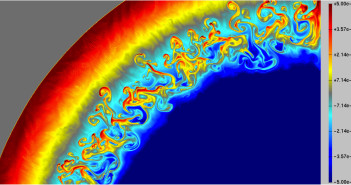
A new study examines how a one-dimensional model can be used to reproduce the multidimensional effects of mixing in supernova remnants.
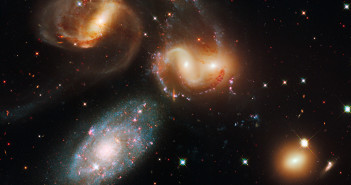
Can a computer algorithm classify galaxies into ellipticals and spirals as well as Galaxy Zoo’s human volunteers?
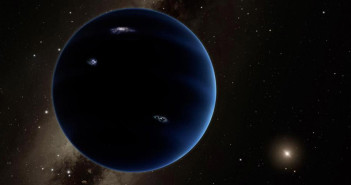
Recent studies have identified signs of an unseen, distant ninth planet in our solar system. A team of scientists have proposed a new way to search for Planet Nine: look for its heat signature.
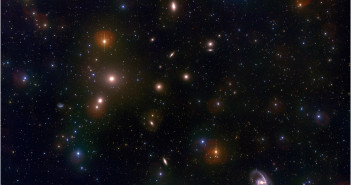
Beautiful observations of the center of the Fornax galaxy cluster reveal clues about how this cluster may have been built.
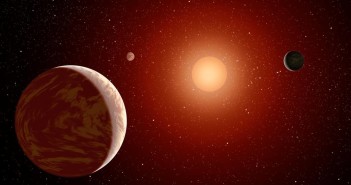
A recent study examines which stars make the best targets when searching for habitable exoplanets.
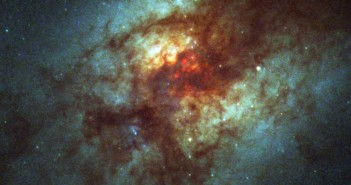
The recent discovery of high-energy gamma-ray emission from Arp 220 reveals more about how supernovae interact with their environments.
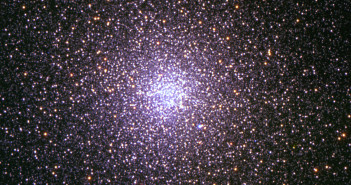
Where do most of the globular clusters in today’s universe reside? A recent study answers this question.